
Los Angeles Motorcycle Accident Lawyer
If you were injured in a motorcycle accident in Los Angeles, Moe Abdallah Law, P.C. holds the at-fault driver accountable for your injuries, and pushes back hard on insurers who try to blame the rider. Free consultation, no fee unless we win.
A motorcycle accident lawyer in Los Angeles gives you the fastest way to fight a driver's insurer that already blames the rider. One second you're riding; the next you're on the pavement, badly hurt, listening to the driver who cut you off swear the crash was your fault. Before you leave the hospital, that driver's insurer is already building a case that you were speeding, weaving, or "illegally" splitting lanes, anything to pay you less. Moe Abdallah Law, P.C. exists to flip that story. We reconstruct what really happened, put the physical evidence on the record, and hold the at-fault driver fully accountable for injuries that are almost always worse for a rider than for anyone in a car. You focus on healing. We handle the fight, and you pay nothing unless we win.
Sunset Boulevard and the LA roads where riders get hurt
Riders make up a large share of the people who die on Los Angeles roads. In NHTSA FARS records for the City of Los Angeles from 2019 to 2024, 263 of the 1,914 people killed were motorcyclists, counting moped and scooter riders. That's about 14 percent, or roughly one death in seven. LADOT's 2024 High Injury Network layer puts Sunset Boulevard at the top of its motorcycle list. The same federal records show two patterns across all fatal crashes in the city, not just motorcycle crashes: 38 percent were speeding-related, and 71 percent happened after dark. Insurers often reach for the "speeding rider" story anyway, even when the driver who turned left is the one at fault. Freeways are the other big setting. On US-101, I-405, I-10 and I-5, lane splitting and sudden lane changes put riders inches from cars. In the Valley, riders also share major streets such as Ventura Boulevard, Van Nuys Boulevard and Sepulveda Boulevard with turning traffic. If you went down on one of these roads, give us the exact block and time. We can then look for video and witnesses before the footage records over. Outside the city limits the pattern holds: Glendale's own crash study found riders in a small share of crashes but a much larger share of serious ones, as our Glendale motorcycle crash page shows.
Answer 3 quick questions and Moe will call you, free. No fee unless we win.
Prefer to talk? Call (323) 716-1992, 24/7.
Who takes the report after an LA motorcycle crash: LAPD or CHP
The agency depends on where you went down. On city streets in Hollywood, Wilshire, Olympic, Pacific and West Los Angeles, LAPD's West Traffic Division handles it from 4849 Venice Blvd., 213-473-0222. In the San Fernando Valley, Valley Traffic Division at 7870 Nollan Place in Panorama City, 818-644-8000, covers areas such as Van Nuys, West Valley, Topanga and North Hollywood. On a freeway, it's CHP. CHP's West Valley Area office is at 5825 De Soto Ave. in Woodland Hills, (747) 373-3000. It patrols about 400 square miles, including parts of the City of Los Angeles. CHP's West Los Angeles Area covers I-405 and I-10, and its Central Los Angeles Area covers US-101 near downtown. CHP's pages don't say which office covers each stretch of the Valley freeways, so check the card the officer gave you. For an LAPD report, request it online and wait at least 45 days. If the crash involved an arrest, a death or a juvenile, you must request it by mail with a $19.00 check or money order. For a CHP report, visit any CHP office, mail a CHP 190 form with a copy of your license, or search CHP's online Crash Report Search. If you left by ambulance before you could give a statement, send us the report and we'll check how it tells your side. In the South Bay, freeway rider crashes usually go to the CHP South Los Angeles Area office, covered on our Torrance motorcycle accident page.
Trauma centers for rider injuries in Los Angeles and the Valley
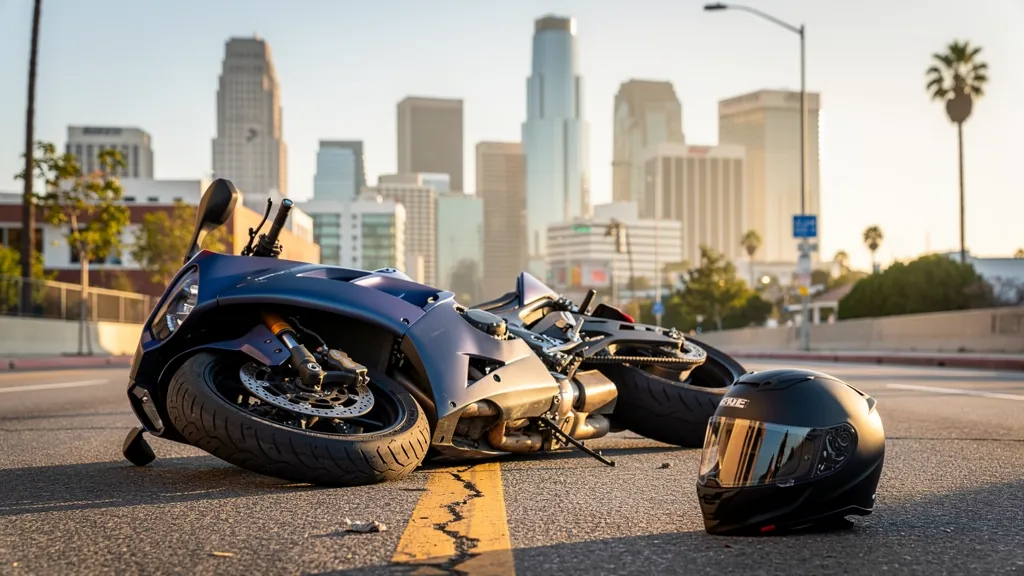
Road rash, broken legs, pelvic fractures and head injuries send a lot of riders to a trauma center. The LA County EMS Agency's Receiving Hospital Directory lists the ones that serve the city. On the Westside, Ronald Reagan UCLA Medical Center at 757 Westwood Plaza and Cedars-Sinai Medical Center at 8700 Beverly Boulevard are Level I trauma centers. East of downtown, Los Angeles General Medical Center on North State Street is Level I. In downtown itself, the directory lists Dignity Health-California Hospital Medical Center on South Grand Avenue as Level II. In the Valley, Dignity Health-Northridge Hospital Medical Center at 18300 Roscoe Boulevard and Providence Holy Cross Medical Center at 15031 Rinaldi Street in Mission Hills are Level II. Children's Hospital Los Angeles on Sunset is the pediatric Level I center if a young passenger was hurt. The directory lists no trauma level for Sherman Oaks Hospital, Encino Hospital Medical Center, Valley Presbyterian, UCLA West Valley or Kaiser Woodland Hills. You may still have been treated well there. If you were moved to a trauma center later, keep the records from both places. Skin graft notes, surgery reports and follow-up visits show how long your recovery runs. Keep your helmet and gear too. Your doctors, and anyone who reconstructs the crash, may need them to explain how you got hurt.
Potholes, road defects and public vehicles in a rider crash
A car has four wheels to absorb a pothole. A motorcycle has two. When a broken road surface or a city vehicle causes the crash, the claim runs against a public agency. Those claims follow strict rules. A rider has six months to present a written claim (Gov. Code § 911.2). A written rejection generally starts a second six-month clock to file your lawsuit (Gov. Code § 945.6). The extra time a minor would get does not apply to government claims (Code Civ. Proc. § 352(b)). For a City of Los Angeles street, a city truck or a DASH bus, only the Office of the City Clerk can accept the claim. File it through the Clerk's online Claim for Damages portal, mail it, or deliver it to City Hall, 200 North Spring Street, Room 395. Claims by email or fax are refused. For a county road in an unincorporated area, the County's form points to the Board of Supervisors claims office at 500 West Temple Street, Room 383. That form is from 2016, so confirm the address. If a Metro bus cut you off or hit your bike, mail Metro's Claim for Damages form to One Gateway Plaza, 99-PL-4. Before anyone patches the road, photograph the defect with something next to it for scale, and note the nearest address. A road repair can erase the proof, so call us fast.
Court for an LA motorcycle case, from Stanley Mosk to the Van Nuys pilot
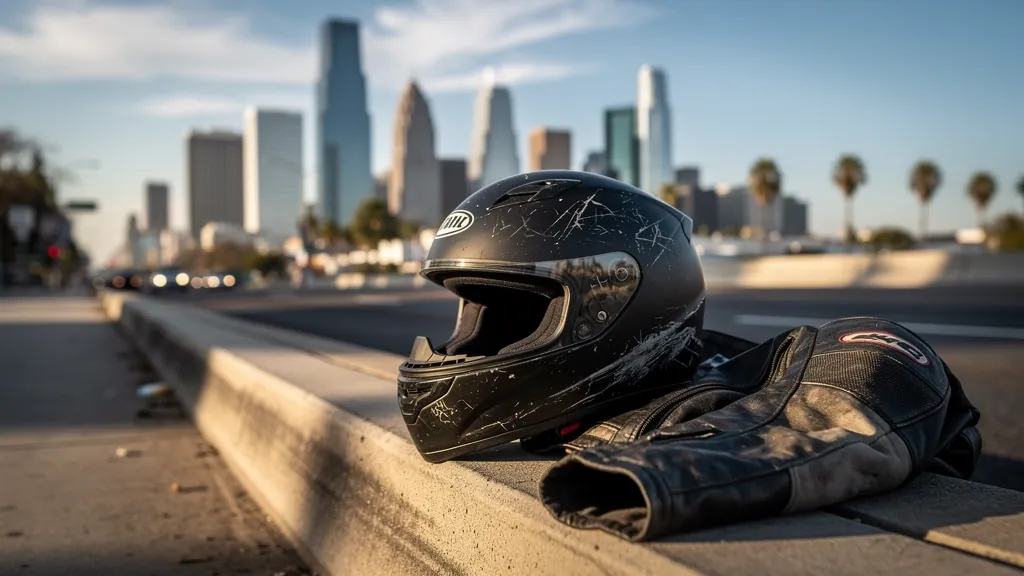
Most motorcycle cases settle. When one has to be filed in Los Angeles, Local Rule 2.3 sends unlimited civil motor vehicle injury cases, meaning over $35,000, to the Stanley Mosk Courthouse at 111 North Hill Street or the Antonovich Antelope Valley Courthouse in Lancaster. At Stanley Mosk, some courtrooms handle nothing but personal injury cases, and a filed motorcycle claim may land in one of them. The court also announced a Pathway Pilot in November 2024 for motor vehicle injury cases filed on or after Nov. 12, 2024 at the Van Nuys Courthouse East and West and at the Pomona and West Covina courthouses. We could not confirm that the pilot is still running, so we check before filing. Valley riders should ask us about it. Whatever court hears it, the proof is the same. The most common car versus motorcycle crash is a left turn. California requires a left-turning driver to yield to oncoming traffic close enough to be a hazard (Veh. Code § 21801(a)). We prove the turn with the police report, video from shops and homes along the block, your helmet camera and the damage to the bike. Don't fix the motorcycle until we've documented it. File your SR-1 with the DMV within 10 days if anyone was hurt or damage passed $1,000 (Veh. Code § 16000). Moe works from 527 W 7th St downtown and takes rider calls 24/7.
Most motorcycle crashes are the other driver's fault
The stereotype says riders cause their own wrecks. On Los Angeles streets and freeways the truth runs the other way: the driver who never saw you is usually the one who caused the crash. The same patterns keep showing up. A car turns left across your path at an intersection. A driver changes lanes into you on the 405 or 101 without checking a blind spot. Someone pulls out of a driveway or side street. A driver fails to yield and simply "never saw" the motorcycle. Insurers blame the rider by reflex, so we build the proof the other way. We pull ECU and speed data from the bike, study lane position and skid marks, gather traffic-camera and helmet-cam footage, read the black-box data from the car, and line up independent witnesses. A lot of this proof, camera footage most of all, gets overwritten or lost within days. The sooner we start, the more of it we can lock down to show exactly who was at fault.
Why motorcycle injuries cost so much more
A rider has no steel cage, no airbags, no crumple zone, just a helmet and gear between the body and the road. That's why the injuries we handle are far worse than in a typical car crash: road rash that needs skin grafts, complex and open fractures, spinal-cord injuries and paralysis, brain injuries, internal organ damage, and amputations. Those injuries mean longer hospital stays, more surgeries, months or years of rehab, and often a permanent limit on the work you can do and the life you can live. The insurance company knows this, so it moves fast to close your claim cheaply before the full picture is clear, often before a second surgery is even scheduled or the lasting effects of a brain or spinal injury are known. We do the opposite. We wait until your prognosis is clear, bring in medical and life-care experts to map out your future treatment, and value the claim for what your recovery will actually cost over a lifetime, not just the bills sitting on the table today. Once you accept a settlement you cannot reopen it, so getting that number right the first time is everything.
What to do after a motorcycle accident in Los Angeles
Get emergency care and keep every record
Call 911 and accept treatment even if adrenaline has you feeling "okay." Head, spine, and internal injuries often stay hidden for hours. A gap in treatment is the first thing an insurer uses to argue you weren't really hurt.
Preserve the scene and your gear
Photograph the vehicles, the road, skid marks, and your injuries. Get the other driver's license, insurance, and plate, and collect witness names and numbers. Don't repair the bike or throw away your damaged helmet and gear. They are evidence.
Say nothing to their insurer, call us first
Don't give a recorded statement, admit any fault, or accept an offer before you talk to a lawyer. Adjusters are trained to twist a rider's words into an admission. The consultation is free.
How insurers blame the rider, and how we fight back
In a motorcycle case the insurer's whole plan is to shift blame onto you. Expect it to claim you were speeding, that you "came out of nowhere," that you were splitting lanes illegally, or that your head injury is your own fault because of your helmet, then float a fast, low offer while you're still in pain. We take each of these apart. No California statute prohibits lane splitting. Vehicle Code § 21658.1 defines it and lets the CHP issue safety guidelines, so "he was splitting lanes" does not end your case. A rider still has to change lanes only when it is reasonably safe (Vehicle Code § 21658(a)) and ride at a safe speed (Vehicle Code § 22350), so the real question is whether the rider or the driver acted unreasonably. California's helmet law (Vehicle Code § 27803) requires every rider and passenger to wear a DOT-compliant helmet, but going without one does not bar your recovery. The insurer may argue that it made your injuries worse and try to cut your award under comparative fault, and the defense has to prove that link. Against the "reckless rider" story we put hard evidence: ECU speed data, lane-position analysis, and camera footage that show the other driver turned across your path or changed lanes into you. The insurer may also demand a broad medical authorization to hunt for pre-existing conditions to pin your injuries on, or drag its feet hoping you'll settle out of desperation while the bills pile up. We handle every conversation so you never have to, build the medical and liability proof into a demand they can't lowball, and prepare each case as if it will go to trial. That is exactly why insurers take represented riders seriously and pay more.

What your motorcycle accident claim can recover
- ✓Medical expenses. Ambulance and emergency care, surgeries, hospital stays, imaging, medication, skin grafts, and physical therapy, both past and future.
- ✓Future & long-term care. Ongoing rehabilitation, home care, assistive devices, and lifetime treatment for spinal, brain, or amputation injuries.
- ✓Lost income & earning capacity. Wages you missed while recovering, plus reduced future earnings if your injuries limit the work you can do.
- ✓Pain & suffering. Physical pain, emotional distress, disfigurement, and the loss of activities and enjoyment the crash took from you.
- ✓Property damage. Repair or replacement of your motorcycle, helmet, and riding gear.
- ✓Punitive damages. Extra damages meant to punish the wrongdoer, available only when you prove malice, oppression, or fraud by clear and convincing evidence (Civil Code § 3294). A driver who got on the road drunk and hit a rider may meet that bar, but no court hands out these damages as a matter of course.
California injury law, the deadlines that matter
California generally gives you two years from the date of the crash to file a personal-injury lawsuit (Code of Civil Procedure § 335.1). If a government vehicle or public entity is involved, such as a city bus or a dangerous roadway, the deadline is much shorter. You must present a written claim to the agency within six months (Gov. Code § 911.2). If the agency mails a written rejection, you then have six months from that notice to file suit (Gov. Code § 945.6). The usual extra time for injured minors does not apply to these government claims (Code Civ. Proc. § 352(b)). California follows pure comparative negligence. You can recover even if you were partly at fault, and your award is reduced in proportion to your own share of fault (Li v. Yellow Cab Co. (1975) 13 Cal.3d 804), so an insurer blaming you for part of the crash does not end your claim. Two rules riders should know. First, no California statute prohibits lane splitting. Vehicle Code § 21658.1 defines it and lets the CHP issue safety guidelines, but riders must still change lanes only when it is reasonably safe (Veh. Code § 21658(a)) and ride at a safe speed (Veh. Code § 22350). Second, every rider and passenger must wear a DOT-compliant helmet (Veh. Code § 27803). Not wearing one does not bar your claim, but an insurer may argue that it made your injuries worse in order to reduce your award under comparative fault. Insurers use each of these rules to shrink your payout, which is why it pays to talk to a lawyer early.
Why injured riders choose Moe Abdallah Law
We know how to beat rider bias
We know the "reckless motorcyclist" playbook is coming and answer it with reconstruction, data, and footage that show what the other driver actually did.
Riders get Moe on the phone, not a case manager
Attorney Moe Abdallah handles your case personally and keeps you updated by call and text at every step.
No fee unless we win
A hurt rider pays nothing to start, and nothing at all if we don't recover money for you. Your first talk with Moe about the crash is free, and Se Habla Español.
Frequently Asked Questions
No. No California statute prohibits lane splitting. Vehicle Code § 21658.1 defines it and lets the CHP issue safety guidelines, so splitting lanes alone does not make you at fault. You still had to change lanes only when it was reasonably safe (Vehicle Code § 21658(a)) and ride at a safe speed (Vehicle Code § 22350). The real question is whether the rider or the driver acted unreasonably. We use speed data, lane-position analysis, and camera footage to show what actually happened and push back on the blame.
Usually yes. California requires every rider and passenger to wear a DOT-compliant helmet under Vehicle Code § 27803, but going without one does not bar your recovery. The insurer may argue that riding without one made your injuries worse and try to reduce your award under comparative fault. The defense has to prove that link, so the fight usually centers on head injuries rather than harm a helmet would not have prevented, like a broken leg or road rash. We push back on the helmet argument so it doesn't drag down the rest of your claim.
Nothing upfront. Moe takes motorcycle cases on contingency, so his fee is a share of the money we recover for you. If there's no recovery, you owe us nothing. The consultation is always free.
Generally two years from the date of the crash to file a lawsuit under California Code of Civil Procedure § 335.1. If a government entity is involved, such as a city bus, a government vehicle, or a dangerous public road, you must first present a written claim to the agency within six months under Government Code § 911.2. If the agency sends a written rejection, you then have six months from that notice to file suit (Government Code § 945.6). A rider or passenger under 18 gets no extra time on these government claims (Code of Civil Procedure § 352(b)). Call as soon as you can so evidence and deadlines are protected.
No. California follows pure comparative negligence, so you can recover even if you're found partly at fault, with your award reduced in proportion to your share of fault rather than barred (Li v. Yellow Cab Co. (1975) 13 Cal.3d 804). Insurers overstate a rider's share of blame to pay less. We counter it with ECU speed data, reconstruction, traffic-cam and helmet-cam footage, and witness accounts.
Get medical care right away even if you feel okay, photograph the scene and vehicles, collect the driver's information and witness contacts, and don't repair the bike or discard your damaged helmet and gear. They are evidence. Then, before you speak to any insurer or give a recorded statement, call us. The consultation is free.
Motorcycle injuries like spinal damage, traumatic brain injury, complex fractures, and amputations often carry high value because they involve major medical costs, long recoveries, permanent effects, and lost earning capacity. There's no fixed formula. Value depends on how severe and permanent your injuries are, your future-care needs, and how clear liability is. We bring in medical and life-care experts to document every current and future cost. Tell us about your crash and your injuries on a free call, and we'll talk through what your claim may be worth.
Yes, Se Habla Español. If Spanish is easier for you, we can go over your motorcycle crash in Spanish, and the consultation is free.
If you laid the bike down and walked away unhurt, you may be fine on your own. But if you're seriously hurt, or the other driver is blaming you, having a lawyer usually puts more money in your pocket even after the fee. Motorcycle injuries run high, and insurers pay represented riders more because they know the case is built to hold up. If you're not sure, a free call costs you nothing and helps you decide.
No. You are not required to give the other driver's insurer a recorded statement, and you shouldn't before talking to a lawyer. Adjusters use those recordings to catch a rider in a small inconsistency and twist it into an admission that you were speeding or at fault. Politely decline and call us. We handle those conversations so nothing you say gets used to cut your claim.
Usually not, at least not until your treatment is done and your doctors know the full extent of your injuries. Early offers come in low, before anyone knows if you need another surgery or have lasting damage from a head or spinal injury. Once you accept and sign, you can't reopen the claim for more. Let us review the offer for free before you sign anything, so you know what your case is really worth.
Yes, get checked right away. Adrenaline after a spill masks real injuries, and head, spine, and internal damage can stay hidden for hours or days. Seeing a doctor protects your health and creates a record that ties your injuries to the crash. A gap between the wreck and your first treatment is one of the main things an insurer uses to argue you weren't really hurt.
If the other driver caused the crash, your injury claim goes to that driver's insurer, not yours. How your own insurer treats the crash depends on your policy and record, so ask your agent if you're unsure. Worry about protecting your health and your recovery first. We can walk through your specific situation on a free call.
It depends on how serious your injuries are and whether liability is disputed. If you heal fully and fault is clear, the claim may resolve within months of your last treatment. A serious injury case takes longer, often a year or more, because we don't settle before your prognosis is clear and every future cost is documented. We push the case forward steadily and keep you updated the whole way.
Freeway crashes belong to the California Highway Patrol, not LAPD. Check the card the officer gave you for the area office, such as West Valley in Woodland Hills or West Los Angeles in Culver City. You can get the report at any CHP office for a fee, mail a CHP 190 form with a copy of your driver license, or use CHP's online Crash Report Search. If you crashed on a city street instead, request the report from LAPD online after 45 days.
LADOT's 2024 High Injury Network layer puts Sunset Boulevard at the top of its motorcycle list. That doesn't make a rider at fault for riding there. If a driver turned across your path or changed lanes into you on Sunset, the driver can be responsible. Inside the city, LAPD's West Traffic Division covers the Hollywood and West Los Angeles areas. Get your report, keep your gear and call us to look for video before it's erased.
You may have a claim against the agency that maintains the road. For a City of Los Angeles street, only the Office of the City Clerk can accept the claim. You have six months from the day you went down to present it (Gov. Code § 911.2), and a rider under 18 gets no extra time (Code Civ. Proc. § 352(b)). Photograph the defect before it's repaired, note the nearest address and call us right away.
Other ways we help
Motorcycle Accidents lawyer by area
We represent motorcycle accidents victims across Los Angeles County:
Los Angeles crash data: Motorcycle accident statistics, Los Angeles
Authoritative resources: California Courts, self-help for injury claims · Cal. Code Civ. Proc. § 335.1, 2-year deadline · California DMV · California Office of Traffic Safety, crash data
Sources & local resources
- High Injury Network (2024) · City of Los Angeles GeoHub (LADOT)
- FARS raw data files, 2019-2024 national CSV (2024 file shown; same path pattern for each year) · NHTSA, U.S. Department of Transportation
- West Traffic Division · Los Angeles Police Department
- Valley Traffic Division · Los Angeles Police Department
- (580) West Valley · California Highway Patrol
- 9-1-1 Receiving Hospital Directory, Reference No. 501 (rev. 10-01-26) · LA County EMS Agency, Department of Health Services
- Pathway Pilot press release (Nov. 7, 2024) · Superior Court of California, County of Los Angeles
- Cal. Veh. Code § 21801 · California Legislative Information
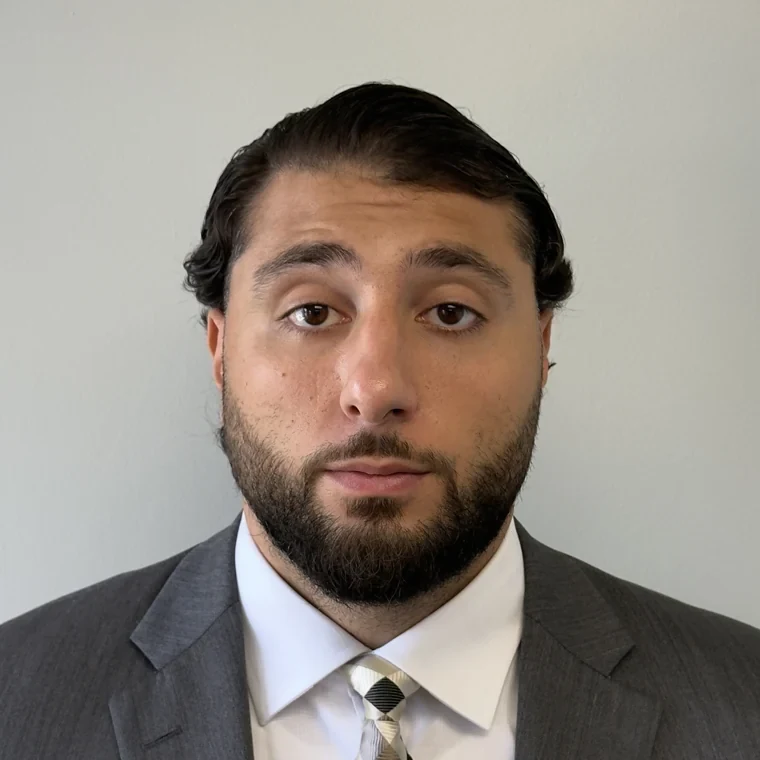
Talk to Moe Abdallah directly
When you call Moe Abdallah Law, you work directly with your attorney and get straight answers, not a call center. Moe takes on the insurance companies and fights for the maximum, and he keeps you updated at every step. The consultation is free and you pay nothing unless he wins.
Real recoveries for real Angelenos
Real recoveries from an attorney who takes your case personally and fights for the maximum.
Rear-ended by a driver who fled, and other firms turned her down. Moe opened an uninsured-motorist claim, proved she could not have been at fault, and secured the full policy limit.
Broke his sternum and had no insurance of his own, and his prior attorney ignored him. Moe took his calls day and night and recovered a settlement that covered his hospital bills and future treatment.
Cut off on the freeway and left with back and neck pain over four months of treatment. Moe secured the full policy limit for his pain and suffering, and his totaled car was reimbursed.
Past results do not guarantee a similar outcome. Every case is different and depends on its own facts.
Talk to a lawyer today, free
Tell us what happened. We respond fast, usually within the hour, and there's no fee unless we win. Available 24/7 · Se Habla Español.
Call (323) 716-1992