
Uber and Lyft Accident Lawyer in Los Angeles
If you were hurt in a rideshare crash, an Uber and Lyft accident lawyer in Los Angeles can figure out which insurance policy applies and pursue the full value of your injuries. Moe Abdallah Law, P.C. sorts out the app-phase coverage, deals with every insurer, and charges no fee unless we win.
If you were hurt in an Uber and Lyft accident in Los Angeles, a rideshare accident lawyer can sort out the insurance and pursue the full value of your injuries while you heal. As a Los Angeles Uber and Lyft accident lawyer, Moe Abdallah does that for passengers and others hurt in LA rideshare crashes. You get hurt in the back of a rideshare or by a driver logged into the app, and within days two insurers start pointing at each other so neither has to pay. We investigate the crash, pin down which coverage applies, take on both insurers, and stand between you and the pressure so you never face it alone. If we don't recover money on your rideshare claim, you owe no fee.
Where Los Angeles rideshare crashes happen: nightlife, freeways and the LAX run
Rideshare trips in Los Angeles cluster where people go out, fly and commute. Picture a Friday night pickup on Hollywood Boulevard, a ride home from Koreatown, an airport run down I-405, or a late trip across Downtown Los Angeles. Night is when LA crashes turn deadly. In federal crash data (NHTSA FARS, our tally for the City of Los Angeles, 2019 to 2024), 71 percent of fatal crashes happened after dark. Of those with a known hour, about 48 percent happened between 9 p.m. and 5 a.m. Those are the hours when a lot of people take a ride home instead of driving. The freeways that carry airport and cross-town rides show up in the same data. Counting ramps, US-101 was named in about 83 fatal crashes inside the city in those six years, I-5 in about 82, I-110 in about 80, I-10 in about 64 and I-405 in about 36. Among city surface streets, Western Avenue led with about 38 fatal crashes. Vermont Avenue and Figueroa Street both sit on LADOT's 2024 High Injury Network. Airport rides add one more layer. Los Angeles World Airports runs a Ground Transportation Permit Program that licenses over 2,500 private ground transportation companies at LAX, ride app operators included, and they must follow the LAX Ground Transportation Rules and Regulations. Where your crash happened tells us which police agency wrote it up, which cameras may have caught it, and which insurer will push back hardest. So the first thing Moe asks is simple. Where were you, and what time was it? Rideshare crashes outside the city follow the same coverage rules but different police agencies, as our pages for a Lyft accident lawyer in Glendale and an Uber accident lawyer in Santa Monica explain.
Answer 3 quick questions and Moe will call you, free. No fee unless we win.
Prefer to talk? Call (323) 716-1992, 24/7.
LAPD or CHP: getting the report for your LA rideshare crash
Who writes your crash report depends on the road. On a surface street inside the City of Los Angeles, LAPD handles it through one of four Traffic Divisions. West Traffic Division, 4849 Venice Blvd., covers Hollywood, Wilshire, Pacific and West Los Angeles, where a lot of nightlife and airport rides start. Central Traffic Division, 251 E. 6th St., covers downtown along with Rampart, Hollenbeck, Newton and Northeast. South Traffic Division works from 4125 S. Crenshaw Blvd. In the Valley, the traffic division office is at 7870 Nollan Place in Panorama City. To get an LAPD report, request it online through LAPD's portal, which runs through LexisNexis in English or Spanish. Expect a wait of 45 days or more while the report is reviewed and approved. Reports that involve an arrest, a death or a juvenile can't be released online. Those go by mail with the request form and a $19.00 check or money order to LAPD Records and Identification Division, P.O. Box 30158, Los Angeles, CA 90030. On a freeway, the California Highway Patrol writes the report. CHP's West Los Angeles Area office at 6300 Bristol Parkway in Culver City covers I-405 and I-10, and its area contains LAX. Near downtown, CHP's Central Los Angeles Area office at 777 W. Washington Blvd. handles I-5, I-10, US-101 and I-110. You can get a CHP report at any CHP office for a nominal fee, by mailing a CHP 190 form, or through CHP's online Crash Report Search. One warning. The report may not say whether the driver's app was on. That is why we pull the trip record too.
Los Angeles trauma centers that treat rideshare passengers
A passenger in the back seat can't brace, steer or brake. When a car slams into the rear door, you take the hit with no warning. In Los Angeles, paramedics take the most serious injuries to a trauma center. The LA County EMS Agency lists these Level I trauma centers serving the city: Los Angeles General Medical Center at 1200 North State Street, Cedars-Sinai Medical Center at 8700 Beverly Boulevard, Ronald Reagan UCLA Medical Center at 757 Westwood Plaza, and Harbor-UCLA Medical Center at 1000 West Carson Street in Torrance. Level II centers include Dignity Health-California Hospital Medical Center on South Grand Avenue downtown, Dignity Health-Northridge Hospital Medical Center on Roscoe Boulevard, and Providence Holy Cross Medical Center in Mission Hills for Valley crashes. If your child was riding with you, Children's Hospital Los Angeles on Sunset Boulevard is a pediatric Level I center. Not every ER is a trauma center. The county directory lists no trauma level for hospitals like Hollywood Presbyterian or Kaiser Los Angeles on Sunset. If you went to one of those first, keep those records as well as any from a later visit. Each stop creates its own chart. We gather every one, from the ambulance run sheet to the trauma team's notes to your follow-up care, because rideshare insurers comb those records for gaps. A clean, complete medical file is how we show the $1,000,000 policy, or the $60,000 per person UM/UIM coverage, what your injuries really cost.
When a DASH bus, Metro vehicle or city street is part of the crash
Some LA rideshare crashes pull in a public agency. A Metro bus clips your Uber on Wilshire Boulevard. A city DASH bus pulls out in front of your Lyft downtown. A dead signal or a broken city street helps cause the wreck. When that happens, a much shorter clock starts. Under California law, you must present a written claim to the public entity within six months of the injury (Government Code section 911.2). A written rejection then generally gives you six months from that notice to file suit (section 945.6). In Los Angeles, where you file depends on who owns the bus or the road. For the City of Los Angeles, which runs LADOT DASH, only the Office of the City Clerk can accept a claim. File through its online Claim for Damages portal, mail the signed form, or deliver it to City Hall, 200 North Spring Street, Room 395. The Clerk does not take emailed or faxed claims, and the City Attorney says no other office can receive one. For Metro buses and trains, Metro's Claim for Damages form goes to One Gateway Plaza, 99-PL-4, Los Angeles, CA 90012-2952. For county vehicles or county roads in unincorporated areas, the County form goes to the Board of Supervisors, Attention: Claims, 500 West Temple Street, Room 383. That county form dates from 2016, so confirm the address before you mail it. The rideshare company's insurance still matters here. We run both claims side by side so neither deadline slips.
Rideshare evidence in LA and the courthouse that hears your case
Rideshare evidence fades fast in a city this busy. The trip record in your Uber or Lyft app shows the driver, the car, the route and the times. It is the quickest way to prove which insurance phase applied, so screenshot it before anything changes. If the ride started or ended at LAX, the pickup point and timing in the app matter too. Next come the cameras. Shops and bars along Hollywood Boulevard, Sunset Boulevard and Wilshire Boulevard often record the street, and many systems tape over old footage within days. If a Metro or DASH bus was nearby, we ask the agency to save any video it has. Dashcams in other rideshare cars are worth chasing as well. If the case doesn't settle, a Los Angeles injury lawsuit worth over $35,000 is an unlimited civil case. LA Superior Court Local Rule 2.3 sends unlimited motor vehicle injury cases to the Stanley Mosk Courthouse, 111 North Hill Street, or to the Michael D. Antonovich Antelope Valley Courthouse in Lancaster. Per the court, a number of Stanley Mosk courtrooms are set aside for personal injury cases alone. In November 2024 the court announced a Pathway Pilot for some motor vehicle injury cases filed in its Van Nuys and Pomona and West Covina courthouses. We check whether that pilot still runs before we file. A rideshare claim worth $35,000 or less is limited civil and belongs at the Spring Street Courthouse, 312 North Spring Street. Moe builds every rideshare case as if it will be tried in one of these rooms.
Who gets hurt in a Los Angeles rideshare crash
You don't have to be riding in the Uber or Lyft to have a claim. We handle cases for passengers hurt in the back seat, other drivers hit by a rideshare car, pedestrians and cyclists struck in a crosswalk or bike lane, and the rideshare drivers themselves when another motorist causes the wreck. Each of these puts you in a different spot with the insurance, because who pays depends on who was at fault and whether the app was on. What stays the same is the pattern after the crash: an adjuster calls fast, sounds helpful, and starts building a reason to pay you less. The sooner we get involved, the more evidence we can lock down before it disappears.
Rideshare injuries cost more than the first offer
A rideshare passenger often has no warning before impact, and even a low-speed hit can leave injuries that last for years. We take rideshare claims for whiplash and neck injuries, herniated discs and other back injuries, concussions and traumatic brain injuries, broken bones, shoulder and knee tears that need surgery, internal injuries, and spinal-cord damage. The insurers in an Uber or Lyft case often float a number early, before your treatment ends, before a surgery is booked, before anyone knows how the injury will play out. Take that early check and you lose the right to come back for more, because a settlement closes the claim for good. We hold off until your doctors can say where your recovery is going, list every bill now and later, and value the claim on what the crash will cost you for life.
What to do after an Uber or Lyft accident in Los Angeles
Get medical care right away
Call 911 from the scene and get checked, even if you climbed out of the Uber or Lyft feeling fine. Adrenaline hides pain, and a gap in care is what both insurers will point to first.
Screenshot the ride and document the scene
Save the trip in your Uber or Lyft app: driver name, car, times, and route. Then get photos of the vehicles, the scene, and your injuries, plus the drivers' licenses, insurance, and plates, and the names and numbers of any witnesses. Get the police report number.
Let us deal with the driver's and the app's insurers
Do not give a recorded statement or take any offer before you speak with a lawyer, whether it's the driver's insurer or the rideshare company's. Either carrier can use your words to argue the claim belongs to the other one, or is worth less. The consultation is free.
How the insurance companies fight you, and how we fight back
In a rideshare crash you're not fighting one insurer, you're fighting the finger-pointing between two. The driver's personal insurer may say the app was on, so it's Uber or Lyft's problem. The rideshare company's insurer may say the app was off, or that its driver wasn't at fault, so it's the other guy's problem. While they argue, your bills pile up and nobody pays. Both will still run the usual playbook: call fast, ask for a recorded statement, request a broad medical authorization, and float a low settlement while you're hurting. We shut that down. We pull the trip data to prove exactly what phase the app was in, force the right policy to respond, handle every conversation so you never have to, and prepare each case as if it will go to trial. Once the trip record is in hand and the case is ready for trial, the finger-pointing has to stop and someone's policy has to answer.

What your rideshare accident claim can recover
- ✓Medical expenses. Ambulance and ER care, hospital stays, surgery, scans, prescriptions, and physical therapy after the rideshare crash, both what you've paid and what's still ahead.
- ✓Lost income. Shifts and paychecks you missed, plus lost earning power if your injuries cut into the work you can do later.
- ✓Pain & suffering. The pain, the anxiety that can follow you into every car ride after, and the everyday things you can no longer enjoy.
- ✓Property damage. Repair or replacement of your own car if a rideshare driver hit it, plus belongings damaged in the crash, like a phone or luggage on an airport run.
- ✓Future care. Rehab, follow-up visits, and any long-term care your injuries will need after the case is done.
- ✓Punitive damages. When a driver acted with malice, oppression or fraud, proven by clear and convincing evidence, California allows extra damages meant to punish (Civil Code § 3294). This can come up in some drunk-driving crashes.
California injury law, the deadlines that matter
In California, rideshare coverage depends on what the driver's app was doing. With the app off, the driver is an ordinary motorist and the driver's own auto policy is the starting point. California's minimum liability limits for policies issued or renewed on or after January 1, 2025 are $30,000 per person, $60,000 per accident and $15,000 for property damage (Vehicle Code § 16056), and other coverage, such as your own uninsured motorist coverage, may also apply. With the app on and waiting for a ride request, state law requires coverage that pays first of at least $50,000 per person and $100,000 per incident for death and injury, plus $30,000 for property damage, and the rideshare company must also carry at least $200,000 per occurrence in excess coverage (Public Utilities Code § 5433(c)). During that logged-on time, a personal auto policy doesn't have to cover the driver unless it expressly covers rideshare use (§ 5434). From the moment the driver accepts a ride until the ride is complete, the law requires at least $1,000,000 in coverage that pays first for death, personal injury and property damage (§ 5433(b)(1)). Since January 1, 2026, SB 371 sets the rideshare company's required uninsured/underinsured motorist coverage at $60,000 per person and $300,000 per incident, and it applies only from when a passenger gets in the car until the passenger gets out (§ 5433(b)(2)). These amounts are minimums, not caps on what the company can owe (§ 5433(f)). You generally have two years from the date of the crash to file a personal-injury lawsuit against a private party (Code of Civil Procedure § 335.1) and three years for vehicle damage (§ 338(c)(1)). If a public entity is involved, you must first present a written claim within six months of the injury (Government Code § 911.2). California follows pure comparative negligence, so you can recover even if you were partly at fault, with your award reduced by your percentage of fault (Li v. Yellow Cab Co. (1975) 13 Cal.3d 804).
Why people hurt in LA Uber and Lyft crashes call Moe Abdallah Law
Moe works your rideshare case himself
Attorney Moe Abdallah handles your Uber or Lyft claim personally. He takes on the driver's insurer and the app's insurer, and he updates you by call and text as the case moves.
No fee unless we win
No upfront cost, and no fee at all unless your rideshare claim recovers money. The consultation is always free.
We prepare to win
We get each rideshare case ready for trial: the trip data, the crash evidence, the experts it needs, and firm negotiation with both insurers.
Frequently Asked Questions
Nothing upfront. Our contingency fee comes only out of what we recover for you, from whichever policy pays. If the claim brings in nothing, you pay us nothing. The consultation is always free.
Usually two years from the date of the crash to file a lawsuit against a private party under California Code of Civil Procedure § 335.1, and three years for vehicle damage (§ 338(c)(1)). If a government entity is involved, such as a city bus or government vehicle, the rules are stricter. You must present a written claim to that agency within six months of the injury (Government Code § 911.2), and if it rejects the claim in writing, you generally have six months from that notice to sue (§ 945.6). Call soon, before street video is erased and the trip details get harder to pin down.
The answer turns on the driver's app status at the moment of the crash. With the app off, the driver's personal policy is the starting point, and California's minimum is $30,000/$60,000/$15,000. With the app on and waiting for a request, state law requires at least $50,000 per person, $100,000 per incident and $30,000 for property damage, plus $200,000 in excess coverage. From the moment the driver accepts a ride until the ride ends, at least $1,000,000 in coverage applies (Public Utilities Code § 5433). We prove which phase the app was in so the right policy pays.
Yes. As a passenger you almost never share any fault, so you can pursue a claim no matter which driver caused the crash. If your rideshare driver was at fault, the $1,000,000 in coverage California requires from ride acceptance until the trip ends generally applies. If another driver caused the crash and had no insurance or too little, the rideshare company's uninsured/underinsured motorist coverage of $60,000 per person and $300,000 per incident may apply. We handle the whole thing for you.
That depends on whether the app was on and what phase it was in. If the rideshare driver had accepted a ride, was heading to a pickup or had a passenger, at least $1,000,000 in coverage applies. If the app was on but no ride was accepted yet, the lower $50,000/$100,000/$30,000 coverage applies, plus $200,000 in excess coverage. If the app was off, it's their personal insurance. We pull the trip data to find out and force the right insurer to respond.
Rideshare claims are harder than regular ones because two insurers point at each other to avoid paying. If you were hurt, a lawyer usually puts more money in your pocket even after fees, because we know how the coverage works and how to prove it. Not sure? Call and we'll give you a no-cost, honest read on your rideshare claim.
No. You are not required to give any insurer a recorded statement, whether it's the driver's or the rideshare company's, and it's used to twist your words and shrink your claim. Decline politely and call us first. We'll handle the conversation for you.
Not while you're still treating. Signing a release ends your rideshare claim for good, and a quick offer usually comes before anyone has sorted out which policy should pay or what your care will cost. Send it to us and we'll look it over for free first.
Yes. The rush of adrenaline after a crash can hide whiplash, back pain or a concussion for days. With two insurers looking for reasons not to pay, a delay in treatment hands them one, so get seen soon and keep every record. Then call us.
If you were a passenger, the rideshare company must carry uninsured/underinsured motorist coverage of $60,000 per person and $300,000 per incident from the moment you get in the car until you get out (Public Utilities Code § 5433(b)(2), as amended by SB 371, effective January 1, 2026). If you were in your own car, your own UM/UIM coverage is usually where to look. We figure out which coverage applies and pursue it for you.
It depends on your injuries and how much the two insurers fight over coverage. A soft-tissue rideshare claim may resolve in a few months, while a serious injury takes longer because we hold out until your prognosis is clear. Moe sends you updates by call or text the whole way.
Yes, Se Habla Español. We'll talk through your Uber or Lyft crash in whichever language suits you, Spanish or English.
It depends on where the crash happened. On a city street, LAPD writes it. Request it online through LAPD's portal and wait at least 45 days, or mail the request form with a $19.00 check or money order to LAPD Records and Identification Division, P.O. Box 30158, Los Angeles, CA 90030. Reports that involve an arrest, a death or a juvenile go by mail only. On a freeway, CHP writes it. Get it at a CHP office, by mailing a CHP 190 form, or through CHP's online Crash Report Search. We can request it for you.
On a freeway, the California Highway Patrol handles it. CHP's West Los Angeles Area office, 6300 Bristol Parkway in Culver City, (424) 577-8700, covers I-405 and I-10, and its area contains LAX. If you aren't sure which agency came, check the card the officer gave you or ask for the report number. Save your trip receipt too. It shows the driver, the pickup and the route. If you were riding as the passenger, the driver had already accepted your ride, so the $1,000,000 coverage period applied.
You may have two claims: one against the rideshare insurance and one against the agency. A claim against a public entity must be presented in writing within six months of the injury (Government Code section 911.2). For a DASH bus, file with the Los Angeles City Clerk at 200 North Spring Street, Room 395, or through its online portal. For a Metro bus or train, mail Metro's Claim for Damages form to One Gateway Plaza, 99-PL-4. Miss that window and you can lose the claim against the agency, so call us early.
Other ways we help
Uber / Lyft Accidents lawyer by area
We represent uber / lyft accidents victims across Los Angeles County:
Authoritative resources: California Courts, self-help for injury claims · Cal. Code Civ. Proc. § 335.1, 2-year deadline · California DMV · California Office of Traffic Safety, crash data
Sources & local resources
- Request a Traffic Report · Los Angeles Police Department
- (565) West Los Angeles · California Highway Patrol
- Ground Transportation Permits · Los Angeles World Airports
- 9-1-1 Receiving Hospital Directory, Reference No. 501 (rev. 10-01-26) · LA County EMS Agency, Department of Health Services
- Claim for Damage · Office of the Los Angeles City Clerk
- Local Rules, Chapter 2 (Rules 2.2 and 2.3, filing locations) · Superior Court of California, County of Los Angeles
- FARS raw data files, 2019-2024 national CSV (2024 file shown; same path pattern for each year) · NHTSA, U.S. Department of Transportation
- Cal. Pub. Util. Code § 5433 · California Legislative Information
- Claim for Damages form · LA Metro
- High Injury Network (2024) · City of Los Angeles GeoHub (LADOT)
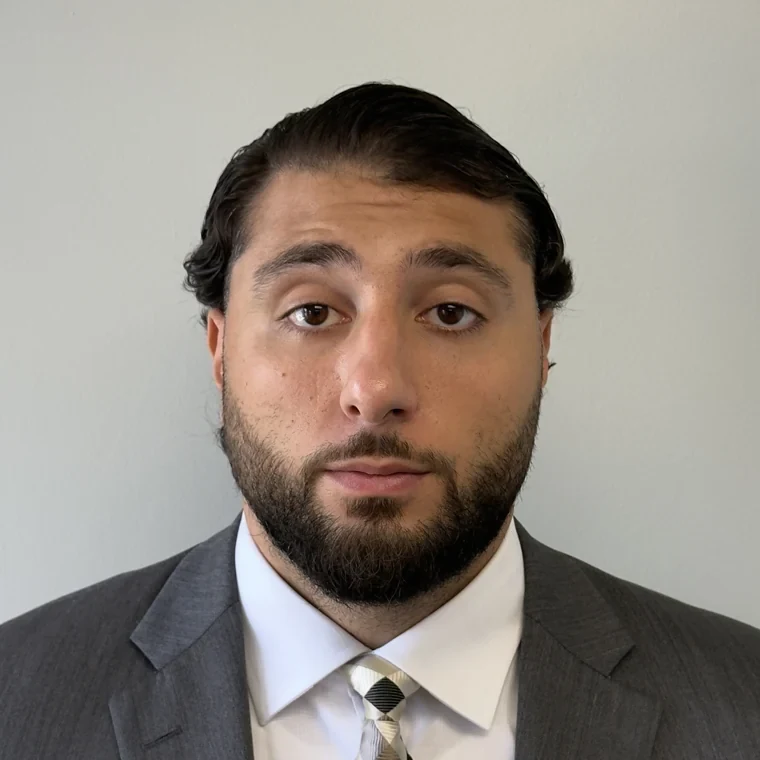
Talk to Moe Abdallah directly
When you call Moe Abdallah Law, you work directly with your attorney and get straight answers, not a call center. Moe takes on the insurance companies and fights for the maximum, and he keeps you updated at every step. The consultation is free and you pay nothing unless he wins.
Real recoveries for real Angelenos
Real recoveries from an attorney who takes your case personally and fights for the maximum.
Rear-ended by a driver who fled, and other firms turned her down. Moe opened an uninsured-motorist claim, proved she could not have been at fault, and secured the full policy limit.
Broke his sternum and had no insurance of his own, and his prior attorney ignored him. Moe took his calls day and night and recovered a settlement that covered his hospital bills and future treatment.
Cut off on the freeway and left with back and neck pain over four months of treatment. Moe secured the full policy limit for his pain and suffering, and his totaled car was reimbursed.
Past results do not guarantee a similar outcome. Every case is different and depends on its own facts.
Talk to a lawyer today, free
Tell us what happened. We respond fast, usually within the hour, and there's no fee unless we win. Available 24/7 · Se Habla Español.
Call (323) 716-1992