
Hit and Run Accident Lawyer in Los Angeles
If you were hurt by a driver who fled in Los Angeles, a hit and run accident lawyer can help you recover even when the driver is never identified. Your own uninsured motorist coverage can pay for your injuries if the fleeing car made physical contact with you or your vehicle, the crash was reported to police within 24 hours, and you file a sworn statement with your insurer within 30 days. Report the crash right away, then call Moe Abdallah Law, P.C.
If you were hurt by a driver who fled the scene in Los Angeles, a hit and run accident lawyer can help you recover compensation even when the other driver is never found. As a Los Angeles hit and run accident lawyer, Moe Abdallah handles exactly these fleeing-driver claims. It feels hopeless when someone hits you and drives off, but you are not out of options. Your own uninsured motorist coverage is built for exactly this moment, and investigators, cameras, and witnesses can sometimes still track the driver down. We take over the process, deal with the insurers, and fight for the full value of your injuries. You owe us no fee unless we recover money for you, whether or not the driver is ever caught.
How often drivers flee fatal crashes in Los Angeles
Hit-and-run is not rare in this city. In federal crash data (NHTSA FARS, our own tally for the City of Los Angeles), at least one vehicle was coded hit-and-run in 436 of the 1,822 fatal crashes from 2019 through 2024. That is almost 1 in 4. In 2024 alone it was 87 of 295 fatal crashes, about 29 percent. People on foot pay the highest price. Of 867 fatal crashes involving a pedestrian in those years, 324 involved a hit-and-run vehicle. Darkness makes a plate hard to catch, and 71 percent of all fatal crashes in the city happened after dark. Which streets see the most deadly crashes of any kind? Western Avenue was named in about 38 fatal crashes, the most of any city surface street in that data. Foothill Boulevard followed at about 33, Figueroa Street at about 30 and Vermont Avenue at about 28. LADOT says its High Injury Network covers 6 percent of city streets, over 450 miles, yet accounts for 70 percent of deaths and severe injuries for people walking. LADOT's Avalon Boulevard Safety Project counted 149 people killed or severely injured on Avalon between 2009 and 2017, and 44 percent of them were walking or riding a bike. These numbers count deaths and severe injuries, not every crash. They still show why a fleeing driver is a real risk on LA streets. They also show why the uninsured motorist coverage on your own policy matters so much here. If a driver hit you and vanished, you are far from alone, and you still have a path forward. To see which Los Angeles streets had the most felony hit-and-runs in 2025, read our dangerous streets data.
Answer 3 quick questions and Moe will call you, free. No fee unless we win.
Prefer to talk? Call (323) 716-1992, 24/7.
Your 24-hour report: LAPD inside the city, CHP on the freeway
For an unknown-driver claim, California requires a report within 24 hours to the city police, or to the sheriff or CHP outside city limits (Insurance Code section 11580.2(b)). Inside the City of Los Angeles, the city police is LAPD. Call 911 at the scene. If no officer came, call LAPD's non-emergency line, 877-ASK-LAPD (877-275-5273), and ask how to make the report. You can also reach the Traffic Division for your area. LAPD's Central Traffic Division sits at 251 E. 6th St., 213-833-3746, and South Traffic Division at 4125 S. Crenshaw Blvd., 323-421-2577. West Traffic Division is at 4849 Venice Blvd., 213-473-0222. Valley Traffic Division is at 7870 Nollan Place in Panorama City, 818-644-8000. Freeways in the city are CHP territory. CHP's Central Los Angeles Area office, (213) 815-2000, covers I-5, I-10, US-101 and I-110 near downtown. West Los Angeles Area, (424) 577-8700, covers I-405 and I-10. East Los Angeles Area, (213) 987-0520, covers I-710, SR-60 and I-5. The UM statute names the city police for crashes inside city limits. So if CHP took a freeway crash inside the city, make an LAPD report within the same 24 hours too, to be safe. Write down each officer's name and report number. Then get copies. LAPD reports are requested online after at least 45 days. If police arrested the driver, the report can't be released online, so request it by mail with a $19.00 check or money order. CHP releases only reports it wrote.
LA trauma centers and the injuries a fleeing driver leaves behind
Many hit-and-run victims in Los Angeles are outside a car. They are walking, riding a bike or on a motorcycle, with nothing between them and the bumper. Those crashes often cause head injuries, broken legs and hips, spine damage and internal bleeding. Paramedics take the worst of them to a trauma center. The LA County EMS Agency lists Los Angeles General Medical Center, 1200 North State Street, as a Level I trauma center. The same is true of Cedars-Sinai Medical Center on Beverly Boulevard, Ronald Reagan UCLA Medical Center on Westwood Plaza, and Harbor-UCLA Medical Center at 1000 West Carson Street in Torrance. Level II centers include Dignity Health-California Hospital Medical Center downtown, Dignity Health-Northridge Hospital Medical Center and Providence Holy Cross Medical Center in Mission Hills. If a child was struck, Children's Hospital Los Angeles on Sunset Boulevard is a pediatric Level I center. Those trauma charts do double duty in a hit-and-run. Your UM coverage only applies to an unknown driver if the fleeing vehicle made physical contact with you or your car. The paramedic and ER notes usually record how you were hurt, such as struck by a car, and the injury pattern itself can show contact. We collect every record from the ambulance to physical therapy. Then we put the medical proof next to the police report and the photos of your car, so your insurer has a hard time claiming the phantom vehicle never touched you.
If a city, county or Metro vehicle hit you and kept going
Sometimes a witness or a video shows that the car that fled belonged to a public agency. It could be a city truck, an LADOT DASH bus, a Metro bus or a county vehicle. That changes your path. The UM statute, Insurance Code section 11580.2(b), carves government-owned vehicles out of what counts as an uninsured vehicle. So instead of your own UM coverage, you go after the agency itself, and a much shorter clock applies. Before any lawsuit, the public entity must receive your written claim within six months of the injury (Government Code section 911.2). If the agency rejects it in writing, you generally have six months from that notice to sue (section 945.6). A road defect can bring in the city too. A dead streetlight over a crosswalk or a broken signal may point to the agency that owns the street. In Los Angeles, a claim against the city goes only to the Office of the City Clerk, through its online portal, by mail, or in person at City Hall, 200 North Spring Street, Room 395. Metro claims go on Metro's Claim for Damages form to One Gateway Plaza. County claims go to the Board of Supervisors, Attention: Claims, 500 West Temple Street, Room 383. The County's form dates from 2016, so confirm that address before you mail it. Here is the trap. Six months passes fast while you wait for police to find the driver. If there is any sign a public vehicle or road was involved, we file the government claim early to protect it, even before we know for sure. We would rather file a claim we don't need than lose one you do.
Metro video, freeway patrol trucks and where your LA case is heard
Los Angeles has a few evidence sources most people never think about after a hit-and-run. Metro runs buses plus the A, B, C, D, E, G, J and K Lines. LADOT DASH buses serve downtown and 27 neighborhoods across the city. If your crash happened on a bus route or near a station like Wilshire/La Brea, we ask the agency right away to save any video it may have. On the freeway, Metro's Freeway Service Patrol runs free tow and service trucks on all major LA County freeways with CHP and Caltrans. They make about 25,000 assists a month, weekdays 6 a.m. to 7 p.m. and weekends 10 a.m. to 6:30 p.m. If anyone is hurt, call 911 first. If your car is stuck and disabled, dial 5-1-1 and say Motorist Aid. If a patrol truck stopped near you, note it, because its crew may have seen the car that fled. Then comes the question of where your case ends up. If the driver is never found, your claim runs against your own insurer. Unless you and your insurer agree on the amount within two years of the crash, you must formally start arbitration within those two years by certified mail, return receipt requested (Insurance Code section 11580.2(i)). If the driver is found and insured, a lawsuit worth over $35,000 is an unlimited civil case. LA Superior Court Local Rule 2.3 sends those to the Stanley Mosk Courthouse, 111 North Hill Street, or the Antelope Valley Courthouse in Lancaster. Smaller cases go to the Spring Street Courthouse. Moe handles each step for you.
Fleeing the scene is a crime, and the driver had a duty to stop
California law requires the driver of any vehicle involved in a crash to stop. When someone is hurt or killed, that driver must also give their name, address, vehicle registration number and owner information, and give injured people reasonable help, including getting them to medical care (Vehicle Code sections 20001(a) and 20003). Leaving the scene of an injury crash can be charged as a felony or a misdemeanor. It carries up to one year in county jail or a state prison term, a fine of $1,000 to $10,000, or both. If the crash caused death or permanent, serious injury, the prison term can be two, three or four years (Vehicle Code section 20001(b)). Leaving a crash that damaged only property is a misdemeanor, punishable by up to six months in county jail, a fine of up to $1,000, or both (Vehicle Code section 20002). That duty matters to your case. A driver who runs often has a reason, whether it's no insurance, a suspended license, or drinking. If the driver is later caught, the criminal court can also order restitution to you. We keep the criminal side in view while we build your civil claim so nothing that could help you gets left behind.
How your uninsured motorist coverage steps in
In most hit-and-run cases, the path to recovery runs through your own uninsured motorist coverage, often shown as UM or UMBI on your policy. It pays for your bodily injuries when the at-fault driver has no insurance or cannot be identified at all. In plain terms, your own insurer stands in for the driver who fled and pays what that driver should have paid, up to your UM limits. It does not pay for damage to your car (Insurance Code section 11580.2(c)(1)). When the driver is unknown, California law sets three conditions. The injury must come from physical contact between the fleeing vehicle and you or the car you were in. The crash must be reported within 24 hours to the city police, or to the sheriff or CHP if it happened outside city limits. And you must file a sworn statement with your insurer within 30 days after that report (Insurance Code section 11580.2(b)(1)-(2)). A driver who forces you off the road but never touches you or your car does not meet the contact rule. If the fleeing driver is later found and has insurance, the case usually becomes a regular claim against that driver's insurer instead. We handle the report, the sworn statement and the paperwork, and we push your own insurer to treat your claim fairly, because even your own carrier will try to pay you less than you deserve. Many drivers don't realize they carry this coverage. California auto liability policies include it unless a named insured signed a written agreement to delete or lower it (Insurance Code section 11580.2(a)). If you are covered under more than one policy, such as one held by a relative you live with, we check how each one applies, but California does not let you add UM limits from different policies together (Insurance Code section 11580.2(d), (q)). The goal is simple: leave no source of recovery on the table.

Finding the driver: cameras, witnesses, and investigators
A driver who flees is not always gone for good. Los Angeles is full of cameras, from traffic signals and businesses to doorbells and dashcams, and footage often captures a plate, a make, or a direction of travel. Witnesses remember details in the moment that fade fast, so we move quickly to find and record them. When it helps, we bring in investigators to canvass the area and pull records before they disappear. Police also work these cases, and a prompt, detailed report gives them and us a real chance. Even a partial plate or a paint transfer on your car can be the thread that identifies the driver and their insurance.
What to do right after a hit-and-run in Los Angeles
Get safe and get medical care
Move out of traffic if you can, call 911, and get checked out even if you feel okay. The shock of being hit and left behind can hide pain, and your insurer will point to any delay in treatment to cut what it pays.
Report it to police within 24 hours and write down everything
Report the crash to the city police, or to the sheriff or CHP outside city limits, within 24 hours. When the driver is unknown, that report is a legal condition of your uninsured motorist coverage, not just good advice. A driver in a crash with injuries also has to report it to the DMV on an SR-1 form within 10 days (Vehicle Code section 16000). Note the fleeing vehicle's plate, color, make, and direction, and photograph the scene, your car, and any injuries. Get names and numbers of witnesses.
Send your insurer a sworn statement within 30 days, then call us
Tell your own insurer about the hit-and-run and file a sworn statement with it within 30 days after your police report, or your uninsured motorist coverage can be lost. Don't give a recorded statement or accept an offer first. The consultation is free.
How your own insurer fights a hit-and-run claim, and how we fight back
In a hit-and-run, the insurer you deal with is often your own, and that does not make it your friend. On a phantom-driver claim, it still wants to pay out as little as it can. It may claim there wasn't really a phantom vehicle, that you waited too long to report, that your injuries were already there, or that you were partly at fault. It will call sounding helpful, ask for a recorded statement, and float a fast, low settlement while you're still hurting. We shut those tactics down. We handle every conversation so you never have to, we gather the police report, camera footage, and witness accounts that prove a hit-and-run occurred, and we build your medical and liability evidence into a demand your insurer can't lowball. We prepare each case as if it will go to trial, which is exactly why insurers take represented clients seriously and pay more.
What your hit-and-run claim can recover
- ✓Medical expenses. The ER visit after the driver fled, plus hospital stays, surgery, scans, prescriptions and physical therapy, now and in the years ahead.
- ✓Lost income. Paychecks you lost while you healed, and lower earning power if the injuries cut into the work you can do later.
- ✓Pain & suffering. The pain itself, the fear and stress of being hit and left behind, and the parts of daily life you can no longer enjoy.
- ✓Property damage. Repair or replacement of your vehicle. Uninsured motorist bodily injury coverage does not pay for this, so it usually comes from your collision coverage, or from the driver's insurer if the driver is found.
- ✓Future care. Rehab, follow-up care and any long-term help your injuries will require down the road.
- ✓Restitution. If the driver is caught, court-ordered restitution as part of the criminal case.
California injury law, the deadlines that matter
Fleeing a crash is a crime in California. The driver of any vehicle involved in a crash that injures or kills someone must stop, give their name, address, registration and owner information, and give injured people reasonable help (Cal. Veh. Code §§ 20001(a), 20003). Leaving the scene of an injury crash can be charged as a felony or a misdemeanor, with up to one year in county jail or a state prison term and a fine of $1,000 to $10,000. If the crash caused death or permanent, serious injury, the possible prison term rises to two, three or four years (Veh. Code § 20001(b)). Leaving a crash that damaged only property is a misdemeanor, punishable by up to six months in county jail, a fine of up to $1,000, or both (Veh. Code § 20002). For you as the victim, your own uninsured motorist (UM) coverage is often the way forward. When the driver who hit you cannot be identified, UM pays for your bodily injuries, but not your property damage, only if three conditions are met: the injury came from physical contact with the hit-and-run vehicle, the crash was reported within 24 hours to the city police (or the sheriff or CHP outside city limits), and you filed a sworn statement with your insurer within 30 days after that report (Cal. Ins. Code § 11580.2(b)(1)-(2), (c)(1)). The 24-hour report is a legal requirement, not just a good idea. You generally have two years from the date of the crash to file a personal-injury lawsuit (Cal. Code Civ. Proc. § 335.1). For a UM claim, you must also do one of three things within two years of the crash: sue the uninsured motorist, reach an agreement with your insurer on the amount owed, or formally start arbitration by written notice sent by certified mail, return receipt requested (Ins. Code § 11580.2(i)). Even when your insurer pins part of the blame on you, the pure comparative negligence rule of Li v. Yellow Cab Co. (1975) 13 Cal.3d 804 still lets you recover in a hit-and-run claim, with your award cut by your own percentage of fault.
Why hit-and-run victims in Los Angeles choose Moe Abdallah Law
Moe handles your hit-and-run claim himself
Attorney Moe Abdallah handles your claim himself, deals with your insurer directly, and calls or texts you with updates as the case moves.
No fee unless we win
No upfront cost, and no fee at all unless we recover money for you, even when the driver is never found. The consultation is always free.
We chase the evidence fast
Camera footage and witness memories fade within days. We move quickly to identify the driver and protect your uninsured motorist claim.
Frequently Asked Questions
Nothing upfront. We take hit-and-run cases on contingency, so our fee comes out of the money we recover from your UM claim or from the driver, if found. No recovery means no fee. The consultation is always free.
Often, yes. This is what your own uninsured motorist coverage is for. When the driver can't be identified, it pays for your injuries if the fleeing vehicle made physical contact with you or your car, the crash was reported to police within 24 hours, and you filed a sworn statement with your insurer within 30 days. That coverage leaves out repairs to your car when the driver is unknown. We handle the claim and hold your insurer to fair treatment.
Uninsured motorist coverage, often shown as UM or UMBI, pays for your injuries when the other driver has no insurance or, as in a hit-and-run, can't be identified. Every California auto liability policy includes it unless a named insured signed a written agreement to delete it or lower it. If you kept it, the limits can't be lower than $30,000 per person and $60,000 per accident on policies issued or renewed since January 1, 2025. Send us your policy and we'll tell you what you have.
Within 24 hours. When the driver is unknown, California requires a report to the city police, or to the sheriff or CHP outside city limits, within 24 hours, and a sworn statement to your own insurer within 30 days after that (Insurance Code section 11580.2(b)). Missing either deadline can cost you your uninsured motorist coverage, so don't put it off. Then call us.
For a lawsuit against an identified driver, you generally have two years from the crash (Code of Civil Procedure section 335.1). For an uninsured motorist claim, within two years of the crash you must sue the uninsured driver, reach an agreement with your insurer, or formally start arbitration by written notice sent by certified mail, return receipt requested (Insurance Code section 11580.2(i)). Those are outer limits. The 24-hour police report and 30-day sworn statement come much sooner.
If you weren't hurt and the damage is small, you may be able to handle it yourself. But if you were injured, uninsured motorist claims have strict rules: a police report within 24 hours, a sworn statement within 30 days, and a two-year deadline to sue, settle, or start arbitration. Your own insurer will also try to pay you less. With a lawyer, hit-and-run victims usually net more even after the fee, because these UM rules leave little room for mistakes. Not sure? Call us for a straight answer about your hit-and-run claim, free.
Be careful. Even in a hit-and-run where you're using your own coverage, a recorded statement can be used to twist your words and shrink your claim. You often have some duty to cooperate, but you should not go it alone. Call us before you talk to the adjuster, and we will take that call for you.
In most cases, not until your treatment is finished. Signing a release closes your hit-and-run claim for good, and a quick offer from your insurer rarely covers what your injuries are worth. Send us the offer and we'll review it free before you sign.
Yes. The shock of being hit by a driver who sped off can mask pain, and whiplash or a concussion may not show for days. Insurers often deny claims by pointing to a gap between the crash and your first treatment, so see a doctor soon and save every record. Your chart also helps prove the physical contact your UM claim needs. Then call us.
Sometimes, yes. Los Angeles is full of traffic, business, doorbell, and dash cameras, and witnesses often catch a plate or a description. Even a partial plate or paint transfer on your car can be the thread. We move fast to find the driver before the evidence disappears.
Many drivers worry about this. How a claim affects your premium depends on your insurer's rating rules and on who was at fault, so send us your policy and we'll walk you through how it applies to you. Don't let that worry stop you from using coverage you've already paid for.
You can still recover. Even with a driver who fled, the pure comparative negligence rule in Li v. Yellow Cab Co. (1975) 13 Cal.3d 804 means your share of fault lowers your compensation but does not wipe it out. Your insurer may inflate your share of the blame to cut its payout, and we answer that with evidence.
It depends on your injuries and whether the driver is found. A claim with clear proof of contact and modest injuries may settle in a few months. Serious injuries take longer, since we won't settle until your doctors know your long-term outlook. You'll hear from us at each stage, so you always know where your claim stands.
Request it online through LAPD's portal, which runs through LexisNexis in English or Spanish, and wait at least 45 days so the report can be reviewed and approved. If police arrested the driver, or someone died, the report can't be released online. In that case, mail the Traffic Collision Report Request form with a $19.00 check or money order payable to the LAPD to Records and Identification Division, P.O. Box 30158, Los Angeles, CA 90030. LAPD's recorded status line is (213) 486-8130. We can request it for you.
CHP handles crashes on LA freeways. Call 911 from the scene. For follow-up, CHP's Central Los Angeles Area office is at (213) 815-2000 and its West Los Angeles Area office is at (424) 577-8700. For an unknown-driver UM claim, the law names the city police for crashes inside city limits, so call 877-ASK-LAPD and make an LAPD report within the same 24 hours too. Then file your sworn statement with your insurer within 30 days (Insurance Code section 11580.2(b)).
Call 911 and let paramedics decide. They take serious injuries to a trauma center. Level I trauma centers serving the city include Los Angeles General Medical Center, Cedars-Sinai Medical Center, Ronald Reagan UCLA Medical Center and Harbor-UCLA Medical Center. For injured kids, Children's Hospital Los Angeles serves as a pediatric Level I center. Wherever you go, keep every record. The notes that say you were struck by a car help prove physical contact, which your uninsured motorist claim needs when the driver is never found.
Other ways we help
Hit-and-Run lawyer by area
We represent hit-and-run victims across Los Angeles County:
Los Angeles crash data: Hit-and-run statistics, Los Angeles
Authoritative resources: California Courts, self-help for injury claims · Cal. Code Civ. Proc. § 335.1, 2-year deadline · California DMV · California Office of Traffic Safety, crash data
Sources & local resources
- FARS raw data files, 2019-2024 national CSV (2024 file shown; same path pattern for each year) · NHTSA, U.S. Department of Transportation
- Vision Zero Maps: High-Injury Network · LADOT Livable Streets
- Avalon Boulevard Safety Project · LADOT Livable Streets
- Request a Traffic Report · Los Angeles Police Department
- (590) Central Los Angeles · California Highway Patrol
- Claim for Damage · Office of the Los Angeles City Clerk
- 9-1-1 Receiving Hospital Directory, Reference No. 501 (rev. 10-01-26) · LA County EMS Agency, Department of Health Services
- Freeway Service Patrol · LA Metro
- Cal. Ins. Code § 11580.2 · California Legislative Information
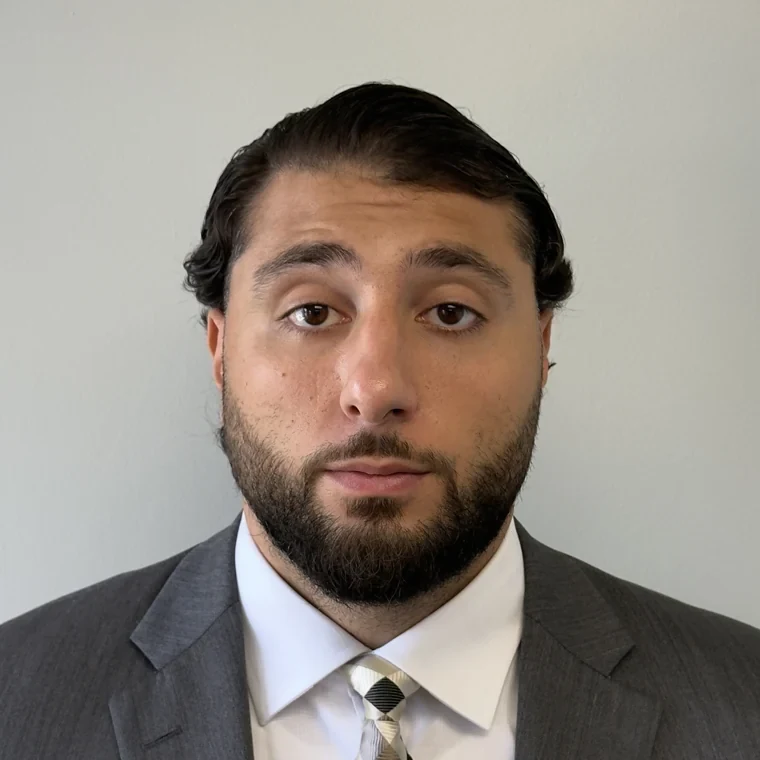
Talk to Moe Abdallah directly
When you call Moe Abdallah Law, you work directly with your attorney and get straight answers, not a call center. Moe takes on the insurance companies and fights for the maximum, and he keeps you updated at every step. The consultation is free and you pay nothing unless he wins.
Real recoveries for real Angelenos
Real recoveries from an attorney who takes your case personally and fights for the maximum.
Rear-ended by a driver who fled, and other firms turned her down. Moe opened an uninsured-motorist claim, proved she could not have been at fault, and secured the full policy limit.
Broke his sternum and had no insurance of his own, and his prior attorney ignored him. Moe took his calls day and night and recovered a settlement that covered his hospital bills and future treatment.
Cut off on the freeway and left with back and neck pain over four months of treatment. Moe secured the full policy limit for his pain and suffering, and his totaled car was reimbursed.
Past results do not guarantee a similar outcome. Every case is different and depends on its own facts.
Talk to a lawyer today, free
Tell us what happened. We respond fast, usually within the hour, and there's no fee unless we win. Available 24/7 · Se Habla Español.
Call (323) 716-1992