
Uber Accident Claim in California: How Uber and Lyft Crash Claims Work
An Uber accident claim in California turns on one question: what was the driver's app doing at the moment of the crash? Moe Abdallah Law, P.C. in Los Angeles handles Uber and Lyft crash claims for passengers, other drivers, and pedestrians, and you pay nothing unless we win.
If an Uber or Lyft car hit you, or you were hurt riding in one, your claim does not work like a normal car crash claim. California sets different insurance rules depending on whether the driver's app was off, on and waiting for a ride, or in the middle of a trip. The amounts range from your driver's personal policy to $1,000,000 in coverage, and the 2026 change to passenger uninsured motorist coverage matters if the other driver had no insurance. This guide walks you through each period, who can claim, how to get the trip record, how to deal with the company's insurer, and the deadlines that can end your case. Everything here comes from the statutes and agency pages listed at the bottom, which we opened and read in October 2026. Moe Abdallah handles car, truck, motorcycle, pedestrian, Uber and Lyft, and uninsured motorist crash cases, so you can call (323) 716-1992 any time for a free review.
The three insurance periods decide who pays
Rideshare insurance in California follows the driver's app status, not just who caused the crash. The state recognizes three situations. In the first, the app is off and the driver is using the car for personal reasons. Only the driver's own personal auto policy applies, and the company's commercial coverage does not. In the second, the driver is logged on and waiting for a ride request. Public Utilities Code section 5433(c) governs that stretch. In the third, the driver has accepted a ride request and is heading to pick someone up or is carrying a passenger. Section 5433(b) governs that stretch, and it carries the largest coverage. Insurers fight hard over which period applies, because the difference can be hundreds of thousands of dollars. One more detail helps you: the waiting-period coverage also picks up after a ride ends. The law counts the gap between the end of one ride and the driver accepting another, or logging off, as the same waiting period. The CPUC, which regulates rideshare companies, numbers the periods differently on its insurance requirements page: its Period 1 is the app open and waiting for a match, Period 2 is a match accepted with the driver on the way, and Period 3 is a passenger in the car. Driving with the app off falls outside all three. Your first job after a crash is to pin down the period, because everything else follows from it.
Coverage when the app is off or the driver is waiting
With the app off, you are dealing with an ordinary driver and an ordinary personal policy. The CPUC's insurance page starts its first rideshare period when the app is open and the driver is waiting for a match. Once the driver logs on and waits for a request, section 5433(c) requires first-in-line coverage of at least $50,000 for injury or death per person, $100,000 per incident, and $30,000 for property damage. Ask for the actual certificate of insurance and read the numbers yourself, because the statute only sets minimums and the policy in force decides what is actually available. The law also requires the company to carry excess coverage of at least $200,000 per occurrence for liability above those limits. The insurer that provides the waiting-period coverage is the only one with the duty to defend the claim. Those limits are small if you have a fractured spine, a brain injury, or surgery bills, and that is why proving the driver had already accepted a ride, if true, can change your whole case. Section 5433(d) also says you do not have to wait for a personal auto policy to deny the claim first.
Coverage once the driver accepts a ride
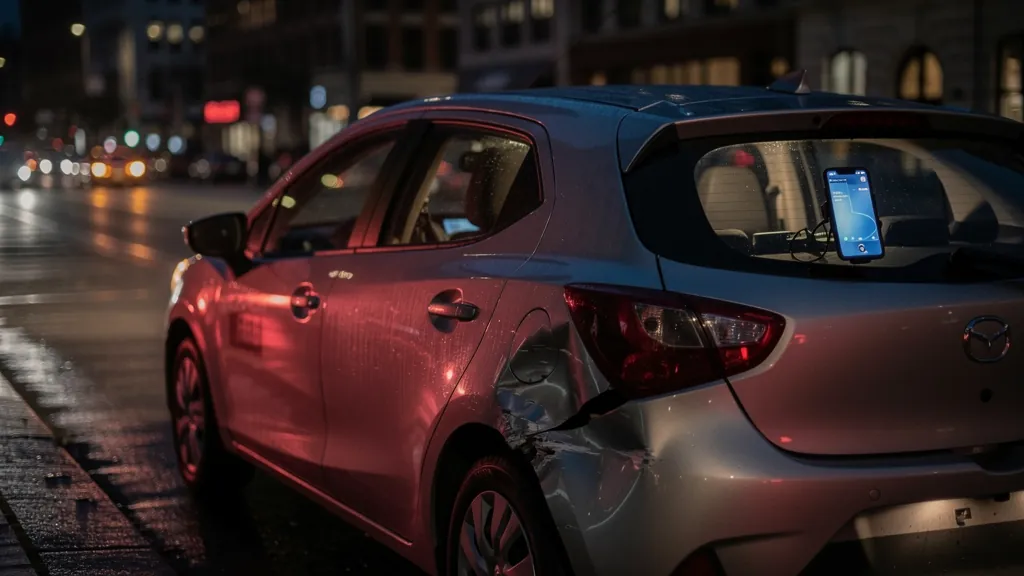
From the moment a driver accepts a ride request until the ride is over, section 5433(b)(1) requires first-in-line coverage of $1,000,000 for death, personal injury, and property damage. A driver's policy, the company's policy, or a combination can meet that requirement, but the company must verify that any driver policy is written to cover rideshare use. If the driver's policy has lapsed or no longer exists, section 5433(e) says the company must provide the required coverage starting with the first dollar of the claim. The insurer on the hook also has a duty to defend and indemnify the driver. The $1,000,000 applies to people in the Uber or Lyft and to people the rideshare car hits, including drivers in other cars, pedestrians, and cyclists. The statute states the amount as the required coverage, so a very large claim can exceed it. Section 5433(f) adds that the law does not limit the company's liability for amounts above the required insurance, if you can prove a claim against the company itself. That is a legal fight, and it is one reason serious injury cases deserve a lawyer.
The 2026 change to uninsured motorist coverage for riders
If you were a passenger and an uninsured or underinsured driver caused the crash, a separate rideshare policy can help you. California Senate Bill 371 changed that coverage. The old text required uninsured and underinsured motorist coverage of $1,000,000. SB 371 was signed on October 3, 2025, as Chapter 314, and the amended section 5433(b)(2) took effect January 1, 2026. It now requires $60,000 per person and $300,000 per incident, from the moment a passenger enters the car until the passenger exits. The bill's text says the coverage comes ahead of other applicable uninsured and underinsured coverage and is solely the company's obligation. It also made the rideshare company responsible for providing it. The bill took effect only because a companion bill, AB 1340, was enacted, and the official code section now shows the amended text. If your crash happened before January 1, 2026, the old amount may govern your claim, so the crash date matters. The CPUC's insurance page still lists the old $1,000,000 uninsured motorist figure, so rely on the amended statute for newer crashes. The change also tells you what the Legislature expects: the state plans to study whether the amounts fit the risk and report by December 31, 2030. Your own auto policy may add further uninsured motorist coverage behind this one, so ask a lawyer to read it.
Passenger, other driver, and pedestrian claims
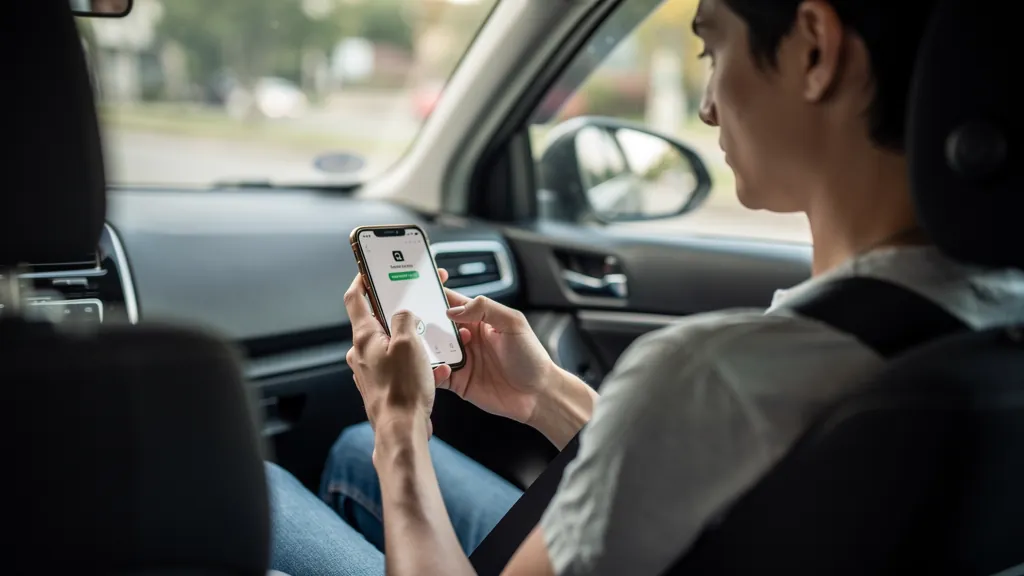
Who you were decides where you start. As a passenger, you can usually claim against the rideshare driver's coverage, and the company's policy applies in the third period. You may also have a claim against another driver who caused the crash, and the rideshare uninsured motorist policy if that driver had no insurance or too little. As a driver in another car hit by an Uber or Lyft, you claim against the rideshare driver's coverage for the period the app was in, and you also keep your own policy for medical payments or collision if you have them. As a pedestrian or cyclist, you claim the same way, and you may have uninsured motorist coverage under your own policy if you own a car. California follows pure comparative negligence under Li v. Yellow Cab Co., so you can recover even if you carry some of the blame, with your award reduced by your percentage of fault. Insurers use that rule to push blame onto riders and walkers. Passengers are the easiest case on fault, because a passenger rarely caused the crash. Even so, expect each insurer to argue the other one should pay.
Getting the trip record and proving the app status
The trip record is the document that fixes the period. It shows when the driver accepted the request, where the car was, and when the ride ended. Start with what you can reach yourself. If you were a passenger, screenshot the trip in your app, then save the receipt email, the driver's name and photo, the car, the plate, and the pickup and drop-off times. If you were not in the car, write down the Uber or Lyft sticker or lit display, the plate, and anything the driver says about picking someone up. Reporting the crash through the company's app or website starts a claim, but it does not give you the full data. A lawyer can send a written demand to the company and its insurer to preserve and produce app data, GPS records, and communications, before they are deleted in the normal course of business. Also look for dashcam video, nearby business cameras, and witness phone numbers. The sooner you move, the more of this evidence survives.
Dealing with the rideshare company's insurer
After a crash you may get calls from the company's claims team or from a third-party insurer. They often sound friendly and ask for a recorded statement about the crash and your medical history. You are not required to give one to the other side's insurer. Do not guess about your injuries, do not say you feel fine, and do not sign a broad medical release. Do give the police report number and the plain facts about the crash. Expect the insurer to dispute the period, to argue the other driver is at fault, or to say the app was off. Both the driver's personal insurer and the rideshare insurer may point at each other, which delays your medical bills while they argue. Keep a folder with every letter, claim number, and adjuster name. An early offer is usually calculated before you know your full treatment, and once you settle you cannot reopen the claim. Moe Abdallah has reached results such as $75,000 after an insurer first offered $900, but past results do not predict a similar outcome, because every case turns on its own facts.
Independent contractor status and what it changes
Uber and Lyft treat their drivers as independent contractors. Under Proposition 22, Business and Professions Code section 7451 says an app-based driver is an independent contractor, not an employee or agent, if the company meets four conditions about scheduling, accepting requests, working for other companies, and other work. That label is why a claim can look like a fight over whether the company is responsible at all. Much of the fight is solved by the insurance rules. Whether the driver is waiting for a request or on a trip, the required coverage, which reaches $1,000,000 once a ride is accepted, applies whether or not a court would call the driver an employee. When the rideshare driver caused the crash, that policy pays for the driver's liability. Section 5433(f) leaves open a separate claim against the company for amounts above the insurance, which would require proof of the company's own fault or a legal basis to hold it responsible for the driver. That is a hard argument and not every case supports it. We look at it only when your damages are larger than the insurance available.
Deadlines you cannot miss
The main deadline is two years from the date of the crash to file a personal injury lawsuit, under Code of Civil Procedure section 335.1. A lawsuit is different from a claim, and a negotiation does not stop the clock. If a government vehicle or public property is involved, such as a city bus that hit the rideshare car or a broken traffic signal, Government Code section 911.2 requires a written claim within six months for injury or death. Rideshare crashes bring this up more often than people expect, since a rideshare car and a bus can be in the same collision. Your own insurance policy may also set a shorter notice period for uninsured motorist claims, so read it early. Separately, Vehicle Code section 16000 requires a driver involved in a crash with injury or with property damage over $1,000 to report it to the DMV within 10 days. That DMV report is the SR-1 form, and if you were driving, file it even if the police came to the scene. Missing any of these dates can end a strong case, so write them on a calendar the day of the crash.
What to do after an Uber or Lyft crash in Los Angeles
Call 911 and get medical care first, even if you feel okay, because adrenaline hides injuries and gaps in treatment give insurers a reason to pay less. If you can, take photos of all vehicles, plates, injuries, the road, and any rideshare sticker or display. Get names, phone numbers, and insurance for every driver and witness, and the police report number. Screenshot your trip before the app updates. Then ask the Los Angeles Police Department for the collision report. The LAPD page says reports go to victims and their representatives, you should allow at least 45 days before requesting one online, and reports involving an arrest, a fatality, or a juvenile must be requested by mail. By mail, the form and a $19.00 check or money order go to the Records and Identification Division, and the recorded line is (213) 486-8130. Keep every medical bill and every pay stub for missed work. Do not post about the crash online. Then call Moe Abdallah Law at (323) 716-1992 for a free case review, available 24/7. You pay nothing unless we win.
Frequently Asked Questions
Your claim depends on the driver's app status. With the app off, the driver's personal policy applies. While waiting for a ride, section 5433(c) requires $50,000 per person and $100,000 per incident. After the driver accepts a ride, it requires $1,000,000. A lawyer proves the status with the trip record and pursues the right insurer.
The insurance rules are the same, because Public Utilities Code section 5433 applies to every transportation network company in California. The paperwork, claims contacts, and data systems differ between companies. Your steps stay the same: document the crash, save the trip data, get the police report, and avoid giving a recorded statement.
By statute, the required amount is $1,000,000 once a driver accepts a ride until it ends, and at least $50,000 per person, $100,000 per incident, and $30,000 property damage while the app is on and the driver waits. The company must also carry at least $200,000 per occurrence in excess coverage for that waiting period.
SB 371 lowered the required uninsured and underinsured motorist coverage for passengers from $1,000,000 to $60,000 per person and $300,000 per incident. The amended section 5433 took effect January 1, 2026. The coverage runs from the moment a passenger enters the car until the passenger exits.
Yes. If the driver caused the crash, you can claim against the coverage that applies to the driver. If another driver caused it, you can claim against that driver, and against the rideshare uninsured motorist coverage if the other driver had no insurance or too little. Passengers rarely carry blame for the crash.
You claim against the coverage tied to the rideshare driver's app status, and the company's $1,000,000 policy applies if the driver had accepted a ride. You can also use your own policy for medical payments or collision. Do not accept blame early, since California allows recovery even if you share fault.
Screenshot your own trip, receipt emails, and driver details. If you were not a passenger, collect the plate, any rideshare display, and witness contacts. A lawyer can send a preservation demand for the company's app and GPS records before they are deleted. The trip record fixes which insurance period applies.
No. You can give the plain crash facts and your claim details, but you do not have to give a recorded statement to the other side's insurer. Speak with a lawyer first, since adjusters use your words about pain, treatment, and fault to reduce what they pay.
You have two years from the date of the crash under Code of Civil Procedure section 335.1. If a government vehicle or public property is involved, you generally must present a written claim within six months under Government Code section 911.2. Your own policy may add shorter notice deadlines.
Have a question about your own case? Call (323) 716-1992 for a free review, or talk to a Los Angeles car accident lawyer →
Get help with your own case
Every crash is different, and the rules above play out differently in each one. If you were hurt, see how Moe handles your kind of case: Los Angeles Uber & Lyft Accident Lawyer, Los Angeles Car Accident Lawyer, Los Angeles Uninsured Motorist Lawyer, or Los Angeles Pedestrian Accident Lawyer. He reviews your case for free, 24/7, and you pay nothing unless we win.
Authoritative resources: California Courts, self-help for injury claims · Cal. Code Civ. Proc. § 335.1, 2-year deadline · California DMV · California Office of Traffic Safety, crash data
Sources & local resources
- Public Utilities Code section 5433 (Transportation Network Companies insurance) · California Legislative Information
- SB 371 Transportation network companies: insurance coverage (Chapter 314, Statutes of 2025) · California Legislative Information
- Insurance Requirements for TNCs · California Public Utilities Commission
- Business and Professions Code section 7451 (App-Based Driver Independence) · California Legislative Information
- Code of Civil Procedure section 335.1 · California Legislative Information
- Government Code section 911.2 · California Legislative Information
- Vehicle Code section 16000 (Accident Reports) · California Legislative Information
- Obtain A Traffic Collision Report · Los Angeles Police Department
Talk to Moe Abdallah directly
When you call Moe Abdallah Law, you work directly with your attorney and get straight answers, not a call center. Moe takes on the insurance companies and fights for the maximum, and he keeps you updated at every step. The consultation is free and you pay nothing unless he wins.
Real recoveries for real Angelenos
Real recoveries from an attorney who takes your case personally and fights for the maximum.
Rear-ended by a driver who fled, and other firms turned her down. Moe opened an uninsured-motorist claim, proved she could not have been at fault, and secured the full policy limit.
Broke his sternum and had no insurance of his own, and his prior attorney ignored him. Moe took his calls day and night and recovered a settlement that covered his hospital bills and future treatment.
Cut off on the freeway and left with back and neck pain over four months of treatment. Moe secured the full policy limit for his pain and suffering, and his totaled car was reimbursed.
Past results do not guarantee a similar outcome. Every case is different and depends on its own facts.
5.0 stars across every review
I would definitely recommend this firm to anyone looking for reliable legal guidance.
Moe Abdallah is the best attorney around , very professional, attentive, respectful, highly knowledgeable, caring for his clients like family and most importantly gets the job done! Forever thankful I found Moe to help me in my case Got me
I am incredibly grateful to Moe Abdallah Law, P.C. for their outstanding representation following my recent accident. Dealing with injuries, medical bills, and insurance companies was overwhelming, but Moe completely took the burden off my
Talk to a lawyer today, free
Tell us what happened. We respond fast, usually within the hour, and there's no fee unless we win. Available 24/7 · Se Habla Español.
Call (323) 716-1992