
Uninsured Motorist Coverage in California: How to File a UM/UIM Claim
Uninsured motorist coverage in California is the part of your own auto policy that pays for your injuries when the driver who hit you has no insurance, too little insurance, or drove off. Moe Abdallah Law, P.C. in Los Angeles files and fights these claims against your insurer, and you pay no fee unless we win.
A driver with no insurance hit you, and now the company you pay every month is the one you have to deal with. That is how an uninsured motorist claim works. Here is what this guide covers: what California Insurance Code section 11580.2 says, what UM and UIM coverage pay for, why a hit-and-run claim needs physical contact and a fast police report, how underinsured coverage works after you collect the at-fault driver's limit, how arbitration runs, and the deadlines that can end a claim. It also covers California's minimum liability limits after the 2025 increase. It is general information, not legal advice for your crash. Call (323) 716-1992 any hour for a free review.
What uninsured motorist coverage pays for in California
California law requires an auto liability policy sold here to include uninsured motorist coverage, unless the policyholder deleted it in a signed writing or agreed to a lower amount (Insurance Code section 11580.2). The coverage pays for bodily injury, including sickness or disease and death that result. In the statute's words, it pays "all sums within the limits" that you are "legally entitled to recover as damages" from the owner or driver of an uninsured vehicle. In plain terms, it pays what the at-fault driver would owe you if that driver had insurance, up to your limit. That means medical bills, lost income, and pain and suffering, all capped by the number on your declarations page. The statute defines an uninsured vehicle broadly. It includes a car with no liability insurance or bond at the time of the crash. It covers a car whose insurer denies coverage, or accepts it only with a reservation. It covers an underinsured vehicle. It covers a stolen or unpermitted car with no applicable insurance, and a vehicle whose driver cannot be identified. It also covers a car whose liability insurer cannot pay because it went insolvent within one year of the accident. Three limits matter. First, the statute says this coverage does not apply to property damage you sustained, so your car repair runs through collision coverage or another part of your policy. Second, the definition excludes vehicles owned or driven by you or a resident of your household. Third, the statute bars stacking: you cannot add the limits of two vehicles or two policies together.
Who counts as an insured under your policy
You do not have to be the person who bought the policy. If the named insured is an individual, the statute treats the named insured and a spouse as insured. It also covers relatives who live in the same household. And it covers anyone else in, entering, or getting out of an insured vehicle. That is why a passenger in your car can usually claim on your UM coverage if the other driver was uninsured, and why you may be able to claim on a family member's policy if you live in their household. The policy also follows you in some situations outside your own car. You can be hit as a pedestrian or on a bicycle and still be an insured person. There are exceptions, so read the exclusions. The statute lets insurers exclude injuries you suffer in a vehicle owned by an insured that is not the insured vehicle, and injuries in a vehicle rented or leased for public or livery use. If you work for Uber or Lyft, tell us at the first call, because more than one policy may apply and the statute's public or livery use exclusions can come into play. When two UM policies could apply, the statute lets insurers prorate. Your damages are not deemed to exceed the higher of the limits, and each insurer pays its share in proportion to its limit. Finding every policy that applies to you takes real work, and it is one of the first things we look at on a UM case.
How much uninsured motorist coverage do you actually have
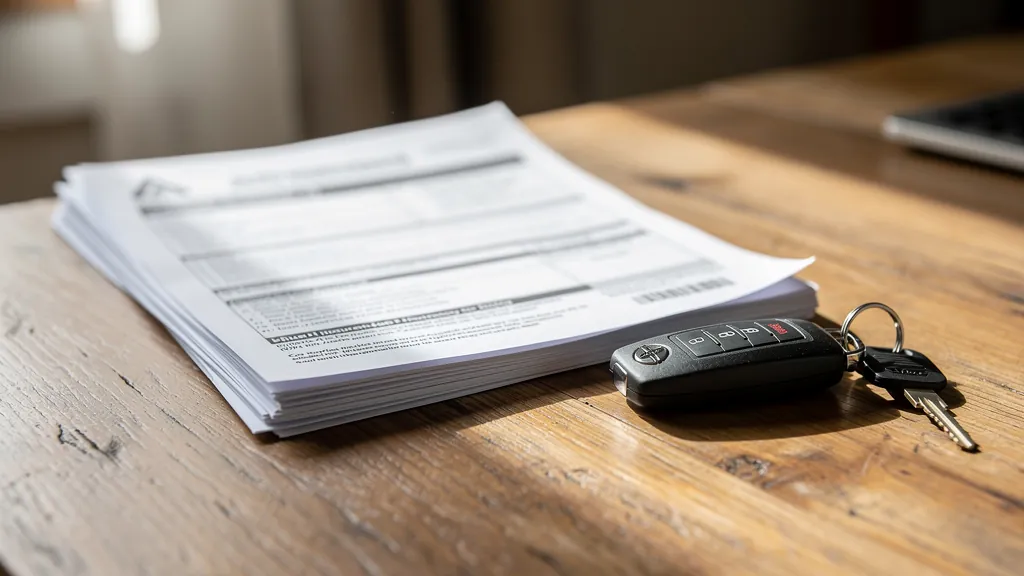
Your UM limit may be lower than you expect. The statute requires insurers to offer UM limits equal to your bodily injury liability limits, but only up to $30,000 for one person and $60,000 for two or more people in one accident. It also lets you sign an agreement for less than that, as long as the amount is not below the state's financial responsibility minimums. Underinsured coverage must be offered at limits equal to your UM limits, and insurers may sell it higher. The statute says the two are offered as a single coverage. So a policy with $30,000 per person UM limits means the most your own insurer owes you for a serious crash is $30,000, no matter how large your losses are. Higher limits are sold, but you have to buy them before the crash. Pull your declarations page now, look for the line that says uninsured and underinsured motorist bodily injury, and write the per-person and per-accident numbers down. This is why we ask for your full policy in the first call. In one case Moe handled, a woman rear-ended by a driver who fled recovered a $100,000 policy-limit uninsured motorist settlement. In another, a client who had no insurance recovered $105,000 for a broken sternum, covering hospital bills and future treatment. Past results are no promise of a similar outcome, and the limits on your policy set the ceiling for yours.
Hit-and-run claims and the physical contact rule
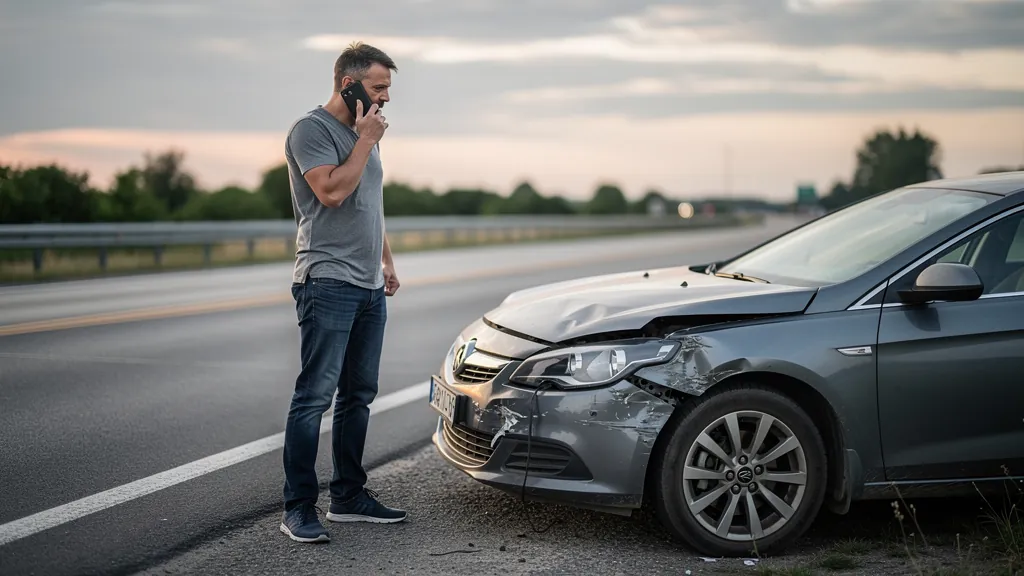
If the driver who hit you fled and cannot be identified, your UM coverage can still apply, but the statute adds two conditions for an unknown driver. First, your injury must have arisen out of physical contact between that vehicle and you, or between that vehicle and the car you occupied. A phantom car that forced you off the road without touching you does not meet the text of the statute. Because an insurer can deny the claim on this point, the contact needs to be documented with paint transfer, damage patterns, photos, or witnesses. Second, you or someone on your behalf must report the accident within 24 hours. The report goes to the police department of the city where it happened. If the crash happened in unincorporated territory, the report goes to the county sheriff or the local California Highway Patrol headquarters. In Los Angeles, that means LAPD for a crash inside city limits, the police department of whatever other city it happened in, or, in unincorporated areas, the Los Angeles County Sheriff's Department or the local CHP office. Then, within 30 days of that report, you must file with your insurer a sworn statement that you have a cause of action for damages against a person whose identity cannot be found, with facts that support it. Miss the 24 hour report or the 30 day sworn statement and your insurer will argue the claim is dead. A hit-and-run with no police report is a hard case, and it is the kind of case Moe took after other firms turned a woman away. Past results are no promise of a similar outcome. If you are reading this a few days after the crash, report it today.
Underinsured motorist coverage after the at-fault driver pays
Underinsured motorist (UIM) coverage applies when the driver who hit you has insurance, but less than your own UM limits. California defines an underinsured vehicle by comparing limits, not by comparing the policy to your damages. If the at-fault driver carries $30,000 and you bought $100,000 in UM/UIM coverage, that vehicle is underinsured. If both policies are $30,000, it is not, even if your bills run to $200,000. The statute then sets an order. UIM coverage does not apply until the limits of the at-fault liability policies have been exhausted by payment of judgments or settlements, and proof of that payment goes to your UIM insurer. The most your UIM insurer owes is your UIM limit, less what you received from the at-fault side. So with a $100,000 UIM limit and a $30,000 payment from the at-fault insurer, the UIM carrier's maximum is $70,000. The insurer also gets credit for what you received from the at-fault driver or that driver's insurer. Timing matters here. The statute says UM coverage does not apply to bodily injury when you settle with the at-fault person, or sue that person to judgment, without your insurer's written consent. Before you accept an at-fault limit, get your own insurer's written consent. In one case Moe handled, the at-fault insurer first offered $900. The at-fault limit was then tendered, and an underinsured motorist claim took the total to $75,000. Past results are no promise of a similar outcome.
How to file an uninsured motorist claim, step by step
Start at the scene if you can. Call 911, get medical care, and get a police report number. For a hit-and-run, remember the 24 hour report rule. Photograph the cars, the road, and your injuries. Write down plates, partial plates, car color, and anything you saw. Get witness names and phone numbers. Then notify your own insurer. California's claim regulations say an insurer must acknowledge your notice of claim within 15 calendar days, send you the forms and instructions, and begin investigating (Cal. Code Regs. tit. 10, section 2695.5). Your policy may require notice in writing. Keep a copy of everything you send. Give the facts, not opinions about fault or your injuries, and be careful with a recorded statement until you have talked to a lawyer. Next, build your damages file: ER and hospital records, bills, imaging, therapy notes, pay stubs, and a short daily journal of pain and limits. Do not stop treatment because an insurer sounds impatient. If you are hurt in Los Angeles, trauma centers and county hospitals can document injuries from the first night. Finally, open the claim formally and calendar the deadline. If your insurer will not agree on a number, the claim goes to arbitration, and the arbitration demand has to go out by certified mail, return receipt requested, inside two years of the crash. We send that notice early so the date never becomes a fight.
What your own insurer will do, and what California requires of it
Your insurer owes you the same fair dealing as any claim, but UM claims are adversarial on value. Expect requests for a medical authorization, wage records, and a medical exam. The statute puts clocks on those requests. If you fail to give wage information or medical releases within 15 days of the insurer's request, or to attend an insurer-arranged exam within 20 days of the request, the insurer may request them again at any time up to 30 days before arbitration. If you still do not comply, the arbitration is stayed for at least 30 days after you do. Answer these requests on time, through a lawyer if you have one. California's Fair Claims Settlement Practices Regulations also bind your insurer (Cal. Code Regs. tit. 10, section 2695.7). After proof of claim, it must accept or deny, in whole or in part, within 40 calendar days. If it needs more time, it must tell you in writing what it needs and repeat that notice every 30 days. Once it accepts the claim, it has 30 calendar days to pay. A denial must be in writing and must state the factual and legal reasons. It may not make an unreasonably low settlement offer, and it may not require you to drop a complaint to the Department of Insurance as a condition of settling. The statute also says payment cannot be delayed because of decisions about other bodily injury coverage, and you are not required to sign a release of other coverage to be paid. The insurer can reduce what it owes by workers' compensation benefits and by medical payments coverage you received.
The arbitration process for UM and UIM disputes
If you and your insurer cannot agree on whether you are legally entitled to recover or on how much, the statute sends the dispute to arbitration. A single neutral arbitrator decides it, not a jury. That surprises many people, since the claim is against their own company, but the statute sets it up that way. Arbitration is not casual. The statute gives both sides access to California's civil discovery rules at any time after the accident, including depositions, interrogatories, and requests for admission, with a few timing limits in the first 20 days. Superior court handles discovery disputes. So expect your records to be requested, your treatment questioned, and you to testify. We prepare these cases the way we prepare any lawsuit: medical narratives, billing proof, photos, witness statements, and a demand that shows the arbitrator what a fair award looks like. A few features are worth knowing. If you also have a workers' compensation claim from the same crash, the arbitrator may not proceed until your condition is stationary and ratable, and the demand must include a sworn statement about that claim. An arbitration award does not bind you or your insurer in a later case against the uninsured motorist personally. And the statute says arbitration begun under it must be concluded within five years of when it was instituted, unless the parties agree in writing to extend the time.
Deadlines for UM and UIM claims in California
The general rule for a personal injury lawsuit in California is two years from the crash (Code of Civil Procedure section 335.1), and six months for a claim against a government entity (Government Code section 911.2). UM claims have their own rule in Insurance Code section 11580.2. No cause of action accrues under your UM coverage unless one of three things happens within two years of the accident: you file suit against the uninsured motorist, you and the insurer reach agreement on the amount due, or you formally start arbitration by written notice to the insurer sent by certified mail, return receipt requested. The statute adds some relief. Courts may excuse missed timeframes under doctrines such as estoppel, waiver, impossibility, impracticality, and futility, but you should never plan around that. While your claim is pending, your insurer must also warn you in writing at least 30 days before the deadline, and if it does not, the deadline is tolled for 30 days from when it does give notice. That notice is not required once the insurer knows you have an attorney. The Fair Claims regulations repeat the 30 day warning for UM claimants and exempt people represented by counsel. There are shorter clocks hidden in the process too: the 24 hour police report and 30 day sworn statement for hit-and-runs, and the 15 and 20 day response windows after your insurer asks for records or an exam. Check your policy for notice terms. If the other vehicle belonged to a city, county, state, or federal agency, the statute says it is not an uninsured motor vehicle, so your claim runs against the government owner instead, and the six month claim deadline may apply.
California's minimum liability limits after the 2025 increase
Minimum limits shape UM claims because they set the floor for what an at-fault driver must carry, and they feed into whether a vehicle counts as underinsured. Under Vehicle Code section 16056, for policies issued or renewed on or after January 1, 2025, the required minimums are $30,000 for injury or death to one person, $60,000 for injury or death to two or more people in one accident, and $15,000 for property damage. The DMV's insurance requirements page lists the same $30,000, $60,000, and $15,000 minimums. Before 2025 the numbers were $15,000, $30,000, and $5,000. An older policy that has not renewed since the change may still carry the old limits, so the car that hit you could legally be insured at the lower amounts. The same statute schedules another step: for policies issued or renewed on or after January 1, 2035, the minimums rise by $20,000 for one person, $40,000 for all persons, and $10,000 for property damage. Here is what that means for you. A $30,000 at-fault policy covers very little of a surgery, an ambulance ride, and months of lost work. Your own UM/UIM limit may be the only other money available, which is a good reason to buy more of it before you need it.
How Moe Abdallah Law handles UM and UIM claims in Los Angeles
Moe Abdallah Law, P.C. handles motor vehicle injury cases only, including uninsured and underinsured motorist claims, hit-and-run cases, and crashes involving cars, trucks, motorcycles, pedestrians, and rideshare vehicles. The office is at 527 W 7th St, Ste 924 in downtown Los Angeles. Attorney Mohamad Abdallah personally handles cases and keeps clients updated by call and text. We have a 5.0 star rating on Google. On a UM case, we pull your policy and find every coverage that can apply. We confirm whether the police report and sworn statement requirements were met, send certified mail notices to protect the two year clock, and get your insurer's written consent before any settlement with the at-fault side. Then we build the medical and liability proof for negotiation or arbitration. Se habla Espanol. The consultation is free, and the fee is contingent, so you owe nothing unless we recover for you. Call (323) 716-1992 any time, day or night. Past results are no promise of a similar outcome, and every claim depends on its own facts and policy limits.
Frequently Asked Questions
It pays for bodily injury you suffer when the at-fault driver has no insurance, has too little, or cannot be identified. That includes medical bills, lost income, and pain and suffering, up to your policy limit. The statute does not cover property damage you sustained, so your car repair goes through other coverage on your policy.
Insurers must include it in auto liability policies sold here, but you can delete it or agree to a lower amount in a signed writing under Insurance Code section 11580.2. If you never signed a waiver, you likely have it. Check your declarations page for the exact limits.
Report the crash to police, get care, then notify your own insurer and keep copies of everything you send. Your insurer must acknowledge the claim within 15 calendar days. If you cannot agree on value, send a written arbitration demand by certified mail, return receipt requested, within two years of the crash.
Yes, when the other driver is unknown. Your injury must come from physical contact between that vehicle and you or the car you occupied. You must also report the crash within 24 hours to the proper agency and file a sworn statement with your insurer within 30 days of that report.
Your UIM coverage applies after the at-fault policy limits are exhausted by settlement or judgment and you send proof of payment to your insurer. Your UIM insurer owes up to your UIM limit, less what you received from the at-fault side. Get your insurer's written consent before you settle.
Under section 11580.2, within two years of the accident you must file suit against the uninsured motorist, reach agreement with your insurer, or start arbitration by certified mail. Your policy and facts may add shorter notice requirements, so do not wait.
For policies issued or renewed on or after January 1, 2025, the minimums are $30,000 for one person, $60,000 for two or more people, and $15,000 for property damage (Vehicle Code section 16056). Older policies may still carry the earlier $15,000, $30,000, and $5,000 limits until they renew.
California regulations require acknowledgment within 15 calendar days and a decision to accept or deny within 40 calendar days after proof of claim. If it needs more time it must say so in writing every 30 days. Once accepted, payment is due within 30 calendar days. You can complain to the Department of Insurance.
Only carefully. The statute says UM coverage does not apply when you settle with a liable person without your insurer's written consent. Ask your insurer for written consent before accepting any at-fault limit, and send proof of payment afterward. A lawyer can handle that sequence so you do not lose the claim.
You can file without one, but your insurer treats the claim as a dispute over value, and arbitration involves discovery and testimony. Moe Abdallah Law, P.C. offers a free consultation and charges no fee unless we recover for you. Call (323) 716-1992 any hour.
Have a question about your own case? Call (323) 716-1992 for a free review, or talk to a Los Angeles car accident lawyer →
Get help with your own case
Every crash is different, and the rules above play out differently in each one. If you were hurt, see how Moe handles your kind of case: Los Angeles Uninsured Motorist Lawyer, Los Angeles Hit-and-Run Accident Lawyer, Los Angeles Car Accident Lawyer, or Los Angeles Uber & Lyft Accident Lawyer. He reviews your case for free, 24/7, and you pay nothing unless we win.
Authoritative resources: California Courts, self-help for injury claims · Cal. Code Civ. Proc. § 335.1, 2-year deadline · California DMV · California Office of Traffic Safety, crash data
Sources & local resources
- California Insurance Code section 11580.2 (uninsured and underinsured motorist coverage) · California Legislative Information
- California Vehicle Code section 16056 (minimum liability limits) · California Legislative Information
- Insurance Requirements · California Department of Motor Vehicles
- 10 CCR section 2695.7, Standards for Prompt, Fair and Equitable Settlements · Cornell Legal Information Institute (California Code of Regulations)
- 10 CCR section 2695.5, Duties upon Receipt of Communications · Cornell Legal Information Institute (California Code of Regulations)
- Getting Help · California Department of Insurance
Talk to Moe Abdallah directly
When you call Moe Abdallah Law, you work directly with your attorney and get straight answers, not a call center. Moe takes on the insurance companies and fights for the maximum, and he keeps you updated at every step. The consultation is free and you pay nothing unless he wins.
Real recoveries for real Angelenos
Real recoveries from an attorney who takes your case personally and fights for the maximum.
Rear-ended by a driver who fled, and other firms turned her down. Moe opened an uninsured-motorist claim, proved she could not have been at fault, and secured the full policy limit.
Broke his sternum and had no insurance of his own, and his prior attorney ignored him. Moe took his calls day and night and recovered a settlement that covered his hospital bills and future treatment.
Cut off on the freeway and left with back and neck pain over four months of treatment. Moe secured the full policy limit for his pain and suffering, and his totaled car was reimbursed.
Past results do not guarantee a similar outcome. Every case is different and depends on its own facts.
5.0 stars across every review
I would definitely recommend this firm to anyone looking for reliable legal guidance.
Moe Abdallah is the best attorney around , very professional, attentive, respectful, highly knowledgeable, caring for his clients like family and most importantly gets the job done! Forever thankful I found Moe to help me in my case Got me
I am incredibly grateful to Moe Abdallah Law, P.C. for their outstanding representation following my recent accident. Dealing with injuries, medical bills, and insurance companies was overwhelming, but Moe completely took the burden off my
Talk to a lawyer today, free
Tell us what happened. We respond fast, usually within the hour, and there's no fee unless we win. Available 24/7 · Se Habla Español.
Call (323) 716-1992