
What to Do After a Car Accident in Los Angeles: Step-by-Step Guide
What to do after a car accident in Los Angeles comes down to this: get safe, call 911, swap information, take photos, get checked by a doctor, report the crash, and talk to a lawyer before you give a recorded statement. This guide walks through each step under California law.
A crash leaves you shaken, maybe hurt, and standing on a freeway shoulder or a busy Los Angeles street with a phone in your hand. What you do in the next hour, the next ten days, and the next two years can change whether you get paid for your injuries. This guide follows the order that matters. We start at the scene, then move to police reports, the DMV form most drivers forget, medical care, the insurance calls, and the deadlines that can end a claim. If the other driver fled or had no insurance, there is a section for that too. Moe Abdallah Law, P.C. handles car, truck, motorcycle, pedestrian, Uber and Lyft, and uninsured motorist crash cases from our downtown Los Angeles office, and a case review costs nothing. Everything below is general information, not legal advice for your exact facts.
Step 1: Stay at the scene and get safe
California law says you must stop. Leaving the scene of a crash that hurt or killed someone is a crime under Vehicle Code 20001, punishable by state prison, up to a year in county jail, a fine of $1,000 to $10,000, or both, with a longer prison term if the crash caused death or permanent, serious injury. Even if nobody seems hurt, stay put. Your first job is safety. If anyone is hurt, call 911 right away and do not move a person with a neck, back, or head injury unless fire or traffic makes staying put more dangerous. If nobody is hurt and your car can move, the DMV tells drivers to get it out of traffic and then call 911. On a Los Angeles freeway, pull onto the shoulder or off at the next ramp if you can, turn on your hazards, and get yourself behind a barrier or guardrail instead of standing between lanes. When the 911 dispatcher answers, give the freeway name, your direction of travel, and the nearest on or off ramp, because that is what lets the CHP find you. Depending on your location, 911 may connect you to the California Highway Patrol or to the local agency that covers that street. Tell the dispatcher if anyone is hurt, if a driver looks impaired, or if a car is blocking a lane.
Step 2: Exchange the information California law requires
Vehicle Code 20003 spells out what a driver must give after a crash that injures anyone. You must give your name, current home address, your vehicle's registration number, and the name and address of the vehicle's owner to the other driver and to any police officer at the scene. You must also show your driver's license when asked, and give reasonable help to anyone hurt, which includes arranging a ride to a hospital if treatment is obviously needed or someone asks for it. A crash with only property damage falls under Vehicle Code 20002. Under that section you must pull over somewhere safe, then either find the other owner and give your name and address, or, if you cannot, leave a written note with your name, address, and a description of what happened and notify the police without unnecessary delay. Moving your car to a safe spot does not decide who is at fault. For your own protection, collect the same things from the other side: full name, phone, address, driver's license number, plate number, insurance company and policy number, and the owner's name if the car is not theirs. Photograph the insurance card and license instead of copying by hand. Keep the talk short and factual. Do not argue about fault, and do not say you are sorry or that you are fine. Adrenaline hides injuries, and a casual comment can be quoted back to you later.
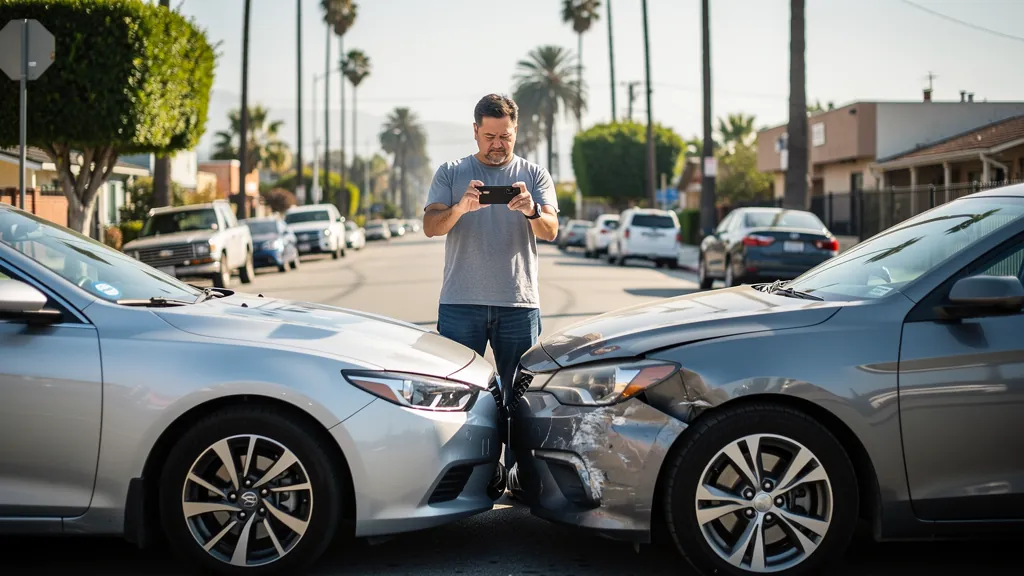
Step 3: Photos, video, witnesses, and what to write down
Your phone is the strongest evidence tool you carry. The scene starts changing the minute traffic moves. Take wide shots that show the whole intersection or freeway lane, then close shots of every damaged car from several angles, the license plates, skid marks, debris, broken glass, traffic signals and signs, and any road defect like a pothole or faded lane line. Shoot your injuries too: cuts, bruises, a swollen wrist, the airbag, a cracked windshield where your head hit. Record a short video walking around the scene and say the date, time, and street out loud. Look up for cameras. Businesses, buses, and traffic poles often have video, and some systems record over footage quickly, so note the names of nearby stores and where cameras point. Ask any witness for a name and phone number before they leave, since witnesses often leave quickly. Ask them to wait for the officer if they can. Then write your own notes while your memory is fresh: where you were headed, the speed, the light color, what you saw the other driver doing, such as looking at a phone. If an officer gives you a report number or a card, photograph it. In a hit-and-run, write down every piece of the plate, the car color and make, and which way it fled.
Step 4: Who writes the report in Los Angeles, and how to get it
Los Angeles County has many agencies, and which one takes your report depends on where the crash happened. Vehicle Code 20008 says a driver in a crash that injures or kills anyone must make a written report within 24 hours to the California Highway Patrol or, if the crash was inside a city, to the CHP or that city's police department. If the agency that gets it is not the one responsible, it must pass it along. The LAPD usually handles crashes on streets inside the City of Los Angeles. The CHP usually handles freeway crashes and many crashes in unincorporated areas. The Sheriff's Department or a separate city police department may respond in other parts of the county. If you are not sure who wrote your report, ask the officer, check the card you were handed, or contact your local police department or a CHP office, which the CHP says can help you identify the agency that investigated. To get an LAPD collision report, the department says you can ask online or by mail. Before requesting online, allow at least 45 days from the crash so the report can be reviewed and approved. Reports involving an arrest, a death, or a juvenile, and reports issued before February 1, 2016, must be requested by mail. The mail request costs $19 by check or money order payable to the LAPD, sent to the Records and Identification Division, Document Processing Unit, P.O. Box 30158, Los Angeles, CA 90030. The LAPD recorded line for status is (213) 486-8130. For CHP reports, you can go to any CHP office and pay a fee, or mail a CHP 190 form (or a personal letter) with a copy of your driver's license to the CHP office that wrote the report. The CHP can only pull reports it investigated. For the Sheriff, call (562) 345-4441 to book a pickup appointment at 12440 East Imperial Highway, Suite 120, Norwalk, or request by mail. Your insurer can often get the report for you too.
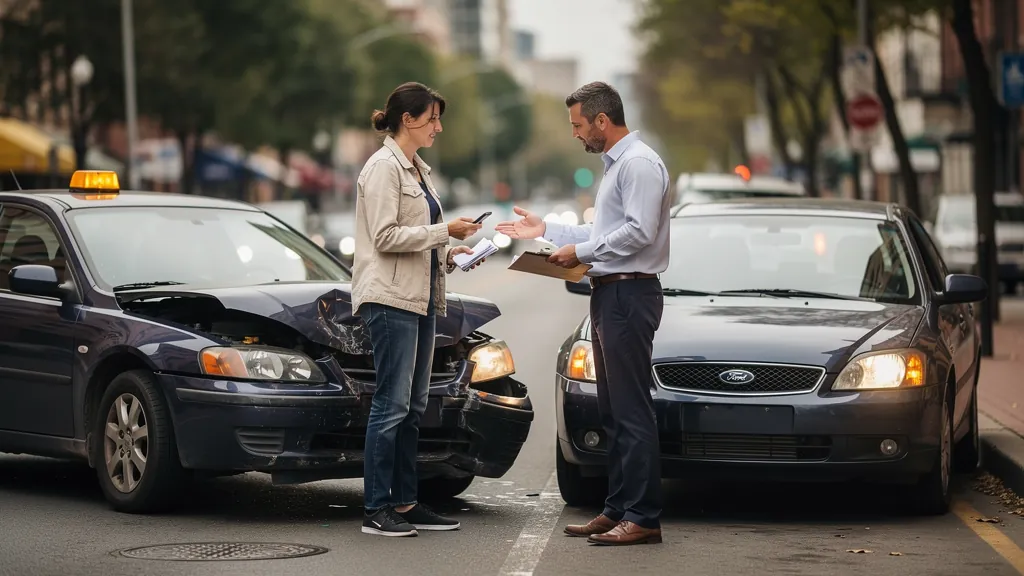
Step 5: File the DMV SR-1 within 10 days
This is the step that catches people. California Vehicle Code 16000 requires the driver of a vehicle in a crash to report it to the DMV within 10 days if anyone was hurt, even slightly, or if property damage to any one person tops $1,000. Drivers call the form the SR-1. The DMV's driver handbook says each driver must file, whether or not the crash was your fault, and even on private property. It is separate from your police report and your insurance claim, and the DMV says police will not file it for you. You can file online through the DMV at dmv.ca.gov/accidentreport, or have your insurance agent, broker, or legal representative send it. Skipping it has a real cost. The handbook states your driving privilege will be suspended if you fail to file. You can skip it only when the vehicle was owned or leased by, or under the direction of, the United States, this state, another state, or a local agency. The DMV adds the collision to your driver record no matter who caused it. Stick to facts, keep your answers consistent with your police report, and keep a copy. If you are unsure how to describe injuries or fault on the form, a lawyer or your insurer can help you fill it in before the 10 days run out.
Step 6: See a doctor and document every injury
Get medical care the same day, even if you feel okay. Whiplash, concussions, back injuries, and internal bleeding can take hours or days to show up, and a gap between the crash and your first visit is something insurers use to say the crash did not hurt you. Go to the emergency room if you have head, neck, or chest pain, numbness, dizziness, trouble thinking, or belly pain. For less urgent problems, urgent care or your own doctor works. Tell every provider that you were in a car crash and describe every symptom, including ones that seem small. Then follow the treatment plan. Missed appointments and stopped therapy give the insurance company an argument that you were not really hurt. Keep a folder for bills, discharge papers, prescriptions, and mileage to appointments. Keep a short daily log of pain, sleep, missed work, and things you could not do, like lifting your child or driving. Save every pay stub and note from your employer about lost time. One uninsured client of ours with a broken sternum recovered $105,000, which covered hospital bills and future treatment. Past results do not promise a similar outcome. Do not post about the crash or your recovery on social media, since insurers look at those accounts.
Step 7: Notify insurers carefully and handle recorded statements
Call your own insurer promptly. Most policies require prompt notice, and delay can hurt your coverage. Stick to the plain facts: who, when, where, and what cars were involved. You can say you are getting medical care without guessing about injuries, speed, or fault. You do not have to give the other driver's insurer a recorded statement, and you are usually better off waiting until you understand your injuries and have talked with a lawyer. Adjusters are trained to ask open questions that lock you into answers such as "I'm fine" or "I looked but didn't see them." Read your own policy first, since your own insurer may require cooperation, and give it the facts it needs while saying no to anything beyond them. Do not sign a medical release that covers your whole history, and do not accept a quick check. Early offers tend to arrive before you know what the injuries will cost, and cashing a check may be treated as closing the claim. If you have uninsured or underinsured motorist coverage, California Insurance Code 11580.2 says your coverage does not apply to bodily injury if you settle with the at-fault party, or take a lawsuit against them all the way to judgment, without your insurer's written consent, so talk to a lawyer before you sign a settlement with anyone. California follows pure comparative negligence, so you can recover even if you share some fault, and the other side often tries to inflate your share. If you were not at fault, a lawyer can keep the focus on the other driver's mistake.
Step 8: Hit-and-run and uninsured drivers
If the other driver fled, call 911 and file a report as soon as you can. California law treats fleeing an injury crash as a serious crime, and for a non-emergency police response in the City of Los Angeles you can call 877-ASK-LAPD (877-275-5273). Your own uninsured motorist coverage is often what pays. Insurance Code 11580.2 sets conditions when the other driver is unknown: the unknown car must have made physical contact with you or with the car you were in, and you or someone for you must report the crash within 24 hours to the police department of the city where it happened or, in unincorporated areas, to the sheriff or the local CHP office. You must also file a sworn statement with your insurer within 30 days saying you have a claim against a driver whose identity cannot be found. Miss those deadlines and you can lose the coverage, so move fast. When a driver is identified but has no insurance, the same UM coverage applies. A driver in a crash without insurance faces a suspension of up to four years under the DMV handbook, but that does not pay your bills. UM and underinsured coverage are offered as one coverage under the statute, and your policy includes them unless you signed a written agreement to delete the coverage or lower its limits. One real result shows how this works: a woman rear-ended by a driver who fled, with no police report, saw other firms turn her down, and Moe recovered a $100,000 policy-limit uninsured motorist payment. Past results do not promise a similar outcome.
Step 9: Know your deadlines, including the 6-month government claim
Most California injury claims must be filed in court within two years of the crash under Code of Civil Procedure 335.1. Miss it and a judge will usually dismiss the case no matter how strong it is. Two shorter clocks catch people off guard. If a government agency or vehicle is involved, such as a city truck, an LA Metro bus, or a road defect the city or county should have fixed, Government Code 911.2 requires you to present a written claim within six months of the crash. That is roughly half a year, not two years, and it applies to injury and death claims. The agency then has its own response period before a lawsuit can follow, so do not wait. Your uninsured or underinsured motorist claim has its own timetable too. Under Insurance Code 11580.2, no UM cause of action accrues unless within two years of the accident you file suit against the uninsured driver, reach an agreement on the amount, or start arbitration by written notice to the insurer sent by certified mail, return receipt requested. Your policy may add notice rules, so read it. Put every date on a calendar the day of the crash: the 24-hour report, the 10-day SR-1, the six-month government claim, and the two-year filing deadline. When in doubt about which applies, assume the shorter one and call a lawyer.
Step 10: When to call a car accident lawyer, and how Moe helps
You can handle a fender bender with no injuries on your own. Call a lawyer when anyone was hurt, when you need more than a few visits to a doctor, when fault is disputed, when the other driver fled or has no insurance, when a commercial truck, rideshare car, or government vehicle was involved, or when an insurer pushes you for a recorded statement or a fast settlement. Earlier is better because evidence disappears: video is overwritten, cars get repaired or scrapped, and witnesses forget. A lawyer can send preservation letters, get the report, gather your records, deal with the adjusters, and tell you whether the offer fits your injuries. One client was offered $900 by the at-fault insurer and ended up with $75,000 after the at-fault insurer tendered its policy limit and Moe also pursued the underinsured claim. Another recovered a $25,000 policy limit and had a totaled car reimbursed after a freeway cut-off. Past results do not promise a similar outcome. Moe Abdallah Law, P.C. is at 527 W 7th St, Ste 924, Los Angeles, CA 90014. Attorney Mohamad Abdallah handles motor vehicle injury cases only, takes calls himself, and keeps clients updated by call and text. The consultation is free, you pay no fee unless he wins, and he is available 24/7. Se habla Español. Call (323) 716-1992.
Frequently Asked Questions
Stay at the scene and get safe. Move to the shoulder or a safe spot if your car can move, turn on hazards, and call 911 if anyone is hurt. Then exchange names, addresses, plate numbers, and insurance details, take photos, and ask witnesses for their phone numbers before they leave.
Follow the same steps: call 911, exchange information, photograph everything, and see a doctor. Do not say anything about fault at the scene. Report to your own insurer, file the DMV SR-1 if there was injury or more than $1,000 damage, and talk to a lawyer before you give the other driver's insurer a recorded statement.
If anyone is hurt or killed, California requires a written report within 24 hours to the CHP or the local police department. With property damage only, you must stop and exchange information, or, if you cannot find the owner, leave a note and notify the police. Even for small crashes, a report helps you prove what happened.
It depends on the agency. For the LAPD, request online or by mail, and allow at least 45 days before requesting online. For the CHP, go to any CHP office or mail form CHP 190 with a copy of your driver's license. For the Sheriff, call (562) 345-4441 to set a pickup appointment in Norwalk.
The SR-1 is a report to the DMV that each driver must file within 10 days if anyone was injured, even slightly, or if property damage topped $1,000. You file whether or not you were at fault. The DMV says your driving privilege will be suspended if you do not file.
Two years from the crash date for most injury claims under Code of Civil Procedure 335.1. If a government agency or vehicle is involved, you must present a written claim within six months under Government Code 911.2. Uninsured motorist claims have their own two-year trigger under the Insurance Code.
Usually not until you have spoken with a lawyer and know your injuries. You can give your own insurer the plain facts it needs. Adjusters ask questions designed to lock in answers that reduce your claim, and anything you say can be used later, so keep it short and factual.
Call 911 and report it within 24 hours, then notify your own insurer. Your uninsured motorist coverage can pay for your injuries. For a hit-and-run with an unknown driver, California requires physical contact and a sworn statement to your insurer within 30 days. A lawyer can help you meet those steps.
Nothing upfront. The consultation is free, and the fee comes only from money recovered for you, so you owe no fee if there is no recovery. Moe is available 24/7, and Se habla Español. Call (323) 716-1992 for a free case review.
Have a question about your own case? Call (323) 716-1992 for a free review, or talk to a Los Angeles car accident lawyer →
Get help with your own case
Every crash is different, and the rules above play out differently in each one. If you were hurt, see how Moe handles your kind of case: Los Angeles Car Accident Lawyer, Los Angeles Truck Accident Lawyer, Los Angeles Motorcycle Accident Lawyer, Los Angeles Pedestrian Accident Lawyer, or Los Angeles Uninsured Motorist Lawyer. He reviews your case for free, 24/7, and you pay nothing unless we win.
Authoritative resources: California Courts, self-help for injury claims · Cal. Code Civ. Proc. § 335.1, 2-year deadline · California DMV · California Office of Traffic Safety, crash data
Sources & local resources
- Section 10: Financial Responsibility, Insurance Requirements, and Collisions (California Driver's Handbook) · California DMV
- California Vehicle Code Section 20001 · California Legislative Information
- California Vehicle Code Section 20003 · California Legislative Information
- California Vehicle Code Section 20008 · California Legislative Information
- California Code of Civil Procedure Section 335.1 · California Legislative Information
- California Government Code Section 911.2 · California Legislative Information
- California Insurance Code Section 11580.2 · California Legislative Information
- Obtain A Traffic Collision Report · Los Angeles Police Department
- Frequently Asked Questions · California Highway Patrol
- Records and Identification FAQ · Los Angeles County Sheriff's Department
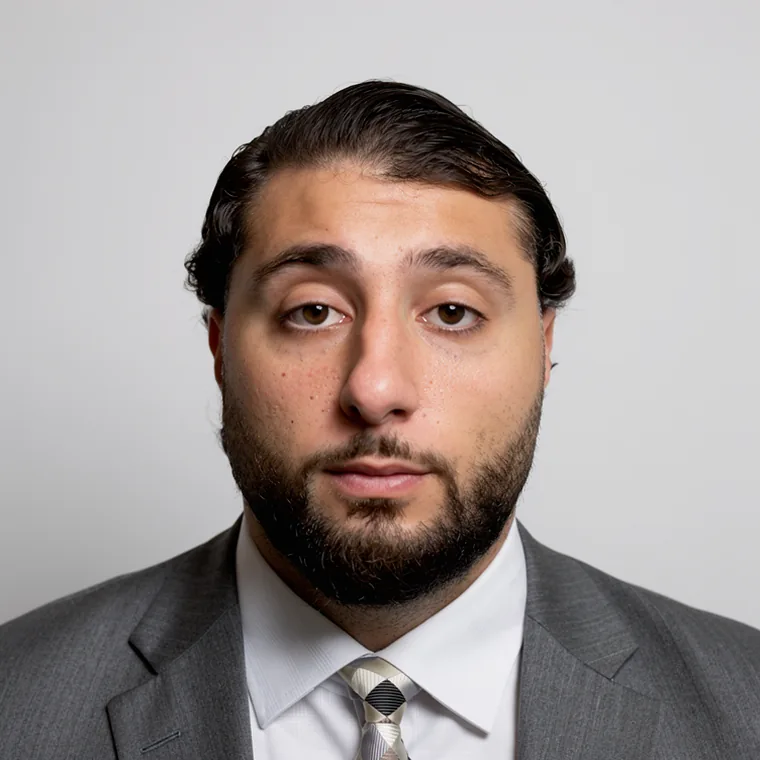
Talk to Moe Abdallah directly
When you call Moe Abdallah Law, you work directly with your attorney and get straight answers, not a call center. Moe takes on the insurance companies and fights for the maximum, and he keeps you updated at every step. The consultation is free and you pay nothing unless he wins.
Real recoveries for real Angelenos
Real recoveries from an attorney who takes your case personally and fights for the maximum.
Rear-ended by a driver who fled, and other firms turned her down. Moe opened an uninsured-motorist claim, proved she could not have been at fault, and secured the full policy limit.
Broke his sternum and had no insurance of his own, and his prior attorney ignored him. Moe took his calls day and night and recovered a settlement that covered his hospital bills and future treatment.
Cut off on the freeway and left with back and neck pain over four months of treatment. Moe secured the full policy limit for his pain and suffering, and his totaled car was reimbursed.
Past results do not guarantee a similar outcome. Every case is different and depends on its own facts.
5.0 stars across every review
I would definitely recommend this firm to anyone looking for reliable legal guidance.
Moe Abdallah is the best attorney around , very professional, attentive, respectful, highly knowledgeable, caring for his clients like family and most importantly gets the job done! Forever thankful I found Moe to help me in my case Got me
I am incredibly grateful to Moe Abdallah Law, P.C. for their outstanding representation following my recent accident. Dealing with injuries, medical bills, and insurance companies was overwhelming, but Moe completely took the burden off my
Talk to a lawyer today, free
Tell us what happened. We respond fast, usually within the hour, and there's no fee unless we win. Available 24/7 · Se Habla Español.
Call (323) 716-1992