
California Personal Injury Lawyer for Vehicle Crash Injuries
A California personal injury lawyer at Moe Abdallah Law, P.C. helps people hurt in vehicle crashes get paid for medical bills, lost income and pain. Attorney Moe Abdallah takes only motor-vehicle injury cases, works with clients anywhere in California by phone, text and email, and charges no fee unless he wins.
If a crash left you hurt, you may have a personal injury claim against whoever caused it, and California law gives you real tools to collect. This page explains how those claims work across the state: what you can recover, how long you have, how fault gets split, and which insurance policies pay. Moe Abdallah is a personal injury attorney in California who handles one kind of case. He represents people physically injured in motor-vehicle crashes, and families who lost someone in one. That covers car, truck, motorcycle, bus, Uber and Lyft, pedestrian, bicycle, hit-and-run, uninsured driver and drunk-driving crashes. He does not take slip-and-fall, dog bite, medical malpractice, workers' comp or property-damage-only cases, so if your injury came from one of those, you need a different lawyer. Moe works with clients across California by phone and email. His office is in downtown Los Angeles. You don't have to come in, and you never pay up front. The free case review is open 24/7, and Moe answers the calls himself. Se Habla Español.
What a California injury claim from a vehicle crash really is
It is a demand for money from the person or company whose carelessness caused your crash, usually paid through their insurance.
Most crash claims rest on negligence. The other driver owed you reasonable care on the road, broke that duty by speeding, texting, running a light or turning in front of you, and that choice caused your injuries. Prove those pieces and the law says they owe you for the harm. In real life you rarely collect from the driver's own pocket. Their auto insurer steps in, handles the claim, and pays up to the policy limit. Sometimes more than one party shares the blame. A trucking company may answer for the driver it sent out. A city may answer for its bus, or in some cases for a dangerous road it failed to fix. A rideshare company's insurance may apply during a trip. Part of a lawyer's job is finding every one of them, because each can add money to your recovery. A claim usually starts outside of court. Your lawyer gathers the police report, photos, witness names, medical records and wage proof, then sends a demand to the insurer. If the insurer pays a fair amount, the case settles. If it won't, the next step is a lawsuit in California superior court. Filing suit does not mean a trial. Many cases still settle once the insurer sees the evidence lined up against it. One thing to say plainly: an injury claim is about your body and your life, not your bumper. Moe takes cases only for people who were physically hurt, or families of people killed, in a vehicle crash. If the crash only damaged your car, a property damage claim with your insurer or the other driver's insurer is the place to start.
Answer 3 quick questions and Moe will call you, free. No fee unless we win.
Prefer to talk? Call (323) 716-1992, 24/7.
The money California law lets an injured person recover
California pays you for every harm the crash caused, both the bills you can add up and the losses you can't.
Civil Code § 3333 sets the measure: the amount that will make up for all the harm the wrongdoer caused, whether or not anyone could have seen it coming. Lawyers split that into two groups. Economic damages are the ones with receipts. Ambulance and ER bills, surgery, physical therapy, prescriptions, future treatment your doctors expect you to need, lost paychecks, and lost earning power if you can't go back to the same work. Non-economic damages cover what has no invoice. Pain, sleepless nights, fear of getting back in a car, scarring, and the hobbies or time with your kids that the injury took away. People often ask whether California caps pain and suffering. Not in a crash case against a driver. The MICRA cap in Civil Code § 3333.2 applies only to claims against health care providers for professional negligence. It does not limit what you can recover from the driver who hit you. Two rules can cut the other way. Under Proposition 213 (Civil Code § 3333.4), a person who was driving their own uninsured car, or who was convicted of DUI for the crash, generally can't recover non-economic damages. An uninsured owner hit by a driver convicted of DUI is the exception. And when the at-fault driver acted with malice, California allows a claim for punitive damages on top of everything else. That takes clear and convincing proof (Civil Code § 3294), and the California Supreme Court allowed a punitive claim against a drunk driver in Taylor v. Superior Court (1979) 24 Cal.3d 890. Your damages are only as strong as your records. Keep every bill, every pay stub, and a short journal of how you feel day to day.
Filing deadlines for injury claims in California
You usually have two years from the crash to sue a private party, but only six months to present a claim when a government agency is involved.
The main clock is Code of Civil Procedure § 335.1. It gives you two years to file a lawsuit for an injury or death caused by someone else's wrongful act or neglect. For a wrongful death case, that period is usually measured from the date of death. Two years sounds like a lot of time. It isn't, once you count months of treatment, records requests and back-and-forth with an adjuster. Government cases move faster. If a city bus, a county truck, a state vehicle or a dangerous public road played a part, you must present a written claim to that agency within six months (Gov. Code § 911.2). This is a claim sent to the agency, not a court filing. The agency has 45 days to act, or the claim is treated as rejected (Gov. Code § 912.4). If it sends a written rejection, you then have six months from that notice to sue (Gov. Code § 945.6). Miss the six-month claim date and you can ask for permission to file late, but no later than one year after the crash (Gov. Code § 911.4). Uninsured motorist claims carry their own rule. Within two years of the crash you must sue the uninsured driver, reach an agreement with your insurer on the amount, or formally demand arbitration by certified mail (Ins. Code § 11580.2(i)). A hit-and-run UM claim also needs a police report within 24 hours and a sworn statement to your insurer within 30 days. Children get extra time on ordinary claims, because the two-year clock is paused while they are minors (Code Civ. Proc. § 352(a)). That pause does not apply to government claims. The safe move is to call a lawyer long before any of these dates gets close.
How shared fault changes what you collect
California uses pure comparative fault, so being partly to blame lowers your award but does not erase it.
Insurers love to say you caused the crash too. You were going a little fast. You looked down at the GPS. You weren't wearing a helmet, or you crossed outside the crosswalk. Even when some of that is true, it doesn't end your case in California. The state Supreme Court threw out the old all-or-nothing rule in Li v. Yellow Cab Co. (1975) 13 Cal.3d 804. Under the pure comparative fault system it adopted, a jury sets everyone's share of blame and your award drops by your share. Say your damages total $100,000 and a jury finds you 20 percent at fault. You collect $80,000. You can still recover something even if you were more at fault than the other side. That math is why the fault fight matters so much. Every point of blame the adjuster pins on you comes straight off your check, so they push hard and early, often during a recorded call a few days after the crash. Don't guess, apologize or estimate speeds on that call. When several parties share the fault, a second rule kicks in. Under Proposition 51 (Civil Code § 1431.2), each defendant pays non-economic damages only in proportion to its own share of fault. Economic damages, like medical bills and lost wages, stay joint, so you can collect them in full from any liable defendant. If one at-fault driver has little insurance and a company shares the blame, that rule can decide how much you actually see. Evidence wins these fights. Photos of the scene, dashcam and doorbell video, the diagram in the police report and independent witnesses all help keep the blame where it belongs.
Which insurance policies pay a crash claim in California
Most money comes from the at-fault driver's liability policy, with your own uninsured or underinsured motorist coverage and med pay filling the gaps.
Start with the at-fault driver's liability coverage. California's minimum for policies issued or renewed on or after January 1, 2025 is $30,000 per person and $60,000 per crash for injuries, plus $15,000 for property damage (Veh. Code § 16056). That floor is low. One surgery can pass $30,000 before you leave the hospital. When the driver has no insurance, or fled and can't be found, your own uninsured motorist (UM) coverage takes their place. When the driver has some insurance but not enough, your underinsured motorist (UIM) coverage can pay the difference once their limits are used up. California insurers must include UM coverage unless you signed a written form to drop or reduce it (Ins. Code § 11580.2), so check your declarations page before you assume you don't have it. Medical payments coverage, or med pay, is the third layer. The California Department of Insurance describes it as coverage for crash-related medical costs, up to your limit, for you, your family and others in your car, paid regardless of fault. Other policies can sit on top, depending on who hit you. Interstate for-hire trucks hauling general freight must carry at least $750,000 in liability coverage under federal rules (49 CFR § 387.9). Rideshare companies must have $1,000,000 in coverage from the moment a driver accepts a ride until it ends (Pub. Util. Code § 5433). Insurers have deadlines too. They must accept or deny a claim within 40 days of receiving proof of claim, and they may not make unreasonably low offers (10 CCR § 2695.7). A lawyer's job here is to find every policy that applies before you sign any release.
How a contingency fee works with a California injury lawyer
You pay nothing up front, and the fee comes out of the money Moe recovers. If there is no recovery, you owe no fee.
A contingency fee means the lawyer's pay depends on winning. Instead of an hourly bill, the lawyer takes an agreed share of the settlement or verdict. That lets you hire help right after a crash, when you may be out of work and buried in medical bills. California puts rules around these deals. Business and Professions Code § 6147 says a contingency agreement must be in writing and signed by both you and the lawyer, and you get a signed copy. It has to state the fee rate, explain how case costs affect the fee and your share, and say that the fee is not set by law and can be negotiated. If a lawyer skips those terms, you can void the agreement and the lawyer is limited to a reasonable fee. Costs are separate from the fee. They include things like medical record charges, police report fees, court filing fees and accident reconstruction reports. Read how your agreement handles them, and ask whether costs come out before or after the fee is figured, because that changes your take-home amount. Ask, too, how medical liens get paid. Hospitals and health plans may claim part of the settlement. A lawyer may be able to negotiate those liens down, which can leave more of the money with you. With Moe the starting point is simple. The case review is free, there is no fee unless he wins, and you can ask him about any line of the agreement before you sign. If you're not sure your case is worth bringing, ask him on that first call.
Working with Moe from anywhere in California
Moe works with clients across California by phone, text and email. His office is in downtown Los Angeles, and you never have to come in.
You might live in Sacramento, Fresno, San Diego or a small town off Highway 99. It doesn't change how your case runs. Most of the work in a crash claim happens on paper and by phone: getting records, talking to adjusters, sending the demand and negotiating. You send forms, photos and bills by email or text, and you get updates by call or text. Moe Abdallah Law, P.C. has one office, at 527 W 7th St, Ste 924, in downtown Los Angeles. There are no branch offices and no teams in other cities. What you get instead is Moe himself. He handles every case personally, takes the calls himself, and keeps you posted by call and text, so you are not handed off to a case manager you've never met. He is licensed by the State Bar of California (Bar No. 348886) and is a graduate of Southwestern Law School. The firm is open 24/7, rated 5.0 stars on Google, and Moe speaks Spanish, so you can handle the whole case in Spanish if you prefer. Se Habla Español. Real cases give a sense of the work. One client was rear-ended by a driver who fled, there was no police report, and other firms had turned her away. Moe pursued her uninsured motorist claim and recovered the $100,000 policy limit. In another case the at-fault insurer offered $900, and the client ended up with $75,000 total through the at-fault driver's limit and an underinsured motorist claim. Every case is different, and past results do not promise a similar outcome. To start, call (323) 716-1992 or send the form on this page. The review is free.
Car, truck, bus, rideshare, DUI and hit-and-run crashes Moe takes
Car crashes make up most injury claims. Rear-ends, T-bones at red lights, left-turn crashes and freeway cut-offs all fall here, and a driver in any injury crash must report it to the DMV on an SR-1 form within 10 days (Veh. Code § 16000). Truck crashes bring bigger insurance and more evidence: hours-of-service logs, electronic logging data, and the post-crash drug and alcohol tests federal rules require the carrier to run after certain crashes (49 CFR § 382.303). Move fast, because a trucking company controls much of that proof. Bus crashes put a higher duty on the operator. A carrier that takes fares must use the highest level of care and diligence for its passengers (Civil Code § 2100), and when the bus belongs to a public transit agency, the six-month government claim rule applies. Uber and Lyft crashes turn on what the app was doing. From the moment a driver accepts a ride until it ends, $1,000,000 in liability coverage applies, and since January 1, 2026 the required UM/UIM coverage with a passenger on board is $60,000 per person and $300,000 per incident (Pub. Util. Code § 5433, SB 371). Drunk-driving crashes can open the door to punitive damages, and if the driver is convicted of a felony, you may get extra time to sue, up to one year after the criminal judgment (Code Civ. Proc. § 340.3). Hit-and-run crashes usually become claims on your own UM coverage. California requires physical contact with the fleeing car, a police report within 24 hours, and a sworn statement to your insurer within 30 days (Ins. Code § 11580.2(b)).
Motorcycle, bicycle, pedestrian, wrongful death and brain injury cases
Motorcycle crashes often start with a driver turning left in front of a rider, and the law says that driver must yield to oncoming traffic close enough to be a hazard (Veh. Code § 21801). California requires every rider and passenger to wear a DOT-compliant helmet (Veh. Code § 27803), but riding without one doesn't bar your claim. The insurer may argue it made your injuries worse. Bicycle crashes come with their own driver duties. A driver passing a cyclist must leave at least three feet of room (Veh. Code § 21760), and no one may open a car door into traffic unless it is safe (Veh. Code § 22517). Cyclists have the same rights on the road as drivers (Veh. Code § 21200). Pedestrian crashes often happen in crosswalks, where drivers must yield and slow down for people crossing (Veh. Code § 21950). Outside a crosswalk, a driver must still use due care (Veh. Code § 21954). Wrongful death claims belong to the family. The surviving spouse or domestic partner and the children come first, and others may qualify depending on who survives and who depended on the person (Code Civ. Proc. § 377.60). A separate survival claim covers losses the person had before death. Brain injury cases need careful handling. A concussion can look minor on day one and still affect memory, mood and work months later. If the injured person lacks legal capacity, the two-year clock can pause for ordinary claims (Code Civ. Proc. § 352(a)), and any settlement needs court approval (Code Civ. Proc. § 372). Uninsured and underinsured driver claims run against your own insurer, as covered above. Whatever the crash type, the first call is free.
Crash cases Moe handles
Where Moe works with clients
The office is in downtown Los Angeles. Moe works with clients everywhere else in California by phone, text and email. Pages for specific areas:
Los Angeles County
Bay Area
Central Coast
Central Valley
Inland Empire
Kern County
Orange County
Sacramento
San Diego County
Ventura County
Frequently Asked Questions
Most California personal injury lawyers who handle crash cases work on contingency. You pay nothing up front, and the lawyer's fee is an agreed share of whatever money is recovered. If there is no recovery, there is no fee. State law requires the agreement to be in writing, signed by both of you, and to say the rate is negotiable (Bus. & Prof. Code § 6147). Moe offers a free case review, works on contingency, and charges no fee unless he wins. Ask any lawyer how case costs are handled before you sign.
For most crash injuries, you have two years from the date of the crash (Code Civ. Proc. § 335.1). For a wrongful death case it is usually two years from the date of death. If a government vehicle or public road is involved, you must present a written claim to the agency within six months (Gov. Code § 911.2), then sue within six months of a written rejection. Uninsured motorist claims also have a two-year rule under Ins. Code § 11580.2(i). Don't wait. Evidence fades well before any deadline.
No. The MICRA cap on non-economic damages applies only to professional negligence claims against health care providers (Civil Code § 3333.2). A claim against the driver who hit you has no cap on pain and suffering. The real limit is usually insurance. If the driver carries only $30,000 in coverage, getting more may depend on your own UIM coverage, other liable parties, or the driver's assets. Proposition 213 can bar non-economic damages for an injured person who was driving uninsured or was convicted of DUI for the crash.
Yes. California follows pure comparative fault (Li v. Yellow Cab Co. (1975) 13 Cal.3d 804). Your award is reduced by your share of blame, but it is not wiped out, even if you were more at fault than the other driver. If you were 30 percent at fault on a $50,000 claim, you would collect $35,000. Insurers know this and try to raise your percentage, often through a recorded statement. Talk to a lawyer before you give one.
Your own policy may cover the gap. Uninsured motorist (UM) coverage pays your injury damages when the at-fault driver has no insurance or can't be identified after a hit-and-run. Underinsured motorist (UIM) coverage can pay once the other driver's limits are used up. California insurers must include UM unless you signed a form to drop it (Ins. Code § 11580.2). Moe once recovered a $100,000 UM policy limit for a client, though past results do not promise a similar outcome.
No. Moe takes only motor-vehicle crash cases for people who were physically injured, or for families of people killed in a crash. He does not handle slip-and-fall, dog bite, medical malpractice, workers' comp, product defect or property-damage-only claims. If your injury came from one of those, you will need a different lawyer, and a lawyer referral service certified by the State Bar of California is a good place to look. If a vehicle crash hurt you anywhere in California, call him for a free review.
You don't have to. The other driver's insurer works for its policyholder, not for you, and a recorded call is often used to lock in details that lower your claim, such as how fast you were going or whether you said you felt fine at the scene. Give simple facts like your name and the date of the crash, then tell the adjuster your lawyer will be in touch. Your own policy may require you to cooperate with your own insurer, which is a different matter. Moe can take these calls for you.
Bring what you have, but don't hold off the call to gather more. Helpful items include the police report number, photos of the cars and your injuries, the other driver's insurance information, names of witnesses, your own policy's declarations page, and a list of the doctors and hospitals you've seen. If you missed work, note the dates. Moe can request records you don't have. You can send everything by text or email from anywhere in California, and the review costs nothing.
Many crash claims settle with the insurance company without a lawsuit. If the insurer refuses a fair offer, the next step is filing suit in California superior court, and even then many cases settle before trial. Moe works with clients across California by phone and email, and his office is in downtown Los Angeles. If your case needs a lawsuit, he will explain where it would be filed and what your part in it would look like before anything is filed.
No. Moe represents people hurt in motor-vehicle crashes anywhere in California. Most of the work happens by phone, text and email, so you never have to come to the downtown Los Angeles office. The case review is free, and you pay nothing unless we win.
More statewide help
Authoritative resources: California Courts, self-help for injury claims · Cal. Code Civ. Proc. § 335.1, 2-year deadline · California DMV · California Office of Traffic Safety, crash data
Sources & local resources
- Code of Civil Procedure § 335.1 · California Legislative Information
- Government Code § 911.2 · California Legislative Information
- Government Code § 945.6 · California Legislative Information
- Insurance Code § 11580.2 · California Legislative Information
- Civil Code § 3333 · California Legislative Information
- Civil Code § 3333.2 · California Legislative Information
- Civil Code § 1431.2 · California Legislative Information
- Business and Professions Code § 6147 · California Legislative Information
- Public Utilities Code § 5433 · California Legislative Information
- Li v. Yellow Cab Co. (1975) 13 Cal.3d 804 · Justia
- Auto Insurance Requirements · California DMV
- Automobile Insurance Terms · California Department of Insurance
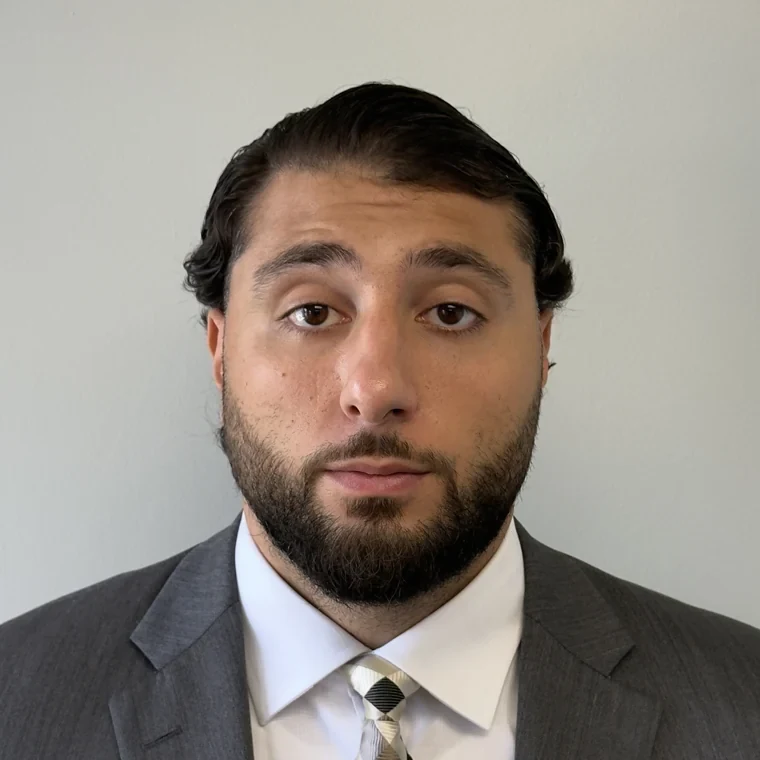
Talk to Moe Abdallah directly
When you call Moe Abdallah Law, you work directly with your attorney and get straight answers, not a call center. Moe takes on the insurance companies and fights for the maximum, and he keeps you updated at every step. The consultation is free and you pay nothing unless he wins.
Real recoveries for real clients
Real recoveries from an attorney who takes your case personally and fights for the maximum.
Hit head-on at high speed, breaking his femur and ankle and needing surgery. Moe secured the at-fault driver's full policy limit.
The at-fault insurer offered just $900 for a back injury on top of pre-existing problems. Moe guided his treatment, tendered the at-fault limit, then opened an underinsured-motorist claim to reach $75,000 total.
Past results do not guarantee a similar outcome. Every case is different and depends on its own facts.
Talk to a lawyer today, free
Tell us what happened. We respond fast, usually within the hour, and there's no fee unless we win. Available 24/7 · Se Habla Español.
Hurt anywhere in California? Moe works with clients statewide by phone and email, so you never have to come to LA.
Call (323) 716-1992