
Wrongful Death Lawyer California
A wrongful death lawyer in California helps a family hold the driver and insurers responsible after a loved one dies in a motor-vehicle crash. Moe Abdallah files the wrongful death claim, the survival action and any government claim, deals with every insurer, and charges no fee unless he wins.
Losing someone in a crash turns your life upside down in a single phone call. Nobody is ready to think about insurance claims or court deadlines that week, and you shouldn't have to do it alone. If you're looking for a California wrongful death attorney, this page explains, in plain words, how these cases work under state law and how Moe Abdallah Law, P.C. can carry the load for your family. Moe takes wrongful death cases only when the death came from a motor-vehicle crash: a car, truck, motorcycle, bus, rideshare, pedestrian or bicycle crash, including drunk-driving and hit-and-run crashes. He does not take deaths from medical care, workplace accidents, falls or defective products. Moe works with families all over California by phone, text and email. His office is in downtown Los Angeles, and you never have to travel there to hire him. He handles every case himself, so the person you talk to on the first call is the lawyer who works your claim. The review is free, Se Habla Español, and you pay nothing unless he wins.
The fatal crash cases Moe takes, and the ones he refers out
Moe handles a wrongful death case when a person died because of a motor-vehicle crash anywhere in California. Deaths from other causes go to other lawyers.
A clear line helps you know right away whether to call. Moe's practice is motor-vehicle crashes, and every case he takes involves a person hurt or killed in one. That covers a parent killed by a red-light runner, a teenager struck in a crosswalk, a rider thrown from a motorcycle, a passenger in an Uber or Lyft, someone hit by a big rig on an interstate, a cyclist sideswiped on a county road, and a pedestrian left in the street by a driver who sped away. It also covers crashes with a city bus or a government truck, which bring their own short deadline. Moe does not handle deaths caused by a doctor or hospital, a fall on someone's property, a job site accident or a defective product. Those cases follow different rules, and a family deserves a lawyer who works in that area every day. If you aren't sure where your loved one's death fits, call anyway. Moe will tell you honestly on the first call whether it's a case he takes. If it isn't, he'll say so plainly instead of keeping you on the line. Crash deaths happen on every kind of road in California, from mountain highways to downtown streets, and the same state law governs all of them. That's why Moe can help a family in Fresno or San Diego the same way he helps one in Los Angeles. The work runs on phone calls, texts, emails, records requests and insurance negotiation, and none of it requires you to come to his office.
Talk to Moe in confidence. Free, no obligation.
Prefer to talk? Call (323) 716-1992, 24/7.
Which relatives California allows to bring the claim
Code of Civil Procedure § 377.60 decides who may sue. The surviving spouse or registered domestic partner and the children come first, and certain dependents may sue too.
The law does not let just anyone file. Section 377.60 of the Code of Civil Procedure sets out three groups. The first is the surviving spouse or domestic partner, the children, and the children of any child who died earlier, meaning grandchildren step into a deceased parent's place. If the person who died left no children or other descendants, the people who would inherit under California's intestate succession rules, such as parents, may bring the claim instead. The second group can sue whether or not anyone in the first group exists, as long as they depended on the person who died for support. It includes a putative spouse (someone who believed in good faith they were legally married), that spouse's children, stepchildren, and parents. The third group is a minor who lived in the household for the 180 days before the death and received at least half of their support from the person who died. Families often call worried that a parent can't sue for a grown son or daughter. The answer depends on who else survived. If your adult child left a spouse or kids, those relatives hold the claim, though a parent who relied on that child for support may still have one. If your adult child left no spouse and no children, you may be the heir. A partner who was neither married to nor registered with the person who died is not on the statute's list. Moe sorts this out on the first call so the right people are named from the start.
The survival action, and what changed for cases filed in 2026
A survival action is a separate claim for the losses your loved one had before death. For actions filed on or after January 1, 2026, it again excludes pain and suffering.
A wrongful death claim covers what the family lost. A survival action covers what the person who died lost between the crash and the moment of death. Code of Civil Procedure § 377.30 passes that claim to the personal representative of the estate, or to the successor in interest if no estate is opened. Section 377.34 limits the damages to losses the person suffered or incurred before death, such as ambulance and hospital bills and wages missed while they were in treatment. It also allows punitive damages the person could have claimed if they had lived, which matters a great deal when a drunk driver caused the crash. Here is the change families should know about. For a few years, California let survival actions include the person's own pain, suffering and disfigurement. Under the current text of § 377.34(b), that applies only to actions granted trial preference before January 1, 2022, or filed on or after January 1, 2022 and before January 1, 2026. A survival action filed today falls back under the general rule, which leaves pain and suffering out. Some websites still promise those damages, and they are out of date. A successor in interest who files also has to sign a sworn declaration under § 377.32 and attach a certified copy of the death certificate, so order several certified copies early. When a loved one survived for days or weeks in a hospital, the survival action can carry the large medical bills from that time, so Moe looks at both claims together in every case.
What a family can recover after a crash death in California
Families can recover money for lost financial support, lost household help, funeral and burial costs, and the loss of love, care, comfort and companionship.
California law describes wrongful death damages as whatever is just under all the circumstances, and the court divides the award among the heirs (Code of Civil Procedure § 377.61). Those damages fall into two groups. The first is money you can count: the financial support your loved one would have given the family, the gifts and benefits you could have expected from them, the value of the household work they did, such as childcare, cooking, repairs and driving relatives to appointments, and the funeral and burial costs. The second group is harder to put into numbers but often weighs the most. It covers the loss of your loved one's love, companionship, comfort, care, assistance, protection, affection, society and moral support, and the loss of the training and guidance they would have given. Those are the items in CACI 3921, the jury instruction California courts use in these cases. Wrongful death damages can't repeat money already recovered in the survival action, so the two claims have to fit together. Fault matters too. California uses pure comparative negligence (Li v. Yellow Cab Co.), and Horwich v. Superior Court applies it to wrongful death heirs. If an insurer argues your loved one was 20 percent to blame, the award shrinks by 20 percent, but the claim does not disappear. Under Proposition 51 (Civil Code § 1431.2), each defendant pays only its own share of the non-economic damages, while economic damages stay joint. That is one reason Moe looks for every party that played a part, such as an employer whose delivery driver caused the crash. Nobody can tell you the value of a case before the facts are in, and anyone who quotes a number on the first call is guessing.
How long your family has, and the six-month government claim rule
Most wrongful death lawsuits must be filed within two years, usually counted from the date of death. A claim against a public agency must be presented within six months.
Code of Civil Procedure § 335.1 gives a family two years to file a wrongful death lawsuit against a private driver or company. The statute says only within two years, and courts ordinarily start that clock on the date of death. Two years sounds like plenty of time. It goes fast when you are grieving, and evidence fades long before then. Skid marks wash away, store cameras record over their footage, and witnesses move or forget. The deadline is much shorter when a government is involved. If a city bus, a county truck, a state vehicle or a dangerous public road played a part, you must present a written claim to that agency within six months (Government Code § 911.2). Miss it and you have to apply for permission to file late, and that application must come within one year at the most (§ 911.4). If the agency sends a written rejection, the lawsuit must be filed within six months of that notice (§ 945.6), which is the deadline that catches families who thought they still had two years. This rule applies all over California, whether the agency is a big transit district or a small town public works department. A drunk-driving case can add time in one narrow way, covered in the next section. Moe tracks every one of these dates from the first call. If you are past six months or close to two years, call anyway. Some cases still have options, and Moe will tell you the truth about yours.
When a drunk or drugged driver caused the death
A drunk driver can face punitive damages through the survival action, and a felony conviction can give the family extra time to sue and stronger proof.
Driving under the influence is a crime under Vehicle Code § 23152, and causing injury while impaired is a separate crime under § 23153. The criminal case and your family's civil case run on separate tracks. A prosecutor seeks punishment. Your claim seeks money for what your family lost, and you don't need a conviction to win it. A conviction can still help. Under Evidence Code § 1300, a felony conviction can be used in the civil case to prove the facts it rested on. A misdemeanor conviction does not get that treatment, and a no-contest plea to a misdemeanor can't be used against the driver as an admission (Penal Code § 1016). If the driver is convicted of a felony for the crash, Code of Civil Procedure § 340.3 lets a family sue within one year after the criminal judgment, when that comes later than the normal deadline. Moe still files on the regular schedule whenever he can, because waiting on a criminal case is a risk. Punitive damages are the other big difference. Civil Code § 3294 allows them when clear and convincing evidence shows malice, which includes a willful and conscious disregard of others' safety, and Taylor v. Superior Court held that a drunk driver's conscious disregard of safety can support punitive damages. In a death case, those damages run through the survival action under § 377.34. They are never automatic. California's dram shop rule is narrow, so a bar that served an adult driver usually can't be sued, though selling alcohol to an obviously drunk minor is one exception.
When the at-fault driver had no insurance, too little, or fled
Your loved one's own uninsured and underinsured motorist coverage may pay when the at-fault driver had no insurance, low limits, or drove away.
Some drivers on California roads carry only the state minimum, which is $30,000 per person and $60,000 per accident for policies issued or renewed on or after January 1, 2025 (Vehicle Code § 16056). That minimum rarely comes close to covering a death. Some drivers carry nothing at all. That is when the uninsured and underinsured motorist coverage on your loved one's own auto policy, or on a household policy that covered them, may pay much of the claim. Insurance Code § 11580.2 requires that coverage in every California auto policy unless the policyholder signed a written form to drop or lower it. For an underinsured claim, the at-fault driver's limits usually have to be paid out first, and the amount received is subtracted from the UIM limit. UM claims carry their own deadline. Within two years of the crash you must sue the uninsured driver, reach an agreement with the insurer, or formally start arbitration by certified mail. A hit-and-run adds three more conditions for UM coverage when the driver is never found: the crash must involve physical contact, it must be reported to police, the sheriff or CHP within 24 hours, and a sworn statement must go to the insurer within 30 days of that report. Families sometimes fear their loved one's lack of insurance kills the claim. Horwich v. Superior Court held that Proposition 213 does not bar heirs from recovering for the loss of care, comfort and society, even when the person who died was an uninsured driver. Moe reads every policy in the household before he tells you what's available.
The first weeks: what to save and what to say no to
Order certified death certificates, keep every bill and letter, get the crash report, and don't give a recorded statement to the other driver's insurer.
You don't need to do much in the first weeks, but a few small steps protect the case. Order several certified copies of the death certificate, because insurers, banks and the court will each want one. Keep every bill, from the ambulance and hospital to the funeral home, along with any letters from insurance companies. Write down what you know about the crash while it's fresh, including the names of witnesses and anyone who called you from the scene. Find the agency that handled the crash. On freeways and in unincorporated areas it's often the CHP, and inside a city it's usually the city police or the county sheriff. Moe can request the report and the coroner or medical examiner records for you. Expect a call from the other driver's insurance adjuster, sometimes within days. The adjuster may sound kind. Their job is to protect their company, and a recorded statement from a grieving spouse can be used later to argue about fault or the relationship. You can politely decline and give them Moe's number instead. Don't sign a release or cash a check from that insurer before you talk to a lawyer, because a release can end the claim for good. Be careful with social media too, since adjusters do look. Finally, if a city bus, county vehicle or road defect may have played a part, call quickly. The six-month government claim clock is already running, and gathering an agency's records takes time.
How a family works with Moe from anywhere in California
Moe works with families across California by phone, text and email, so you never have to travel to his downtown Los Angeles office.
Moe works with clients in every part of California by phone and email. His office is in downtown Los Angeles at 527 W 7th St, Ste 924. A family in Sacramento, Bakersfield, Riverside or Redding hires him the same way a family in Los Angeles does. You call (323) 716-1992 any time, day or night, and Moe reviews the case for free. If he takes it, you never have to come in to sign anything, and you share photos, bills and letters by text or email. From there Moe does the work. He requests the crash report and the medical examiner records, sends preservation letters for video and vehicle data, finds every insurance policy that may apply, and files the wrongful death claim, the survival action and any government claim on time. A wrongful death lawsuit is filed in a California superior court, either in the county where the crash happened or in a county where a defendant lives (Code of Civil Procedure § 395(a)). Moe handles every case himself. You won't be handed off to a case manager you've never met, and he keeps you updated by call and text so you aren't left wondering. He also understands that families grieve at different speeds. Some want every detail. Others want to hear only when something big happens. Tell him which kind of updates you want. The fee is a contingency fee, so you pay no fee unless he wins. Se Habla Español, so Spanish-speaking parents, grandparents and siblings can talk with him directly in their own language.
Where Moe works with clients
The office is in downtown Los Angeles. Moe works with clients everywhere else in California by phone, text and email. Pages for specific areas:
Los Angeles County
Sacramento
San Diego County
Hurt in Los Angeles? See the Los Angeles wrongful death page.
Frequently Asked Questions
There's no set amount, and no honest lawyer can give you a number before reviewing the facts. Value depends on your loved one's age and earnings, the household help they gave, who survived them, how strong the proof of fault is, any fault blamed on your loved one, and how much insurance is available. Insurance often sets the practical limit, which is why Moe checks the at-fault driver's policy, any employer's coverage, and the UM and UIM coverage in your own household before talking about value.
Sometimes. If your adult child left a spouse, a registered domestic partner or children, those relatives hold the claim under Code of Civil Procedure § 377.60. If your child left no spouse and no descendants, parents may qualify as heirs and bring the claim. Parents who depended on the adult child for financial support may also sue as dependents, even when a spouse or children survive. Moe can tell you which situation applies after a short call.
In California, the wrongful death award belongs to the heirs as a group, and the court divides it among them under Code of Civil Procedure § 377.61 when they can't agree. The split usually reflects what each heir lost. A young child who lost a parent's support and guidance for many years may receive a larger share than an adult child who lived on their own. Money from the survival action is different: it goes to the estate or the successor in interest, not straight to each relative.
Your family can still recover. California follows pure comparative negligence, and Horwich v. Superior Court applies that rule to wrongful death heirs. The award is reduced by your loved one's share of fault, so a family found entitled to $100,000 with 25 percent fault on the person who died would receive $75,000. An insurer may try to push fault onto the person who died, because that person can't tell their side. Moe answers that with the crash report, scene photos, video, vehicle data and witness accounts.
It often adds value to the case. When someone lives for a time after a crash, the hospital bills and lost wages from those days belong to the survival action under Code of Civil Procedure § 377.34, alongside the family's wrongful death claim. The two-year deadline for the wrongful death claim is ordinarily counted from the date of death, not the crash date. If a public agency was involved, though, act fast, because the six-month government claim deadline applies and you should not assume the later date buys extra time.
The two cases are separate, and your family does not need a conviction to win money. A felony conviction can still help, because Evidence Code § 1300 lets it prove facts in the civil case, and Code of Civil Procedure § 340.3 can give extra time to sue after the criminal judgment. A misdemeanor plea of no contest can't be used as an admission against the driver. Moe follows the criminal case for useful records but keeps your civil claim moving on its own schedule.
Yes, but the rules are stricter. You must present a written claim to the public agency within six months of the death under Government Code § 911.2 before you can sue. If the agency rejects it in writing, you then have six months from that notice to file the lawsuit. These rules apply across California, to transit districts, cities, counties and state agencies. Missing the six-month window can end the claim, so call Moe as soon as you suspect a public agency played a part.
The first review is free, and Moe works on a contingency fee, so there is no fee unless he wins. You don't pay anything up front or by the hour. His fee comes out of the settlement or award at the end, and if there's no recovery, you owe him no fee. California requires a written contingency fee agreement, and Moe goes over it with you in plain words before you sign. You can ask him any question about it by phone, text or email at any point in the case.
Yes. Se Habla Español. Many families who call after a crash death include parents or grandparents who are more comfortable in Spanish, and Moe can talk with them directly instead of passing everything through a younger relative. You can call (323) 716-1992 at any hour, and the conversation can happen in Spanish, English or both. That matters when a family is making hard decisions together and everyone needs to understand the same facts at the same time.
No. Moe represents people hurt in motor-vehicle crashes anywhere in California. Most of the work happens by phone, text and email, so you never have to come to the downtown Los Angeles office. The case review is free, and you pay nothing unless we win.
More statewide help
Authoritative resources: California Courts, self-help for injury claims · Cal. Code Civ. Proc. § 335.1, 2-year deadline · California DMV · California Office of Traffic Safety, crash data
Sources & local resources
- Code of Civil Procedure § 377.60 · California Legislative Information
- Code of Civil Procedure § 377.61 · California Legislative Information
- Code of Civil Procedure § 377.30 · California Legislative Information
- Code of Civil Procedure § 377.34 · California Legislative Information
- Code of Civil Procedure § 335.1 · California Legislative Information
- Government Code § 911.2 · California Legislative Information
- Government Code § 945.6 · California Legislative Information
- Code of Civil Procedure § 340.3 · California Legislative Information
- Civil Code § 3294 · California Legislative Information
- Insurance Code § 11580.2 · California Legislative Information
- Li v. Yellow Cab Co. (1975) 13 Cal.3d 804 · Justia
- Horwich v. Superior Court (1999) 21 Cal.4th 272 · Justia
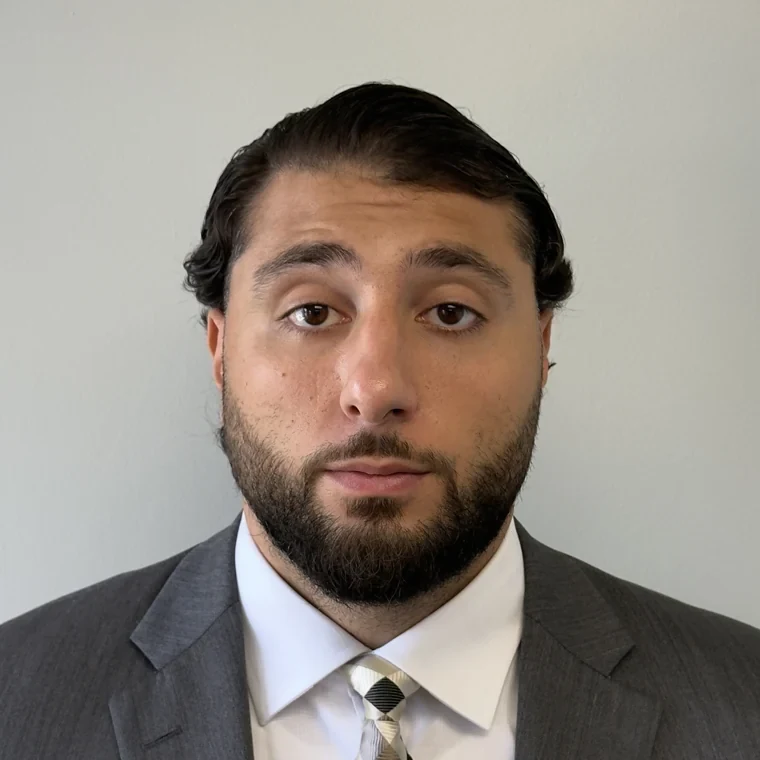
Talk to Moe Abdallah directly
When you call Moe Abdallah Law, you work directly with your attorney and get straight answers, not a call center. Moe takes on the insurance companies and fights for the maximum, and he keeps you updated at every step. The consultation is free and you pay nothing unless he wins.
Real recoveries for real clients
Real recoveries from an attorney who takes your case personally and fights for the maximum.
Hit head-on at high speed, breaking his femur and ankle and needing surgery. Moe secured the at-fault driver's full policy limit.
A passenger rear-ended on the highway with back and neck injuries on top of a pre-existing condition. Moe argued the crash severely worsened it and secured the full policy limit.
Past results do not guarantee a similar outcome. Every case is different and depends on its own facts.
Talk to a lawyer today, free
Tell us what happened. We respond fast, usually within the hour, and there's no fee unless we win. Available 24/7 · Se Habla Español.
Hurt anywhere in California? Moe works with clients statewide by phone and email, so you never have to come to LA.
Call (323) 716-1992