
Car Accident Lawyer in California
A car accident lawyer in California deals with the insurance companies, proves who caused the crash, and fights for the full value of your injury claim. Moe Abdallah Law, P.C. takes injured drivers and passengers from anywhere in California, with a free consultation and no fee unless we win.
A crash can happen on the 5 outside Sacramento, on a surface street in Riverside, or on the coast road in San Diego County. The rules that decide your claim are the same in all of them, because they are California rules. Moe works with clients across California by phone and email. His office is in downtown Los Angeles. You never have to come to LA to hire him. You call or text, send your photos and medical records, and Moe takes it from there. Moe Abdallah Law, P.C. takes only one kind of case: people physically hurt in motor-vehicle crashes, and families who lost someone in one. He does not take property-damage-only claims, workplace injuries, or slip-and-fall cases. If you were injured, Moe handles every case himself, so the lawyer you talk to on day one is the lawyer who argues with the insurer. As a car accident attorney in California, he looks at the deadlines, the police report, the other driver's policy, and your own coverage before the adjuster has a chance to lock in a low number. The consultation is free, he answers 24/7, and Se Habla Español.
How Moe works with injured clients anywhere in California
You talk to Moe by phone, text, or email, wherever you live in the state. His only office is in downtown Los Angeles, and you never have to come in.
Most of what happens in a car crash case happens on paper and on the phone. The insurer wants records. The hospital sends bills. The police agency releases a report. None of that needs you in a lawyer's lobby. So Moe set up his practice to work the way people already live. You can reach him from Los Angeles County, Orange County, the Inland Empire, San Diego County, the Central Valley, or the Bay Area, and the process is the same. The first call is free. Moe asks what happened, where you were hurt, who treated you, and what the insurers have said so far. If he takes the case, you send what you have by text or email: photos of the cars, the other driver's insurance card, your discharge papers, and any letters from an adjuster. He keeps you updated by call and text, so you know what is going on without having to chase anyone. Moe has one office, at 527 W 7th St, Suite 924, in downtown Los Angeles. He does not have branch offices, and he will not pretend to. What he offers instead is direct access. You get his phone, not a call center. He handles every case himself, which means one person knows your file from the first call to the last check. The fee works the same statewide. You pay nothing up front, and you owe no fee unless we win. He speaks with clients in English and Spanish.
Answer 3 quick questions and Moe will call you, free. No fee unless we win.
Prefer to talk? Call (323) 716-1992, 24/7.
What the statewide crash numbers show about California roads
The California Office of Traffic Safety reports 4,061 traffic deaths in 2023, down from 4,539 in 2022.
California tracks its crashes closely, and anyone can look at the numbers. The Office of Traffic Safety (OTS) publishes quick statewide figures built from two databases: the Statewide Integrated Traffic Records System, or SWITRS, which the CHP keeps from police crash reports, and the federal Fatality Analysis Reporting System, known as FARS. According to OTS, traffic deaths in California fell nearly 11 percent, from 4,539 in 2022 to 4,061 in 2023. The death rate was 1.26 per 100 million miles traveled in 2023. Alcohol-impaired driving deaths, meaning crashes where a driver or rider had a blood alcohol level of 0.08 or higher, fell from 1,419 to 1,355. Deaths of people not wearing a seat belt or other restraint fell from 853 to 780. Those are improvements, and they still mean more than four thousand lives lost in a single year. Deaths are only part of the picture. SWITRS also counts the crashes where people were hurt but survived. UC Berkeley's SafeTREC runs a free mapping tool called TIMS that lets anyone look up injury crashes from SWITRS by city or county. These numbers describe the whole state, not your crash. What they do tell you is that insurers in California handle injury claims every day, and they have a set process for every one. It helps to have someone in your corner who knows that process too.
Two years to sue, and the exceptions that change the math
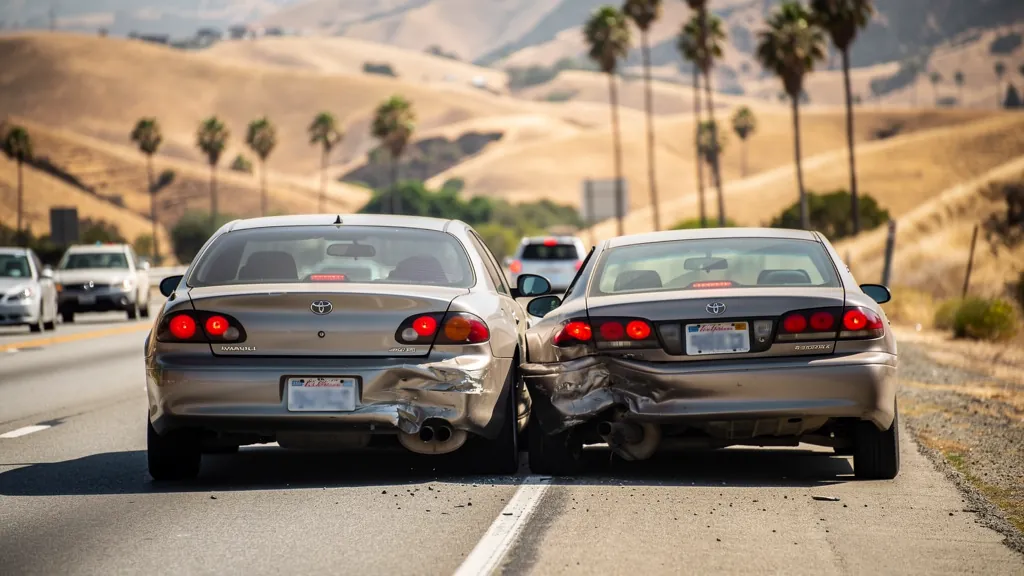
Under Code of Civil Procedure § 335.1, most people hurt in a California crash have two years from the date of the injury to file a lawsuit.
The general rule is short and strict. Code of Civil Procedure § 335.1 gives you two years to bring a lawsuit for injury to a person, or for a death, caused by someone else's wrongful act or neglect. For most crashes, that clock starts on the day of the collision. If the two years pass with no lawsuit on file and no settlement signed, the claim is usually gone, no matter how badly you were hurt. Damage to your car runs on a separate, longer track. Code of Civil Procedure § 338(c)(1) allows three years for injury to property. People sometimes settle the car quickly and assume the injury claim is on the same timeline. It is not. If the injured person is a child, the time to sue is generally paused until age 18 under Code of Civil Procedure § 352(a), but that pause does not apply to a claim against a public agency. If a federal vehicle hit you, such as a mail truck or a military car, a different federal rule applies: you file a written claim with the federal agency within two years, and you have six months after a final denial to sue (28 U.S.C. § 2401(b)). Filing an insurance claim does not stop any of these clocks. Talking with an adjuster does not stop them either. California regulations do require an insurer to send an unrepresented claimant written notice of the deadline at least 60 days before it runs out, but you should not wait for that letter. Moe checks your dates in the first conversation.
Crashes involving a city bus, county truck, or state road
If a California public agency is responsible, you must present a written government claim to that agency within six months of the crash (Gov. Code § 911.2).
Public agencies own a lot of the vehicles on California roads. City buses, county sheriff patrol cars, school district vans, public works trucks, and state vehicles all belong to public entities. Agencies also design and maintain roads, signals, and signs. When one of them caused or contributed to your crash, a faster rule applies before you can sue. Under Government Code § 911.2, a claim for injury or death has to be presented to the public entity no later than six months after the crash. This is a written administrative claim on the agency's form, not a lawsuit. The agency then responds. If it sends written notice that it rejected your claim, Government Code § 945.6 gives you six months from that notice to file suit. If it never sends written notice, the deadline to sue is generally two years from the crash. Miss the six-month window and you are not always finished. Government Code § 911.4 lets you apply for permission to present a late claim, but the application must be made within a reasonable time and no later than one year after the crash, and the agency can say no. Each city, county, and transit district has its own claims process, so the right form depends on who owned the vehicle or the road. That is often not obvious at the scene. A contractor's truck can look like a city truck, and a freeway ramp can belong to the state while the street below belongs to the city. Moe sorts out which agency is involved early so the six-month date does not slip by.
Partly at fault? California still lets you recover
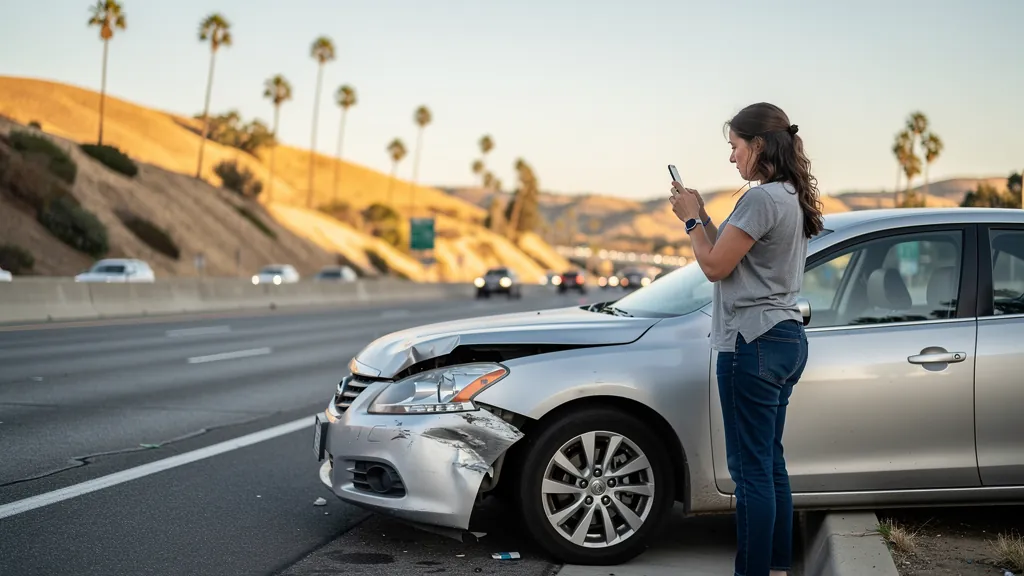
California uses pure comparative fault: your award goes down by your share of the blame, but being partly at fault does not bar your claim.
Many states cut off a claim if the injured person was 50 or 51 percent responsible. California does not. In Li v. Yellow Cab Co. (1975) 13 Cal.3d 804, the California Supreme Court adopted pure comparative negligence. Your damages are reduced by your percentage of fault, and that is all. If a jury finds your losses are $200,000 and you were 25 percent at fault, you can recover $150,000. Even a driver found 70 percent at fault can recover 30 percent of their losses from the other driver. This rule shapes how insurers argue. Once an adjuster cannot deny that their driver ran the light, the next move may be to claim you were speeding, looking at your phone, or not wearing a seat belt. Every point of fault they pin on you comes straight off the check. The insurer's fault estimate is an opening position, not a ruling. When more than one driver caused the crash, Proposition 51 also matters. Under Civil Code § 1431.2, each defendant pays for non-economic losses, such as pain and suffering, only in proportion to its own fault. Economic losses, such as medical bills and lost pay, remain joint, so one defendant can be made to cover the full amount. In a chain-reaction crash on a crowded freeway, that difference can move real money from one insurer to another. Moe pushes back on inflated fault with the scene photos, the vehicle damage, witness accounts, and the officer's own findings in the report.
California minimum limits and your own UM/UIM coverage
California drivers must carry at least $30,000 per person and $60,000 per accident for injuries, plus $15,000 for property damage, on policies issued or renewed since January 1, 2025.
Under Vehicle Code § 16056, the minimum liability limits rose on policies issued or renewed on or after January 1, 2025, to $30,000 for one person's injuries, $60,000 for everyone hurt in one crash, and $15,000 for property damage. They are set to rise again in 2035. A minimum policy is often not enough for a crash with surgery, a hospital stay, or months away from work. That is where your own policy comes in. Under Insurance Code § 11580.2, every California auto liability policy must include uninsured motorist coverage unless you and your insurer agreed in writing, on the form the statute requires, to drop it or lower it. Underinsured motorist coverage comes with it. UM pays when the at-fault driver has no insurance or cannot be found. For a hit-and-run, the law requires physical contact with the other vehicle, a report to police or the CHP within 24 hours, and a sworn statement to your insurer within 30 days. UIM pays when the other driver's limits run out before your losses do. Their insurer has to pay its full limit first, and your UIM limit is reduced by what that driver's insurance paid. UM and UIM claims have their own two-year rule: within two years of the crash you must sue the at-fault driver, reach an agreement with your insurer, or formally start arbitration by certified mail. One more trap: under Proposition 213 (Civil Code § 3333.4), a person who was driving uninsured generally cannot recover pain and suffering. In one case, Moe recovered $75,000 total after the at-fault insurer offered $900, by collecting that driver's limit and then a UIM claim. Past results do not promise a similar outcome.
The DMV SR-1 and the police crash report
You must file an SR-1 with the DMV within 10 days if anyone was hurt or killed, or if property damage tops $1,000. Your crash report comes from whichever agency investigated.
Two pieces of paperwork follow almost every injury crash in California, and people mix them up. The first is the SR-1, the Report of Traffic Accident Occurring in California. Under Vehicle Code § 16000, a driver must send it to the DMV within 10 days when the crash caused any injury, no matter how minor, a death, or more than $1,000 in property damage to any one person. The DMV says the SR-1 is required in addition to any report made to the police, the CHP, or your insurer. You can file it online through the DMV, or your insurance agent, broker, or lawyer can file it for you. Skipping it can put your license at risk, and it does nothing to help your injury claim. The second is the police crash report, and where you get it depends on who showed up. Depending on where the crash happened, the report may come from the CHP, a city police department, or a county sheriff. If the CHP wrote your report, you can request it online through the CHP crash portal, or submit form CHP 190 in person or by mail. The CHP says any of its offices can get you a copy of a CHP report from anywhere in the state, so a crash near Redding does not mean a trip to Redding. The CHP cannot pull reports written by other police departments, so you would ask that agency directly. Moe can request the report for you as your legal representative and read it for errors before the insurer leans on it.
Which county's court would hear a California injury case
Under Code of Civil Procedure § 395(a), an injury case can be filed in the superior court of the county where the crash happened or where a defendant lives.
Many car crash claims settle with an insurer without a trial, but the court question still matters, because the deadline to sue is real and the right county has to be named. California's venue statute answers it. Code of Civil Procedure § 395(a) says that for an action for injury to a person, or for a death caused by negligence, the proper court is the superior court in either the county where the injury happened or the county where the defendants, or some of them, live when the case is filed. So if you were hurt on a highway in Riverside County by a driver who lives in Orange County, the law points to either of those two superior courts. If no defendant lives in California, the statute lets the plaintiff choose the county in the complaint. Each of California's 58 counties has its own superior court, and the Judicial Branch of California keeps a statewide court finder on its website that lists every courthouse. Within a county, the court decides which of its buildings hears civil cases. Choosing the county is a legal decision with real effects, including where you might testify and where the other side's witnesses live. Moe reviews where the crash happened and where every defendant lives before deciding where a case should go. Until then, the work of building your claim does not depend on your location. Records, bills, photos, and statements move by email, and your updates come by phone and text.
Where Moe works with clients
The office is in downtown Los Angeles. Moe works with clients everywhere else in California by phone, text and email. Pages for specific areas:
Los Angeles County
Bay Area
Central Coast
Central Valley
Inland Empire
Kern County
Orange County
Sacramento
San Diego County
Ventura County
Hurt in Los Angeles? See the Los Angeles car accidents page.
Frequently Asked Questions
Usually two years from the crash for an injury claim, under Code of Civil Procedure § 335.1. Vehicle damage has three years under § 338(c)(1). If a city, county, or other California public agency is responsible, you first have to present a written claim within six months (Gov. Code § 911.2). UM and UIM claims against your own insurer have a separate two-year rule. These deadlines do not pause while you talk with an adjuster, so check your dates early.
Moe Abdallah Law, P.C. works on contingency. You pay nothing up front, and you owe no fee unless we win. The fee comes out of the recovery at the end of the case, and the consultation is free. That arrangement is the same whether you live in Los Angeles County, the Inland Empire, or Northern California. California requires a written contingency fee agreement, and Moe goes over it with you before you sign. You can ask him any question about it by phone or text.
For policies issued or renewed on or after January 1, 2025, California requires at least $30,000 per person and $60,000 per accident for bodily injury, plus $15,000 for property damage (Vehicle Code § 16056). The older 15/30/5 limits no longer apply to new or renewed policies. A serious injury can cost far more than $30,000, so Moe also looks at your own uninsured and underinsured motorist coverage, and at any other party who may share the blame.
Yes, if anyone was injured or killed, or if property damage to any one person is more than $1,000. You or your insurance agent, broker, or lawyer must file the SR-1 with the DMV within 10 days (Vehicle Code § 16000). This is separate from the police report and from your insurance claim. The DMV accepts the SR-1 online, and a paper form is available too. Missing it can put your driver's license at risk.
If the California Highway Patrol handled your crash, you can request the report online through the CHP crash portal, or fill out form CHP 190 and submit it in person or by mail to a CHP Area office. You need to be a party of interest, such as a driver, passenger, vehicle owner, or a parent of a minor. The CHP says any of its offices can get you a copy of a CHP report, wherever in California the crash happened. Moe can also request it for you.
Yes. California follows pure comparative fault (Li v. Yellow Cab Co. (1975) 13 Cal.3d 804). Your recovery goes down by your percentage of fault, but it does not disappear. If you were 20 percent at fault, you can still recover 80 percent of your losses. Insurers know this rule well and may try to raise your share. An adjuster's fault estimate is not final, and the evidence from the scene can push it back down.
Your own uninsured motorist coverage may pay for your injuries. California policies include UM coverage unless it was waived in writing on the statutory form. For a hit-and-run, the other car must have made physical contact, the crash must be reported to police or the CHP within 24 hours, and you must give your insurer a sworn statement within 30 days. The UM claim also has its own two-year deadline under Insurance Code § 11580.2(i).
Under Code of Civil Procedure § 395(a), an injury case can go to the superior court in the county where the crash happened or the county where a defendant lives. If no defendant lives in California, the injured person can choose the county in the complaint. Many cases settle before a lawsuit is ever needed. When one is needed, Moe looks at the crash location and every defendant's county before deciding where to file.
No. Moe represents people hurt in motor-vehicle crashes anywhere in California. Most of the work happens by phone, text and email, so you never have to come to the downtown Los Angeles office. The case review is free, and you pay nothing unless we win.
More statewide help
Authoritative resources: California Courts, self-help for injury claims · Cal. Code Civ. Proc. § 335.1, 2-year deadline · California DMV · California Office of Traffic Safety, crash data
Sources & local resources
- Code of Civil Procedure § 335.1 · California Legislative Information
- Government Code § 911.2 · California Legislative Information
- Government Code § 945.6 · California Legislative Information
- Code of Civil Procedure § 395 · California Legislative Information
- Vehicle Code § 16056 · California Legislative Information
- Insurance Code § 11580.2 · California Legislative Information
- Li v. Yellow Cab Co. (1975) 13 Cal.3d 804 · Justia
- Report of Traffic Accident Occurring in California (SR-1) · California DMV
- Request a Crash Report · California Highway Patrol
- Frequently Asked Questions · California Highway Patrol
- California Traffic Safety Quick Stats · California Office of Traffic Safety
- Find my court · Judicial Branch of California
Talk to Moe Abdallah directly
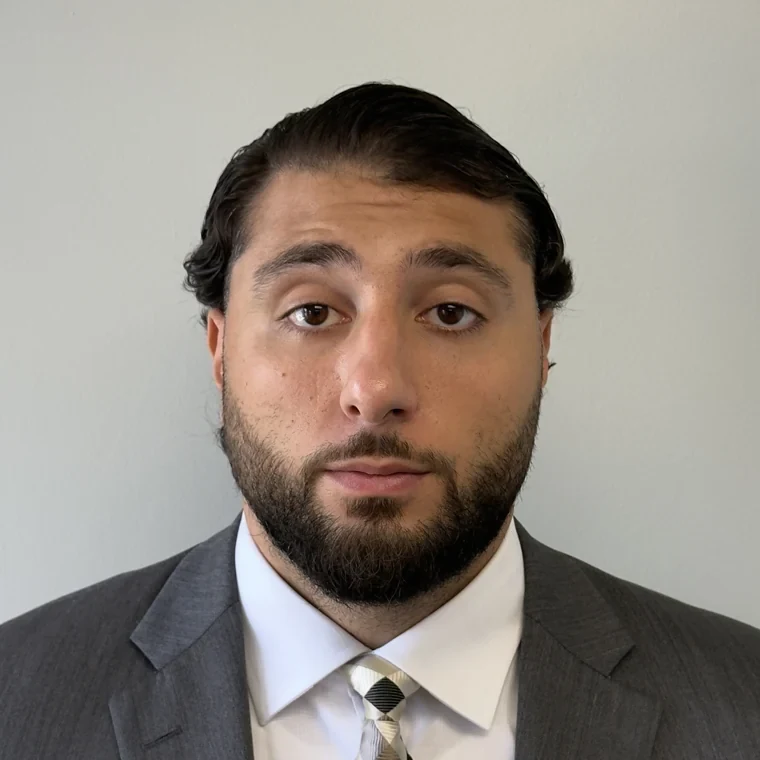
When you call Moe Abdallah Law, you work directly with your attorney and get straight answers, not a call center. Moe takes on the insurance companies and fights for the maximum, and he keeps you updated at every step. The consultation is free and you pay nothing unless he wins.
Real recoveries for real clients
Real recoveries from an attorney who takes your case personally and fights for the maximum.
The at-fault insurer offered just $900 for a back injury on top of pre-existing problems. Moe guided his treatment, tendered the at-fault limit, then opened an underinsured-motorist claim to reach $75,000 total.
A passenger rear-ended on the highway with back and neck injuries on top of a pre-existing condition. Moe argued the crash severely worsened it and secured the full policy limit.
Past results do not guarantee a similar outcome. Every case is different and depends on its own facts.
Talk to a lawyer today, free
Tell us what happened. We respond fast, usually within the hour, and there's no fee unless we win. Available 24/7 · Se Habla Español.
Hurt anywhere in California? Moe works with clients statewide by phone and email, so you never have to come to LA.
Call (323) 716-1992