
Car Accidents in Los Angeles: Statistics, Deaths and What They Mean for You
Moe Abdallah Law, P.C. helps people hurt in car accidents in Los Angeles turn crash statistics into a plan for their own claim. Federal records show 308 people died on City of Los Angeles streets and freeways in 2024, and almost one in four fatal crashes since 2019 involved a driver who fled.
Car accidents in Los Angeles kill hundreds of people every year and injure many more. This page pulls the numbers from official sources: federal crash records from NHTSA, the City of Los Angeles open data portal, LADOT's Vision Zero program, and the California DMV. Each figure names its year and its source. Where no reliable number exists, we say so instead of guessing. After the statistics, you get plain steps for what to do if you were hurt in a crash here, using real California law and real LA agencies. Moe Abdallah Law, P.C. handles car, truck, motorcycle, pedestrian, bicycle, Uber and Lyft, uninsured motorist, and hit-and-run cases. A free review is available any hour at (323) 716-1992, and you pay no fee unless Moe wins.
How many people die in car accidents in Los Angeles each year
NHTSA's Fatality Analysis Reporting System, known as FARS, logs every U.S. crash that kills someone within 30 days. We tallied the records coded to the City of Los Angeles for 2019 through 2024. The city recorded 264 fatal crashes and 277 deaths in 2019, then 276 crashes and 292 deaths in 2020. The count jumped to 323 crashes and 340 deaths in 2021 and peaked in 2022 at 343 crashes and 356 deaths. In 2023 it was 321 crashes and 341 deaths. In 2024, the latest full year in the federal files, it was 295 crashes and 308 deaths. That is 1,822 fatal crashes and 1,914 deaths over six years, or nearly one death every day. For wider context, FARS lists 778 deaths in all of Los Angeles County in 2024, so the city accounts for about 40 percent of them. The county total was 716 in 2019, 760 in 2020, 851 in 2021, 866 in 2022, and 840 in 2023. The 2024 drop from the 2022 peak is real but small. Three hundred and eight deaths is still above the 277 recorded in 2019. LADOT's Vision Zero program aims to eliminate traffic deaths, but the federal counts show the problem has not gone away. These are deaths only. Injury crashes are far more common, and no single official source gives a clean city-wide injury count, which is why the sections below also use LAPD collision reports.
Who is dying: pedestrians, drivers, riders and cyclists
The mix of victims in Los Angeles looks different from the national picture. Of the 1,914 deaths from 2019 to 2024, 869 were people on foot. That is 45 percent of everyone killed. Another 657 deaths, 34 percent, were people riding in cars, trucks and similar vehicles. Motorcyclists, including moped and scooter riders, accounted for 263 deaths, about 14 percent, and bicyclists for 82, about 4 percent. The last 43 deaths were other road users, such as people on personal conveyances. In 2024 alone, 156 of the 308 deaths were pedestrians. That is more than half. Occupants of cars and trucks made up 99, motorcyclists 32, bicyclists 13, and others 8. If you were hit while walking, that pattern matters for your claim. Drivers must yield to pedestrians in marked crosswalks and in unmarked crosswalks at intersections under Vehicle Code section 21950, and insurers still try to blame the person on foot. California follows pure comparative negligence, which means you can recover even if you carry some of the blame, with your award reduced by your share. If you were riding a motorcycle, no California statute prohibits lane splitting, and not wearing a helmet does not bar a claim, although an insurer may argue it made your injuries worse. Moe handles pedestrian, motorcycle and bicycle cases.
Hit-and-run, speed and darkness in fatal Los Angeles crashes
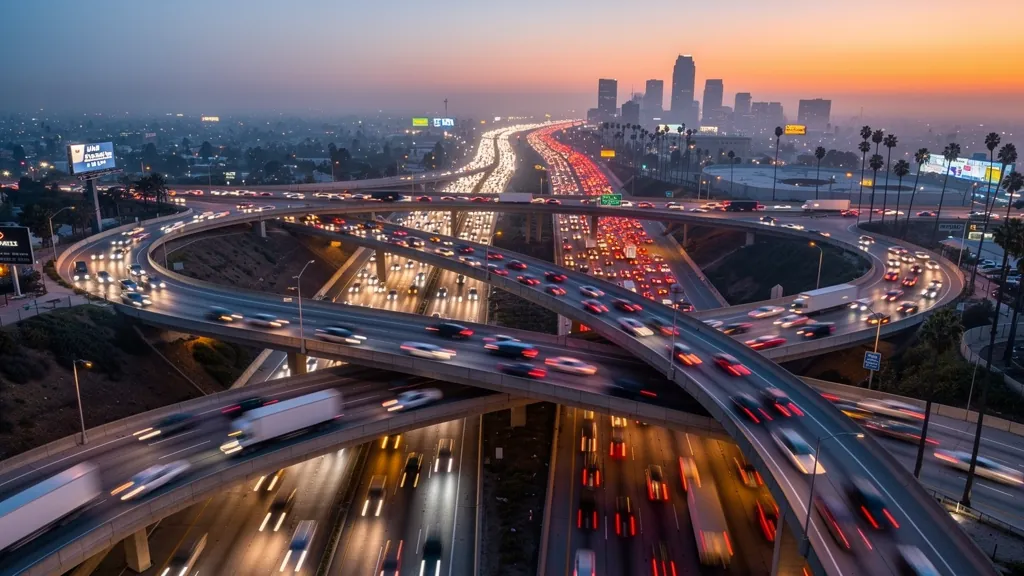
Three patterns show up again and again in the federal records for fatal crashes inside the city. First, drivers who flee. In 436 of the 1,822 fatal crashes from 2019 to 2024, at least one vehicle was coded as hit-and-run. That is 24 percent, almost one in four. The yearly count rose from 55 of 264 crashes in 2019 to 87 of 295 in 2024, which is about 29 percent. The pattern is sharper for pedestrians. Of 867 fatal crashes that involved a pedestrian, 324 involved a vehicle coded as hit-and-run. Second, speed. A vehicle was coded as speeding-related in 694 fatal crashes, 38 percent. FARS counts racing, exceeding the posted limit, driving too fast for conditions, and unspecified speeding in that figure. Third, darkness. In 1,295 of the 1,822 fatal crashes, 71 percent, the crash happened after dark, whether or not the street was lit. Among crashes with a known hour, 876 of 1,807, about 48 percent, happened between 9 p.m. and 5 a.m. What this means for you: if the driver fled, your own uninsured motorist coverage is often the way you get paid. Under California Vehicle Code section 20001, leaving the scene of a crash that injured someone can be charged as a felony. When the driver is unknown, Insurance Code section 11580.2 generally requires physical contact between the fleeing vehicle and you or the vehicle you were in, a report to police within 24 hours, and a sworn statement to your insurer within 30 days after that report. Moe obtained a $100,000 policy-limit uninsured motorist recovery for a woman rear-ended by a driver who fled with no police report, after other firms turned her down. Past results do not predict a similar outcome.
Streets and freeways named in fatal crash records and by LADOT
Two official sources name roads. The first is the federal FARS file, which records the road name for each fatal crash. For 2019 to 2024, counting ramps and spelling variants, the freeways named most often in City of Los Angeles records are US-101 with about 83 fatal crashes, I-5 with about 82, I-110 with about 80, I-10 with about 64, and I-405 with about 36. Freeways and expressways account for 435 of the 1,822 fatal crashes, or 24 percent. On surface streets, the FARS records list about 38 fatal crashes on Western Avenue, 33 on Foothill Boulevard, 30 on Figueroa Street, 28 on Vermont Avenue, and 25 on Normandie Avenue. Road names are typed in by hand, so a few crashes may be spelled in ways these counts miss. Treat them as a floor, not a ranking of every danger point. The second source is LADOT's High Injury Network, a map of the streets where most severe crashes happen. LADOT says the network is 6 percent of city streets, over 450 miles, yet it accounts for 70 percent of deaths and severe injuries for people walking. In LADOT's 2024 network layer on the City's GeoHub, Vermont Avenue, Western Avenue and Figueroa Street are among the longest stretches listed for pedestrians and for bicyclists. Sunset Boulevard leads the motorcycle list, and Vanowen Street, Sherman Way and Victory Boulevard in the Valley are among the longest for drivers. LADOT's own project pages add local detail. On Adams Boulevard between Crenshaw Boulevard and Fairfax Avenue, 69 people were killed or severely injured between 2009 and 2019, including 10 deaths, 6 of them pedestrians. On Avalon Boulevard between Jefferson Boulevard and 120th Street, 149 people were killed or severely injured from 2009 to 2017, and 44 percent were walking or biking.
How often cars collide: LAPD collision counts
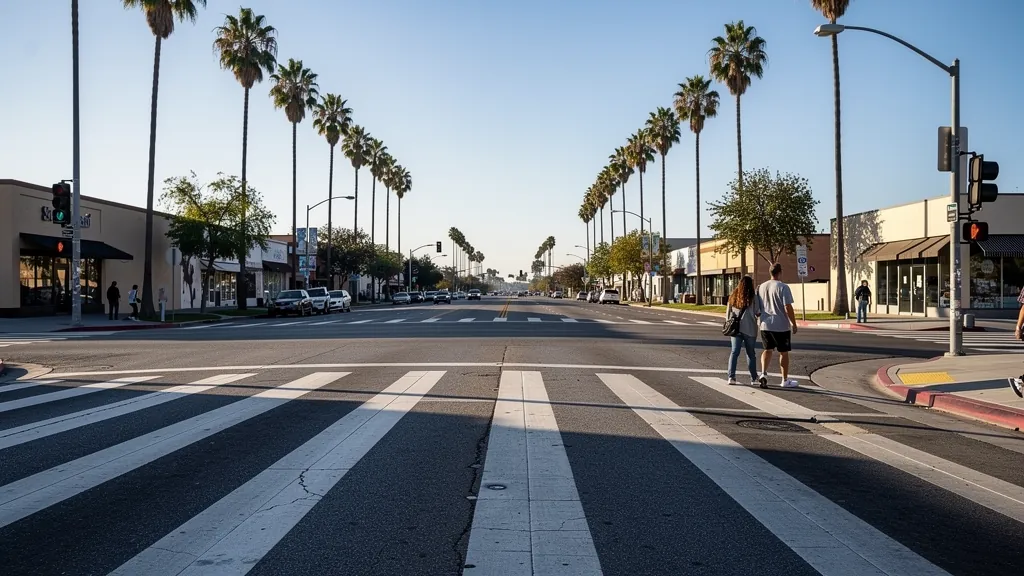
Deaths are a small slice of the total. The City of Los Angeles open data portal publishes LAPD traffic collision reports. For 2019, the last year before the pandemic changed travel, it lists 56,628 reported collisions, about 155 a day. The 2018 count was 57,159. The portal's own notice says LAPD has moved to a new records system and that this dataset no longer receives updates. Yearly counts in the dataset after 2020 are far lower, about 16,000 to 19,000, and the portal does not explain the gap, so we do not read them as a real drop in crashes. Within 2019, the busiest LAPD areas were 77th Street with 3,993 collisions, Southwest with 3,333, Wilshire with 3,154, and Newton with 3,150. Friday was the busiest day with 9,088 collisions. By hour, the afternoon rush dominates: 11,180 collisions, about 20 percent of the year, happened between 4 p.m. and 6:59 p.m., and the single busiest hour was 5 p.m. to 5:59 p.m. with 3,904. None of these reports say who was hurt or how badly, and no official source we could open gives a city-wide count of injury crashes by year. The California Highway Patrol's SWITRS database holds injury data, and UC Berkeley's TIMS tool lets the public query it, but you have to build the query yourself. For you, the practical point is simple. A crash in Los Angeles is routine to the agencies handling it, which is why you should not assume anyone else is preserving your evidence.
California context: statewide deaths, impaired driving and pedestrians
California's deaths set the backdrop. FARS shows 3,719 traffic deaths in the state in 2019, 3,980 in 2020, 4,513 in 2021, 4,539 in 2022, 4,169 in 2023, and 3,876 in 2024. The 2024 figure is 7 percent below 2023 but still above 2019. For 2024, NHTSA breaks the 3,876 deaths down this way: 1,493 drivers, 541 passengers, 522 motorcyclists, 1,090 pedestrians, 163 pedalcyclists, and 67 others. California ranked 8th among states for pedestrian deaths per 100,000 residents in 2024, at 2.76. On drunk driving, NHTSA's state table shows that 1,311 people, 34 percent of all California deaths in 2024, died in crashes where the highest driver blood alcohol level was 0.08 or above. Counting any alcohol at 0.01 or above, the figure is 1,526, or 39 percent. We could not retrieve a Los Angeles-only alcohol count for recent years, because the federal city file stopped carrying that field after 2020, so we do not guess at one. If a drunk driver hurt you, California allows punitive damages for conduct showing conscious disregard for others' safety under Civil Code section 3294, and driving under the influence is a crime under Vehicle Code section 23152. The criminal case and your injury claim are separate tracks, and the injury claim generally keeps its own two-year deadline.
What these numbers mean if you were hurt in a crash
Statistics describe crowds. Your claim is about one crash, but the numbers still change how you should act. Because roughly one in four fatal crashes involves a driver who flees, check your own policy for uninsured motorist coverage early. Under Insurance Code section 11580.2, every California auto liability policy must include it unless you and your insurer agreed in writing, on the form the statute requires, to delete or lower it. Because so many crashes happen after dark and at speed, evidence disappears fast. Street camera and business video can be overwritten quickly, and a car's event data recorder can be lost when a car is repaired or scrapped. Moe moves quickly on evidence for that reason. Because minimums are low, do not assume the other driver's insurance covers you. The DMV lists California's minimum liability limits as $30,000 for injury or death to one person, $60,000 for more than one person, and $15,000 for property damage. A serious injury can cost more than that. One client had an at-fault insurer that offered $900. Moe tendered the at-fault driver's limit and pursued an underinsured claim, and the case closed at $75,000 total. Another uninsured client with a broken sternum recovered $105,000, which covered hospital bills and future treatment. Past results do not predict a similar outcome. We do not publish an average settlement for Los Angeles crashes, because no reliable source gives one. Value depends on your injuries, your medical bills, your lost income, how clearly the other driver was at fault, and the insurance available. See a doctor even if you feel fine, because injuries from a collision can show up days later.
What to do in the first days after a Los Angeles crash
Call 911 if anyone is hurt, and stay at the scene. California law requires every driver involved in a crash to stop and exchange information. Photograph the cars, the road, the signals, and your injuries. Get names and numbers for witnesses, since in one of our cases the other driver staged fake witnesses and Moe found the real ones. Get medical care the same day, even if you feel fine. File the DMV's SR-1 report. The DMV says you, your insurer or your representative must send it within 10 days if anyone is injured, no matter how minor, or if property damage tops $1,000. Ask the officer which agency is writing your report and get the report number. LAPD says traffic collision reports are available online no sooner than 45 days after the crash, and reports involving a fatality, an arrest or a juvenile must be requested by mail. LAPD's non-emergency number is 877-ASK-LAPD. If a City of Los Angeles vehicle, employee or road defect played a part, the deadline is much shorter. The City Attorney's claims page says claims for injury or death must be filed with the City Clerk within six months under Government Code section 911.2. For a private-party crash, you generally have two years from the date of the crash to file a lawsuit under Code of Civil Procedure section 335.1. Be careful with the other driver's insurer. You do not have to give a recorded statement, and the first offer is often low. Moe Abdallah Law, P.C. is at 527 W 7th St, Ste 924, Los Angeles, CA 90014, and you can call (323) 716-1992 any hour. Se habla español. The review is free, and you owe nothing unless he wins.
Where these numbers come from and what they leave out
We want you to be able to check every figure. The Los Angeles city and county death counts come from NHTSA's public FARS data files for 2019 to 2024, filtered to California, Los Angeles County, and the FARS city code for the City of Los Angeles. We counted fatal crashes, deaths, victim types, hit-and-run flags, speeding flags, lighting, and road names directly from those files, using the federal coding for each field. The state yearly totals come from the same FARS files, and the 2024 state breakdowns come from NHTSA's FARS Encyclopedia tables. LADOT figures come from its Vision Zero maps page, its Adams and Avalon project pages, and its 2024 High Injury Network layer on the City GeoHub. Collision counts come from the LAPD dataset on the City open data portal. Insurance minimums come from the California DMV. A few limits are worth knowing. FARS only covers fatal crashes and counts deaths within 30 days, so it will not match a city or county count that uses a different rule. A crash coded to the city boundary might not match a crash reported to LAPD. LADOT's corridor figures cover specific years noted above, and the network has been updated since. We did not use California Office of Traffic Safety crash rankings for Los Angeles, because we could not retrieve the ranking tables to verify them. For injury totals, you can query SWITRS through UC Berkeley's TIMS site yourself. None of these numbers predict what will happen in your case.
Frequently Asked Questions
NHTSA's FARS records show 277 deaths in the City of Los Angeles in 2019, 292 in 2020, 340 in 2021, 356 in 2022, 341 in 2023, and 308 in 2024. Los Angeles County recorded 778 deaths in 2024. These counts cover deaths within 30 days of a crash and include pedestrians, riders and drivers.
LADOT's High Injury Network is the city's map of the streets with the most severe crashes. It is 6 percent of city streets but accounts for 70 percent of deaths and severe injuries for people walking. Vermont Avenue, Western Avenue and Figueroa Street are among the longest pedestrian stretches in the 2024 layer. US-101, I-5 and I-110 appear most often in federal fatal crash records for the city.
In the federal records for 2019 to 2024, 436 of 1,822 fatal crashes in the city, about 24 percent, involved a vehicle coded as hit-and-run. In 2024 it was 87 of 295, about 29 percent, the highest share of the six years. No reliable source gives a figure for all injury crashes, so we do not offer one.
Call 911, get medical care, and report the crash to police within 24 hours. Then tell your own insurer promptly. Your uninsured motorist coverage can pay when the at-fault driver is unknown and the other car made physical contact with you or the vehicle you were in. The law also requires a sworn statement to your insurer within 30 days after the police report. Leaving the scene of an injury crash can be charged as a felony under Vehicle Code section 20001. Moe has recovered a $100,000 policy limit in a hit-and-run case. Past results do not predict a similar outcome.
If LAPD wrote it, you can request the report online, but LAPD asks you to wait at least 45 days after the crash. Reports involving a fatality, arrest or juvenile must be requested by mail. Ask the officer for the report number at the scene. If the California Highway Patrol responded, request it from CHP.
You generally have two years from the crash date to file an injury lawsuit under Code of Civil Procedure section 335.1. If a government entity is involved, such as the City of Los Angeles, a claim must be filed within six months under Government Code section 911.2. For a hit-and-run uninsured motorist claim, the police report is due within 24 hours and a sworn statement to your insurer within 30 days after that.
California's minimum liability limits are $30,000 for one injured person, $60,000 for more than one, and $15,000 for property damage, per the DMV. A serious injury can exceed those limits. Your own underinsured motorist coverage may add money. Moe pursued that route in a case that closed at $75,000 after a $900 offer. Past results do not predict a similar outcome.
Yes, in many cases. The DMV says an SR-1 report must be sent within 10 days if anyone is injured, no matter how minor, or killed, or if property damage is over $1,000. You, your insurance agent, or your legal representative can file it. It is separate from any police report.
No. Citywide numbers do not set your value. Your injuries, medical bills, lost income, fault, and available insurance do. The statistics matter because they show how often drivers flee, speed or crash at night, so you should secure your own evidence and check your coverage early. A free review with Moe looks at the facts of your own crash.
Have a question about your own case? Call (323) 716-1992 for a free review, or talk to a Los Angeles car accident lawyer →
Get help with your own case
Every crash is different, and the rules above play out differently in each one. If you were hurt, see how Moe handles your kind of case: Los Angeles Car Accident Lawyer, Los Angeles Pedestrian Accident Lawyer, Los Angeles Motorcycle Accident Lawyer, Los Angeles Hit-and-Run Accident Lawyer, or Los Angeles Drunk Driving Accident Lawyer. He reviews your case for free, 24/7, and you pay nothing unless we win.
Authoritative resources: California Courts, self-help for injury claims · Cal. Code Civ. Proc. § 335.1, 2-year deadline · California DMV · California Office of Traffic Safety, crash data
Sources & local resources
- FARS Encyclopedia: States, Crashes and All Victims (2024 data) · NHTSA, U.S. Department of Transportation
- FARS Encyclopedia: States, Alcohol · NHTSA, U.S. Department of Transportation
- FARS Encyclopedia: Ranking of State Pedestrian Fatality Rates · NHTSA, U.S. Department of Transportation
- Vision Zero Maps: High-Injury Network · LADOT Livable Streets, City of Los Angeles
- High Injury Network (2024) · LADOT, City of Los Angeles GeoHub
- Traffic Collision Data from 2010 to Present · City of Los Angeles Open Data, LAPD
- Request a Traffic Report · Los Angeles Police Department
- Report a Traffic Accident (SR-1) · California DMV
- Vehicle Insurance Requirements · California DMV
- Claims Against the City of Los Angeles · Los Angeles City Attorney
Talk to Moe Abdallah directly
When you call Moe Abdallah Law, you work directly with your attorney and get straight answers, not a call center. Moe takes on the insurance companies and fights for the maximum, and he keeps you updated at every step. The consultation is free and you pay nothing unless he wins.
Real recoveries for real Angelenos
Real recoveries from an attorney who takes your case personally and fights for the maximum.
Rear-ended by a driver who fled, and other firms turned her down. Moe opened an uninsured-motorist claim, proved she could not have been at fault, and secured the full policy limit.
Broke his sternum and had no insurance of his own, and his prior attorney ignored him. Moe took his calls day and night and recovered a settlement that covered his hospital bills and future treatment.
Cut off on the freeway and left with back and neck pain over four months of treatment. Moe secured the full policy limit for his pain and suffering, and his totaled car was reimbursed.
Past results do not guarantee a similar outcome. Every case is different and depends on its own facts.
5.0 stars across every review
I would definitely recommend this firm to anyone looking for reliable legal guidance.
Moe Abdallah is the best attorney around , very professional, attentive, respectful, highly knowledgeable, caring for his clients like family and most importantly gets the job done! Forever thankful I found Moe to help me in my case Got me
I am incredibly grateful to Moe Abdallah Law, P.C. for their outstanding representation following my recent accident. Dealing with injuries, medical bills, and insurance companies was overwhelming, but Moe completely took the burden off my
Talk to a lawyer today, free
Tell us what happened. We respond fast, usually within the hour, and there's no fee unless we win. Available 24/7 · Se Habla Español.
Call (323) 716-1992