
If you were struck by a vehicle while walking in Los Angeles, Moe Abdallah Law, P.C. pursues the driver for your injuries and holds insurers accountable. California law strongly protects pedestrians. Free consultation, no fee unless we win.
A pedestrian accident lawyer in Los Angeles protects you the moment a driver hits you on foot, before the insurer can shift blame onto you. At Moe Abdallah Law, P.C., we step in right away. One second you're crossing the street. The next, you're on the pavement, and the driver's insurance company is already building a case against you. You face a hospital stay, missed work, and injuries that may never fully heal. On foot, you had nothing but your own body to take the impact, so the stakes could not be higher. We act right away. We investigate the crash, save the footage and evidence that proves what really happened, shut down the insurer's tactics, and fight for the full value of your injuries. California law strongly protects people on foot, and we put that protection to work for you. You pay us nothing unless we win.
California law puts the duty on the driver, and our Los Angeles pedestrian accident lawyer holds them to it. Under California Vehicle Code § 21950, drivers must yield the right-of-way to pedestrians in both marked and unmarked crosswalks, and they must always use due care for anyone on foot. That duty doesn't stop the moment you step outside the painted lines. A driver who was speeding, texting, distracted, or impaired can be liable even if you weren't in a crosswalk at all. The law puts the burden on the person driving a two-ton machine to watch for and protect the people around them, not on the person on foot who has no protection at all. When a driver rolls through a crosswalk, turns left across your path without looking, backs out of a driveway, or runs a red light, they break that duty. The fact that you were walking rather than driving does not weaken your right to be paid. We pull signal-timing data, traffic-camera and nearby-business footage, cell-phone records where distraction is suspected, and independent witness statements to show exactly what happened. Much of that evidence gets erased within days, and camera systems record over their own footage on short loops. That's why moving fast to save it matters so much.
Pedestrian injuries turn severe because your body takes the full force of the crash. Los Angeles ranks among the most dangerous cities in the country for people on foot. The city's own Vision Zero program has mapped a network of "high-injury" corridors, a small share of LA streets where most of the serious and fatal pedestrian crashes happen. These are wide boulevards like those across South LA, Hollywood, and the Valley, where drivers move fast and crosswalks sit far apart. When a vehicle strikes a person at those speeds, no bumper, frame, or airbag absorbs the force. Your body takes all of it. That's why the cases we handle so often involve traumatic brain injuries, spinal-cord damage, multiple fractures, and internal injuries, and why so many pedestrian crashes turn catastrophic or fatal. These injuries mean long hospital stays, surgeries, months or years of rehab, and future medical needs that far outlast the first insurance offer. A brain injury can change your memory, mood, and ability to work for the rest of your life. A spinal injury can end your independence. Even a "straightforward" leg or hip fracture can take several surgeries and leave you with a permanent limp and chronic pain. We wait until your prognosis is clear, work with your treating doctors and, when needed, life-care planners and job experts, and document every current and future cost. That way we can value your claim for what these injuries will really cost you over a lifetime, not for what an adjuster wants to pay to close the file fast.
Call 911 and let paramedics check you at the scene, even if you think you can walk away. Pedestrian injuries like internal bleeding, concussions, and spinal damage often hide behind adrenaline. A gap in treatment is the first thing an insurer uses to claim you weren't really hurt.
If you can, photograph the location, the vehicle and its plate, the crosswalk or intersection, and your injuries. Get the names and numbers of witnesses and the responding officer's report number. If the driver fled, note anything you can about the car and its direction. It helps investigators find them.
Do not give a recorded statement, sign a medical release, or accept any offer from the driver's insurance company before you talk to a lawyer. Their goal is to pin the blame on you. The consultation is free, and we'll protect your claim from the first phone call.
Almost every pedestrian case we take brings the same move from the insurance company. They claim you "darted out," crossed against the signal, or stepped off the curb where the driver couldn't see you. They do it because it works. If they can shift blame onto you, they pay less. Here's what they don't want you to know. California follows <strong>pure comparative negligence</strong>, which means you can recover money even if you were partly at fault. Your award drops by your percentage of fault, but it is never barred outright, even if a jury decided you were 50% or more responsible. So the whole fight becomes about shrinking the share of blame put on you, and that's where careful investigation wins cases. We use crosswalk and signal-timing records, traffic-camera and nearby-business footage, the vehicle's speed and event-data-recorder information, and independent witness accounts to show the driver was speeding, distracted, or failed to yield. We handle every talk with the adjuster so you never have to argue your own case, and we build the file as if it will go to trial. That's exactly why insurers take represented pedestrians seriously and pay more.

California gives you two years from the date of the crash to file a personal-injury lawsuit (Code of Civil Procedure § 335.1). That window shrinks dramatically to just six months if a government vehicle struck you or a dangerous public road condition contributed to the crash, an unmarked crosswalk, a broken signal, or an obscured sightline, because a formal claim must first be filed with the public entity under Government Code § 911.2. On the merits, drivers owe pedestrians the right-of-way in marked and unmarked crosswalks and a duty of due care at all times (Vehicle Code § 21950), and California's pure comparative negligence rule means you can recover even if you were partly at fault, with your award reduced by your percentage of blame (Li v. Yellow Cab Co.). Insurers exploit every one of these rules, running out the clock and inflating your share of fault, which is why talking to a lawyer early can make or break your case.
You work directly with Attorney Moe Abdallah, who takes your case personally, fights the insurance company, and keeps you updated by call and text at every step. You'll never get handed off to a stranger.
You pay nothing upfront and nothing at all unless we recover for you. The consultation is always free, and Se Habla Español.
We build every case for trial, with fast evidence preservation, the right experts, and hard negotiation that forces insurers to pay full value.
Often, yes. California follows pure comparative negligence, so you can recover even if you were partly at fault. Your award simply drops by your percentage of blame, and it is never barred outright. A driver who was speeding, distracted, or impaired can be liable even when you weren't in a crosswalk, because drivers must use due care for pedestrians at all times. We fight to shrink any fault put on you.
That's the most common defense in pedestrian cases, and it's beatable. Don't argue it yourself or give a recorded statement. We counter it with crosswalk and signal-timing data, traffic-camera and surveillance footage, vehicle speed information, and witness accounts. Even if some fault lands on you, California's pure comparative negligence rule still lets you recover. So the fight is about proving the driver's share, and we take that on for you.
Hit-and-run pedestrian cases are still winnable. Your own auto policy's uninsured/underinsured motorist coverage may apply even though you were on foot, and we work with investigators who use camera footage, debris, and witness leads to find the driver. Call us and we'll walk through every source of recovery open to you.
Nothing upfront. We work on a contingency fee, so our fee comes only from the compensation we recover for you. If we don't win, you owe us nothing. The consultation is always free.
Generally two years from the date of the crash under Code of Civil Procedure § 335.1. But if a government vehicle struck you or a dangerous public road condition played a part, you may have as little as six months to file a claim against the public entity under Government Code § 911.2. Because these deadlines are strict and evidence disappears fast, it's best to call as soon as you can.
Call 911 and accept a medical check even if you feel okay, because adrenaline hides serious injuries. If you can, photograph the scene, the vehicle, its plate, and your injuries, and get witness contact information and the police report number. Then contact us before you talk to any insurer, so nothing you say can be used to cut your claim.
It depends on how bad and how permanent your injuries are, your medical costs and future care, lost income and earning power, and how clearly the driver was at fault. Because pedestrians take the full force of a crash, these cases often involve serious injuries and real value. But there's no fixed formula. The best way to find out is a free case review.
Yes. Se Habla Español. Our team will help you in the language you're most comfortable with, at no cost for the consultation.
For a minor incident with no real injuries, you might manage on your own. But if you were seriously hurt, or the driver's insurer is blaming you for stepping out, a lawyer usually recovers more even after the fee. Pedestrian injuries tend to be severe and expensive, and insurers pay represented people more because they know the claim is built to hold up. A free call costs nothing and helps you decide.
No. You are not required to give the driver's insurer a recorded statement, and you shouldn't before talking to a lawyer. Adjusters use those recordings to get you to say something they can twist into "you darted out" or shared the blame. Politely decline and call us. We handle those conversations so nothing you say gets used to shrink your claim.
Usually not, not before your treatment is finished and your doctors understand the full picture. Early offers come in low, before anyone knows if you'll need more surgery or face lasting effects from a brain, spine, or serious fracture injury. Once you accept and sign, you can't reopen the claim. Let us review any offer for free before you sign, so you know what your case is actually worth.
Yes, get checked right away. Adrenaline after being hit masks real injuries, and concussions, internal bleeding, and spinal damage can stay hidden for hours. Seeing a doctor protects your health and creates a record connecting your injuries to the crash. A gap between the crash and your first treatment is one of the main things an insurer uses to claim you weren't really hurt.
If you weren't at fault, filing a claim against the driver who hit you generally won't raise your California rates, since the at-fault driver's insurer pays. California limits how insurers treat not-at-fault claims. Put your health and recovery first. We're glad to walk through your specific situation on a free call.
It depends on how serious your injuries are and whether the driver's insurer disputes fault. A simpler case can settle in a matter of months once you finish treatment. A serious injury case takes longer, often a year or more, because we won't settle before your prognosis is clear and every future cost is documented. We keep the case moving and keep you updated at each step.
Authoritative resources: California Courts, self-help for injury claims · Cal. Code Civ. Proc. § 335.1, 2-year deadline · California DMV · California Office of Traffic Safety, crash data
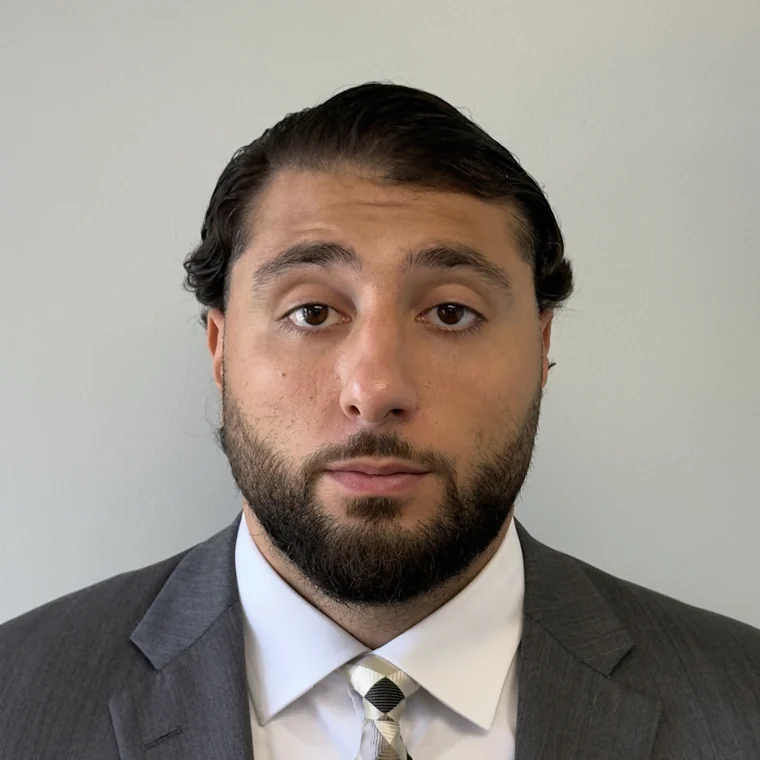
When you call Moe Abdallah Law, you work directly with your attorney and get straight answers, not a call center. Moe takes on the insurance companies and fights for the maximum, and he keeps you updated at every step. The consultation is free and you pay nothing unless he wins.
Real recoveries from an attorney who takes your case personally and fights for the maximum.
Rear-ended by a driver who fled with no police report, and other firms turned her down. Moe opened an uninsured-motorist claim, proved she could not have been at fault, and secured the full policy limit.
Broke his sternum and had no insurance of his own, and his prior attorney ignored him. Moe took his calls day and night and recovered a settlement that covered his hospital bills and future treatment.
Cut off on the freeway and left with back and neck pain over four months of treatment. Moe secured the full policy limit for his pain and suffering, and his totaled car was reimbursed.
Past results do not guarantee a similar outcome. Every case is different and depends on its own facts.
Attorney Moe represented me with nothing but care and diligence during my case, he got me the results that I needed while I was going through a hard time.
Attorney Moe was attentive to all my concerns and issues. He walked me through the entire process of my case and made things easy to understand. I cannot recommend him enough!
I would definitely recommend this firm to anyone looking for reliable legal guidance.
Tell us what happened. We respond fast, usually within the hour, and there's no fee unless we win. Available 24/7 · Se Habla Español.
Call (323) 716-1992