
Los Angeles Truck Accident Lawyer
If you were hurt in a collision with a commercial truck or big rig in Los Angeles, Moe Abdallah Law, P.C. investigates the driver, the carrier, and their insurers and fights for the full value of your injuries. Free consultation, no fee unless we win.
A truck accident lawyer in Los Angeles gives you the fastest way to protect a case a trucking company is already working to limit. A crash with a big rig that can weigh up to 80,000 pounds loaded is a different kind of case than a car wreck, and you want that lawyer on it fast. The injuries run catastrophic. The trucking company's insurer and defense team are already working to limit what they pay. The evidence that proves what really happened can vanish within days. Moe Abdallah Law, P.C. moves fast to protect it. We investigate the driver, the carrier, and everyone else who put that truck on the road. We build the case on federal safety rules and fight for the full value of your injuries while you focus on healing. You pay no fee on your truck case unless we win it.
Port traffic, the 710 and the freight routes through Los Angeles
Big rigs in Los Angeles follow the freight. CHP's East Los Angeles Area says thousands of commercial vehicles use I-710 every day to enter and leave the Port of Long Beach. CHP's South Los Angeles Area patrols the southern part of the county, including the Port of Los Angeles. CHP's Central Los Angeles Area covers I-110, the Harbor Freeway, plus SR-60 at the East LA Interchange and the Four-Level Interchange of US-101 and SR-110. Trucks also share I-105, the Glenn Anderson Freeway, and I-5, the Golden State Freeway. Federal crash data shows how deadly these freeways can be for everyone on them. In NHTSA FARS records for the City of Los Angeles from 2019 to 2024, US-101 had about 83 fatal crashes, I-5 about 82, I-110 about 80 and I-10 about 64. Those counts cover every kind of vehicle, not just trucks. Freeways and expressways made up about 24 percent of all fatal crashes in the city. Trucks also make deliveries on city streets, where LAPD takes the report. If you were hit near the port, on the 710 or on a freeway ramp, tell us exactly where and which way the truck was headed. That tells us which agency wrote the report and where to look for video and witnesses. North of downtown, the I-5, SR-134 and SR-2 carry the same freight into Glendale, where we see truck accident cases in Glendale on the freeway ramps and the surface streets.
Answer 3 quick questions and Moe will call you, free. No fee unless we win.
Prefer to talk? Call (323) 716-1992, 24/7.
Which CHP or LAPD office has your truck crash report
A truck crash on a freeway is a CHP case. Each CHP area office keeps its own reports, and CHP can only release reports it investigated. The East Los Angeles Area office is at 1601 Corporate Center Dr. in Monterey Park, (213) 987-0520. It covers I-710, I-10, SR-60 and I-5. The South Los Angeles Area office is at 19700 Hamilton Ave. in Torrance, (424) 551-4000. Its area includes the Port of Los Angeles. For the downtown freeways and the Four-Level Interchange, the report sits with the Central Los Angeles Area office, 777 W. Washington Blvd., (213) 815-2000. The Altadena Area office covers SR-134 and SR-710. Each CHP office keeps weekday hours, Monday through Friday from 8 a.m. to 5 p.m. CHP's pages describe these areas only in broad terms, so check the card the officer gave you for the office name. To get the report, go to any CHP office and pay the fee, mail a CHP 190 form with a copy of your license, or use CHP's online Crash Report Search. If the truck hit you on a city street, LAPD writes the report instead. Crashes in the Harbor area go through LAPD's South Traffic Division at 4125 S. Crenshaw Blvd. Downtown crashes go through Central Traffic Division on E. 6th St. Wait at least 45 days for an LAPD report online. We order the report for you and compare it with the carrier's own records. Crashes farther south near the harbor often go to the CHP South Los Angeles Area instead, which our Long Beach truck accident page explains.
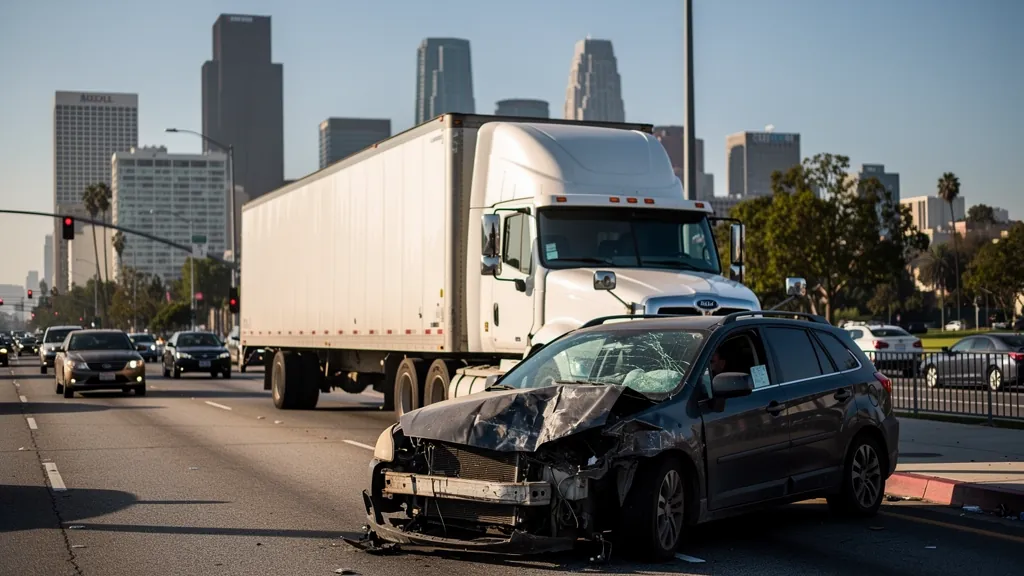
Level I trauma care after a big rig crash in LA
Truck crashes cause the injuries trauma centers exist for: brain injuries, spinal damage, crushed limbs and burns. The LA County EMS Agency's Receiving Hospital Directory names the trauma centers across the region. Near the port, Harbor-UCLA Medical Center at 1000 West Carson Street in Torrance is a Level I trauma center. Los Angeles General Medical Center at 1200 North State Street is Level I. On the Westside, Ronald Reagan UCLA Medical Center in Westwood and Cedars-Sinai Medical Center on Beverly Boulevard are both Level I. A big rig crash on the downtown freeways may mean a trip to Dignity Health-California Hospital Medical Center on South Grand Avenue, a Level II center. In the Valley, Northridge Hospital Medical Center and Providence Holy Cross Medical Center in Mission Hills are Level II. Just outside the city, the directory lists St. Francis Medical Center in Lynwood and Huntington Hospital in Pasadena as Level II. Trauma care is costly, and catastrophic injuries lead to surgeries, rehab and home care that last for years. Your records from that first hospital stay set the baseline for the whole claim. Ask for the trauma team notes, the imaging and the operative reports. We use them to show the full cost of the crash, including the care you'll need later, not just the bills you have today.
When a city, county or Metro truck causes the crash
Not every heavy vehicle on LA roads belongs to a trucking company. A city work truck, a county vehicle or a Metro bus can cause the same damage. A public entity is liable for injuries caused by an employee driving its vehicle on the job (Veh. Code § 17001). These claims start with a short deadline. You have six months from the truck crash to present a written claim (Gov. Code § 911.2). The agency then has 45 days to act, or the claim is treated as rejected (Gov. Code § 912.4). After a written rejection, you generally have six months to sue (Gov. Code § 945.6). If you miss the six-month window, you can only apply for leave to file late, within a reasonable time and no later than one year after the crash (Gov. Code § 911.4). Where the claim goes matters. For a City of Los Angeles vehicle, only the Office of the City Clerk at City Hall, 200 North Spring Street, Room 395, can accept it, and it won't take email or fax. For a County of Los Angeles vehicle, the County's 2016 form names the Board of Supervisors claims office at 500 West Temple Street, Room 383, so confirm before you mail it. If a Metro bus was the heavy vehicle that hit you, mail Metro's Claim for Damages form to One Gateway Plaza, 99-PL-4. A federal truck, such as a mail truck, follows federal claim rules instead. We sort out who owned the truck and file in the right place before the clock runs. In Pasadena, heavy trucks are limited to signed truck routes, and a city refuse truck claim starts with the city; our Pasadena truck accident lawyer page covers both.
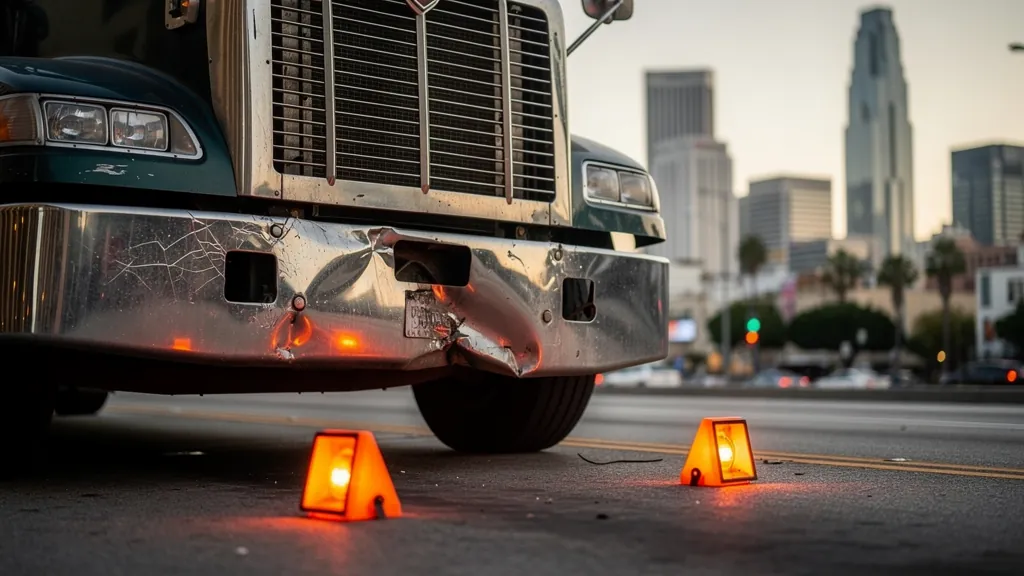
Filing in LA court and the evidence a truck case needs
Serious truck injury cases in Los Angeles usually land in the Superior Court's unlimited civil track. That covers cases over $35,000. Under Local Rule 2.3, these motor vehicle injury cases go to the Stanley Mosk Courthouse at 111 North Hill Street or the Antonovich Antelope Valley Courthouse in Lancaster. According to the court, a number of Stanley Mosk courtrooms are reserved for personal injury cases like a truck crash suit. A filed case lets us force the carrier to hand over what it holds. Federal rules require the trucking company to drug and alcohol test its driver after a fatal crash. They also require it when the driver gets a citation after a crash where someone was treated away from the scene or a vehicle was towed. Alcohol tests must happen within 8 hours and drug tests within 32 hours (49 CFR § 382.303). Missed tests must be documented. We ask for those results, the ELD logs, the ECM download and the dispatch records. We also look for local proof. That means the CHP or LAPD report, video from businesses along the route, and witnesses who stopped on the freeway. Write down any USDOT number you see on the truck. It helps us identify the carrier. Also file a DMV SR-1 within 10 days if anyone was hurt or damage passed $1,000 (Veh. Code § 16000).
Why truck accident cases are bigger, and harder to win
A fully loaded semi can weigh about 20 times as much as a typical car, so a hit leaves devastating results: traumatic brain injuries, spinal-cord damage, amputations, severe burns, and far too often wrongful death. Size isn't the only reason these cases run harder to win. Interstate trucking answers to a thick body of federal safety rules enforced by the Federal Motor Carrier Safety Administration (FMCSA). Those rules cap how long a driver can stay behind the wheel with hours-of-service limits (49 CFR § 395.3), require most carriers to use electronic logging devices (ELDs) that record those hours, set strict maintenance and inspection standards, hold drivers to qualification requirements, and dictate how cargo gets secured. When a carrier breaks a rule, that violation becomes powerful proof of negligence. Picture a fatigued driver who logged too many hours, an overloaded or badly secured trailer, worn-out brakes, or a driver who never should have been hired. Proving it takes a lawyer who knows where those records live and how to read them, because the trucking company will not hand them over willingly.

The evidence disappears within days, so we move immediately
The strongest proof in a truck crash lives inside the truck and the carrier's own files, and some of it can get overwritten in days. The truck's electronic control module, the ECM or "black box," captures speed, braking, throttle, and engine data from the moments before impact. That data can loop over or erase once the truck goes back in service. Federal rules make carriers keep other records only for set periods: driver hours-of-service logs for at least six months (49 CFR § 395.8(k)), maintenance and inspection records for a year (49 CFR § 396.3(c)), and the driver's qualification file for three years after the driver leaves (49 CFR § 391.51(c)). Dispatch notes, messages and camera footage may have no set retention period at all. The moment we take your case, we send formal spoliation and preservation letters demanding the carrier keep every piece of it, and we work to inspect the truck itself before anyone repairs it or puts it back on the road. Every day that passes is a day the evidence can slip away. That is the single biggest reason to call a lawyer right away, before the trucking company's team finishes its own investigation.
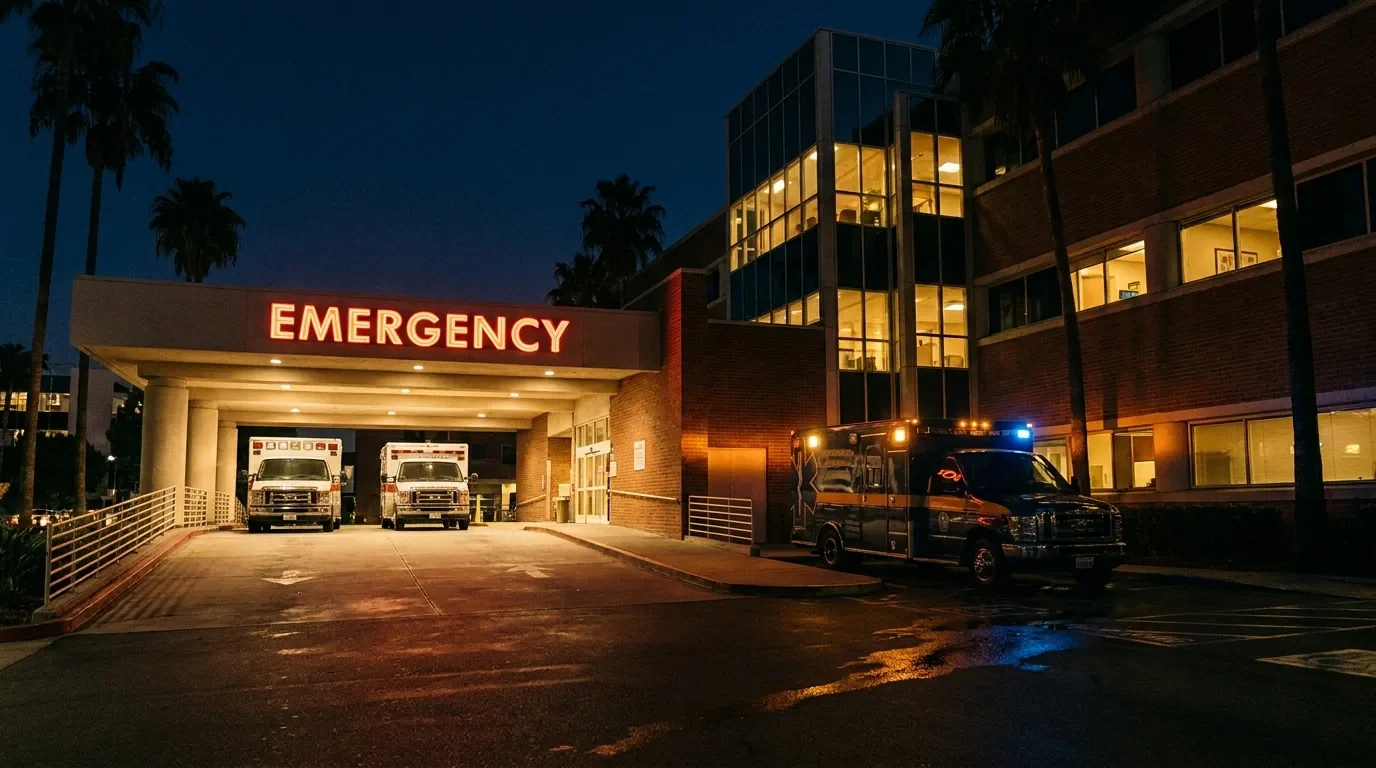
Multiple parties are on the hook, and that means larger policies
In an ordinary car crash you usually find one at-fault driver and one insurance policy. Truck cases are rarely that simple. The driver may be liable, and so may the trucking company or carrier that employed and dispatched them, the freight broker that arranged the load, the company that leased the truck or trailer, the shop responsible for maintenance, the crew that loaded and secured the cargo, and even a parts manufacturer if a defective brake or tire caused the wreck. Sorting out who is responsible takes a careful dig into contracts, logs, and safety records, the kind of work the carrier hopes you won't do. It matters for one very practical reason: commercial trucks carry far more insurance than passenger cars. A for-hire interstate carrier hauling general freight in a truck rated over 10,000 pounds must carry at least $750,000 in liability coverage (49 CFR § 387.9), and many carry $1 million or more. When we name every liable party, we open up every one of those policies to cover your medical bills, lost income, and long-term care. That is why truck cases can be worth far more than a typical car accident, but only when someone builds them correctly from the very first days.

What to do after a truck accident in Los Angeles
Get emergency medical care
Call 911 and get checked even if you think you're "okay." Truck-crash injuries like internal bleeding and brain trauma often hide their symptoms at first, and a gap in treatment is the first thing the insurer uses to devalue your claim.
Document the scene and the truck
If you can, photograph the vehicles, the debris, and the truck's company name, USDOT number, and license plate. Get the police report number and the names and numbers of any witnesses. This points us to the carrier whose records we need to preserve.
Don't talk to the trucking company, call us
The carrier's insurer or a "rapid response" investigator may contact you within hours. Don't give a recorded statement, sign anything, or take an offer before you speak with a lawyer. The consultation is free.
How the trucking company fights you, and how we fight back
Major carriers keep rapid-response teams on call to reach a crash scene fast, take photos, line up their own experts, and start building a defense before you've even left the hospital. Their insurer's job is to pay you as little as possible. It will try to get a recorded statement it can use against you, pin part of the blame on you, argue your injuries came before the crash, and dangle a fast, low settlement while you're still hurting and short on money. We counter every move. We handle all communication so you never have to talk to them. We send preservation letters and pull the FMCSA records before they disappear. We bring in accident-reconstruction and trucking-safety experts, and we name every liable party and every insurance policy in play. We prepare each case as if it will go to trial, which is exactly why carriers and their insurers take represented clients seriously and pay far more.

What your truck accident claim can recover
- ✓Medical expenses. Emergency care, surgery, hospitalization, imaging, medication, and rehabilitation, past and future.
- ✓Lost income. Wages you missed, plus reduced earning capacity when catastrophic injuries keep you from returning to the work you did before.
- ✓Long-term & future care. Ongoing treatment, in-home care, assistive equipment, and lifetime care for spinal-cord, brain, and amputation injuries.
- ✓Pain & suffering. Physical pain, emotional distress, disfigurement, and loss of enjoyment of life.
- ✓Property damage. Fixing or replacing the vehicle the truck struck, plus other belongings the crash ruined.
- ✓Wrongful death. For families who lost a loved one: funeral costs, lost support, and the loss of companionship and guidance.
- ✓Punitive damages. When a defendant acted with malice, oppression or fraud, proven by clear and convincing evidence (Civ. Code § 3294). A trucking company can owe them for its driver's conduct only in narrow cases, such as when an officer, director or managing agent hired or kept a driver the company knew was unfit with conscious disregard for safety. These damages are never automatic.
California injury law, the deadlines that matter
In California, you generally have two years from the date of the crash to file a lawsuit for personal injury or wrongful death against a private driver or trucking company (Code of Civil Procedure § 335.1), and three years to sue for damage to your vehicle or other property (Code Civ. Proc. § 338(c)(1)). Special rules, such as extra time for injured children, can change those dates (Code Civ. Proc. § 352). If a California public entity is involved, such as a city, county or public-works truck, the deadlines are much shorter. You must first present a written claim to that entity within six months for an injury or death claim (Gov. Code § 911.2(a)). If it sends written notice rejecting the claim, you generally have only six months from that notice to file suit (Gov. Code § 945.6(a)(1)). A child hurt in the truck crash gets no extra time on these government claims. California also follows pure comparative negligence: you can recover even if you were partly or even mostly at fault, and your award is reduced by your percentage of fault (Li v. Yellow Cab Co. (1975) 13 Cal.3d 804). In our experience, trucking insurers often take their time while they investigate and push to put more of the blame on you, which is why it pays to get a lawyer involved early.
Why people hurt by big rigs in Los Angeles call Moe Abdallah Law
Moe works your truck case, not a case manager
Attorney Moe Abdallah handles your case personally and keeps you posted by call and text at every step.
No fee unless we win
Taking on a trucking company costs you nothing to start, and nothing at all if we recover nothing. Your first consultation is free.
We move fast and prepare to win
We lock down the evidence before it's gone, bring in the right experts, and build every case for trial, the pressure that makes trucking insurers pay.
Frequently Asked Questions
Often more than just the driver. Liability can reach the trucking company or carrier, the freight broker, the company that leased the truck or trailer, the maintenance provider, the crew that loaded the cargo, and even a parts manufacturer if a defect caused the crash. Because several parties can share fault, you usually find several insurance policies to pursue. We name every responsible party and every policy that applies to your case.
Truck evidence has a short shelf life. The truck's ECM "black box" data can get overwritten within days once the truck goes back into service, and the carrier only has to keep driver logs for six months (49 CFR § 395.8(k)). We send legal preservation letters right away and work to inspect the truck before anyone repairs it, locking down the proof your case depends on.
They can run much larger. Commercial trucks carry much bigger insurance policies. For-hire interstate carriers of general freight must carry at least $750,000 in liability coverage (49 CFR § 387.9), and many carry $1 million or more, and the injuries are usually far more severe, which raises the potential value. But that value is only real if someone builds the case correctly from day one, with the federal safety violations and every liable party documented. That's the work we do.
Interstate carriers answer to the FMCSA, which sets hours-of-service limits (for property haulers, no more than 11 hours of driving after 10 hours off duty, 49 CFR § 395.3), requires most carriers to log driving time electronically, mandates regular maintenance and inspections, sets driver-qualification standards, and governs how cargo gets loaded and secured. When a carrier breaks these rules, say a fatigued driver over their hours, an overloaded trailer, or bad brakes, that violation becomes strong proof of negligence in your case.
Generally two years from the date of the crash to file an injury or wrongful-death lawsuit under Code of Civil Procedure § 335.1, and three years for vehicle damage (§ 338(c)(1)). If a California public entity is involved, you must present a written claim to it within six months under Government Code § 911.2, and if it rejects the claim in writing you generally have six months from that notice to sue (Gov. Code § 945.6). Because truck-crash evidence disappears so fast, call well before any deadline.
You can still recover. California follows pure comparative negligence, so your compensation drops by your percentage of fault rather than getting barred entirely, even if you were more at fault than the truck driver (Li v. Yellow Cab Co. (1975) 13 Cal.3d 804). Trucking insurers routinely exaggerate your share to pay less. We push back with the ECM data, logs, reconstruction, and witness evidence.
No, not before you talk to us. The carrier's insurer or rapid-response investigator may reach out within hours, sounding helpful while hunting for anything to use against you. Don't give a recorded statement, sign a medical release, or take an offer. Let us handle all communication so nothing you say gets turned against your claim. The review is free.
Nothing upfront. We work on a contingency fee, which means our fee comes only from the compensation we recover for you. If we don't recover from the carrier or its insurer, you owe us nothing. Talking with Moe about your truck crash costs nothing, and Se Habla Español.
In a serious truck crash, you will almost always want a lawyer. These cases involve federal safety rules, evidence that disappears in days, and multiple insurance policies you likely can't reach on your own. A carrier's team is built to pay you as little as possible, and an injured person handling it alone is at a real disadvantage. Even after the fee, represented clients typically recover far more. A free call helps you decide with no pressure.
No, and you shouldn't before talking to a lawyer. The carrier's insurer or rapid-response investigator may call within hours, sounding helpful, but a recorded statement is used to pin blame on you or minimize your injuries. You have no obligation to give one. Decline, and let us handle every conversation so nothing you say gets turned against your claim.
Usually not, especially early. Fast offers arrive before anyone knows the full extent of your injuries or the future care you'll need, and truck-crash injuries are often severe. Once you accept and sign, the claim is closed for good, even if your condition worsens. Let us review any offer for free first. With multiple liable parties and larger policies in play, an early number rarely reflects what the case is truly worth.
Yes, get checked right away. The force of a truck impact can cause internal bleeding, concussions, and spinal damage that don't show symptoms at first, and adrenaline hides pain in the hours after a crash. Prompt care protects your health and links your injuries to the wreck. A gap in treatment is the first thing the insurer uses to argue you weren't seriously hurt.
If you weren't at fault, no. Under Ins. Code § 491, your auto insurer's rating plan can't raise your premium because of a crash in which you were not at fault, and the trucking company's insurer is the one that pays your claim. Focus on your recovery first. We can review your specific situation on a free call.
It varies. A clearer case can resolve in a matter of months once treatment is complete, while a serious or catastrophic injury case takes longer, often well over a year, because we won't settle before your prognosis is clear and every liable party and policy is documented. Truck cases carry more moving parts, but we move fast on the evidence and keep the case pushing forward while keeping you updated.
On the freeway, the California Highway Patrol does. CHP's East Los Angeles Area office in Monterey Park covers I-710, and its South Los Angeles Area office in Torrance covers the area that includes the Port of Los Angeles. CHP releases only reports it wrote. Get yours at any CHP office for a fee, by mailing a CHP 190 form with a copy of your license, or through CHP's online Crash Report Search. A crash on a city street goes to LAPD instead.
Six months to present a written claim to the city (Gov. Code § 911.2). Only the Office of the City Clerk can accept it, at City Hall, 200 North Spring Street, Room 395, or through its online portal. If the city doesn't act within 45 days, the claim is treated as rejected (Gov. Code § 912.4). After a written rejection, you generally have six months to sue (Gov. Code § 945.6). Call us early so the claim goes in on time.
The LA County EMS Agency lists Harbor-UCLA Medical Center in Torrance as a Level I trauma center. Los Angeles General Medical Center, Ronald Reagan UCLA Medical Center and Cedars-Sinai are also Level I. St. Francis Medical Center in Lynwood is Level II. Wherever you were treated, get copies of your trauma notes, scans and surgery reports. They anchor your claim for current and future care.
Other ways we help
Truck Accidents lawyer by area
We represent truck accidents victims across Los Angeles County:
Authoritative resources: California Courts, self-help for injury claims · Cal. Code Civ. Proc. § 335.1, 2-year deadline · California DMV · California Office of Traffic Safety, crash data
Sources & local resources
- (535) East Los Angeles · California Highway Patrol
- (530) South Los Angeles · California Highway Patrol
- Frequently Asked Questions · California Highway Patrol
- 9-1-1 Receiving Hospital Directory, Reference No. 501 (rev. 10-01-26) · LA County EMS Agency, Department of Health Services
- Claim for Damage · Office of the Los Angeles City Clerk
- Local Rules, Chapter 2 (Rules 2.2 and 2.3, filing locations) · Superior Court of California, County of Los Angeles
- 49 CFR 382.303, Post-accident testing · eCFR, National Archives
- Cal. Gov. Code § 911.2 · California Legislative Information
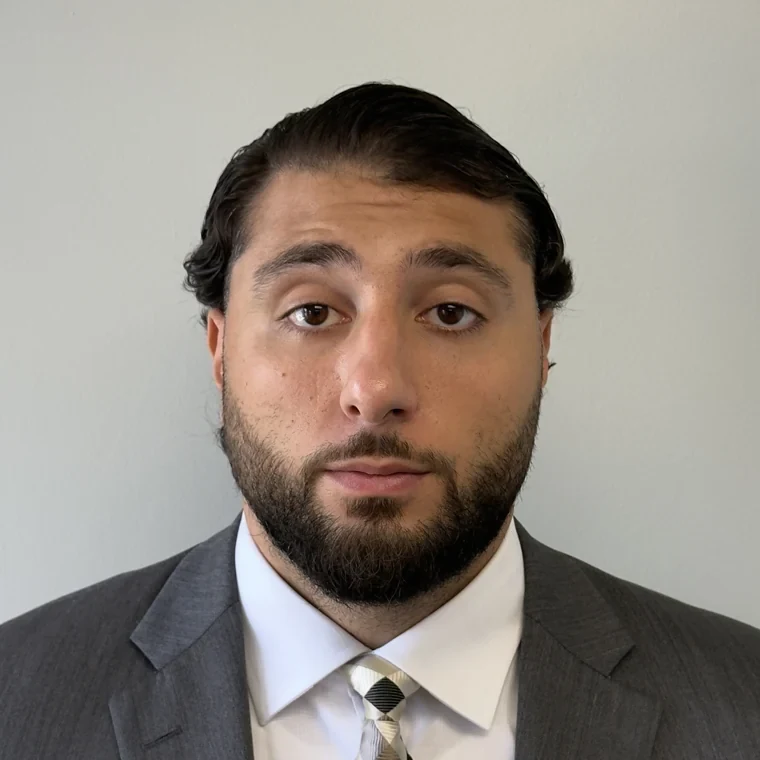
Talk to Moe Abdallah directly
When you call Moe Abdallah Law, you work directly with your attorney and get straight answers, not a call center. Moe takes on the insurance companies and fights for the maximum, and he keeps you updated at every step. The consultation is free and you pay nothing unless he wins.
Real recoveries for real Angelenos
Real recoveries from an attorney who takes your case personally and fights for the maximum.
Rear-ended by a driver who fled, and other firms turned her down. Moe opened an uninsured-motorist claim, proved she could not have been at fault, and secured the full policy limit.
Broke his sternum and had no insurance of his own, and his prior attorney ignored him. Moe took his calls day and night and recovered a settlement that covered his hospital bills and future treatment.
Cut off on the freeway and left with back and neck pain over four months of treatment. Moe secured the full policy limit for his pain and suffering, and his totaled car was reimbursed.
Past results do not guarantee a similar outcome. Every case is different and depends on its own facts.
Talk to a lawyer today, free
Tell us what happened. We respond fast, usually within the hour, and there's no fee unless we win. Available 24/7 · Se Habla Español.
Call (323) 716-1992