
Glendale Truck Accident Lawyer
A Glendale truck accident lawyer from Moe Abdallah Law, P.C. takes on crashes with big rigs and delivery trucks on the I-5, SR-134, SR-2 and Glendale's surface streets. Moe preserves the truck's black box and driver logs, goes after every company that owes you, and charges no fee unless he wins. Call (323) 716-1992 for a free review, 24/7.
A loaded semi can outweigh your car many times over. The gap shows up in the injuries: broken backs, brain injuries, crushed legs, and too often a death in the family. If a truck hit you in Glendale, the trucking company's insurer is already building its side of the story, and it has a head start. Moe Abdallah Law, P.C. is a Los Angeles firm that handles only motor-vehicle injury cases, and truck crashes are part of that work. Here is what sets a Glendale truck crash apart: the freeways and streets where it happens, the federal rules that bind the carrier, the evidence that disappears fast, the local police and court details, and your deadlines. Your first call is free, Moe takes it himself, and you pay nothing unless he wins your case.
Where big rigs and Glendale traffic collide
Four freeways touch Glendale: the I-5 (Golden State Freeway), which briefly enters the city, the SR-134 (Ventura Freeway), the SR-2 (Glendale Freeway), and the I-210 (Foothill Freeway) in northern Glendale. Trucks run all of them, then exit to reach stops on city streets like San Fernando Road, Brand Boulevard, and Glendale Avenue. Glendale's own Vision Zero analysis found that 13% of the city's streets account for 71% of crashes and 78% of killed-or-seriously-injured crashes. City staff told the Council that many of those crashes happen on streets such as Brand Boulevard, Colorado Street and Central Avenue, and near freeway entrances and exits. That last detail matters for truck cases. A rig that merges onto the 134 from a short ramp, or brakes late for stopped traffic at an off-ramp, needs far more room than a car. When it does not get that room, the person in the smaller vehicle pays. The same analysis found pedestrians were in 17% of Glendale crashes but 45% of the killed-or-seriously-injured ones, which shows how badly a size mismatch ends here. If a truck hit you on foot or on a bike, the same legal work applies.
Answer 3 quick questions and Moe will call you, free. No fee unless we win.
Prefer to talk? Call (323) 716-1992, 24/7.
Federal trucking rules hand you proof of negligence
A truck driver does not follow the same rules you do. Commercial carriers answer to the Federal Motor Carrier Safety Administration, and after a crash those rules become evidence. Hours-of-service rules for property-carrying drivers allow at most 11 hours of driving inside a 14-hour on-duty window after 10 straight hours off duty, plus a 30-minute break after 8 hours of driving (49 CFR 395.3). A driver who ran past those limits coming down the I-5 or across the 134 into Glendale was tired, and a tired driver reacts late at the freeway ramps where Glendale's Vision Zero team found many crashes happen. After a fatal crash, or an injury or tow-away crash with a citation, the employer must also test the driver for alcohol and drugs, and the clock runs out at 8 hours for alcohol and 32 hours for drugs (49 CFR 382.303). Missed tests have to be documented, and a gap there tells its own story. The Glendale police or CHP report shows whether the driver was cited, which is one of the triggers for that testing. Carriers must also carry minimum liability insurance. For for-hire interstate carriers of non-hazardous freight with trucks of 10,001 pounds or more, that floor is $750,000 (49 CFR 387.9). That is a floor, not a ceiling, and it is one reason truck claims can be worth more than car claims.
The proof inside the truck can vanish within days
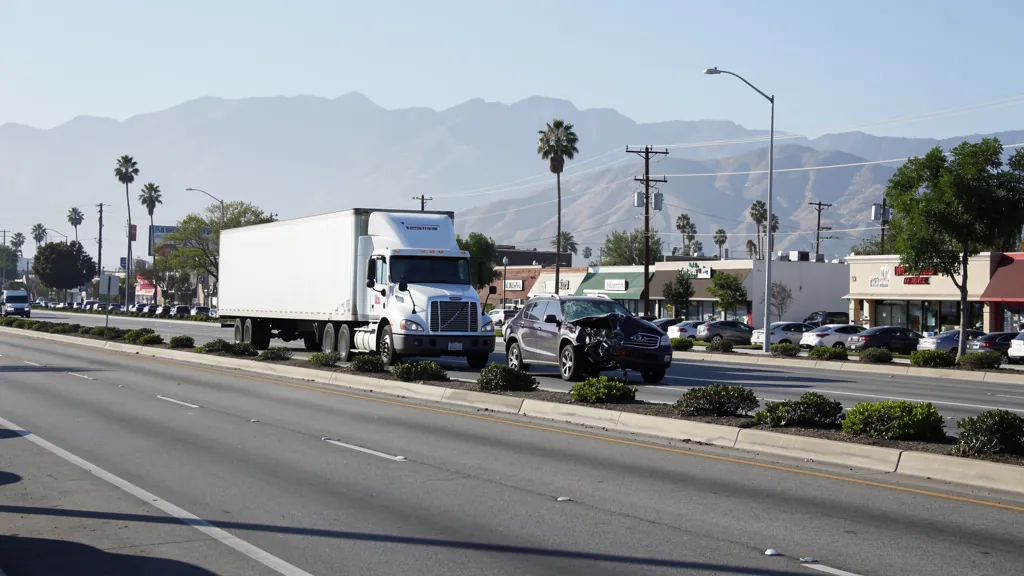
Most of the evidence that wins a truck case sits inside the truck or in the carrier's files. The engine control module, the ECM or black box, records speed, braking and throttle data from the seconds before impact. The electronic logging device shows how long the driver had been working. Dispatch messages, fuel and toll receipts, maintenance records, and the driver's qualification file fill in the rest. Some of it, like black box data and dash camera video, can be overwritten once the truck goes back to work, and other records are only kept for a limited time. A truck that hit you on San Fernando Road or Glendale Avenue may be back on the I-5 or the 134 the next morning. We move first. When Moe takes your case, he sends a written preservation demand to the carrier and its insurer, listing the ECM data, ELD logs, dash camera video, and maintenance files by name, and he works to inspect the truck before anyone repairs it. That letter puts the carrier on notice that the evidence matters to a claim. We also look for camera footage from businesses along the street where you were hit, such as Brand Boulevard or Central Avenue, before it gets recorded over. Call early so those steps happen in the first days, not the first months.
Who owes you money after a Glendale truck crash
Do not assume the driver is the only target. The trucking company is usually responsible for what its employee does on the job. Behind the carrier there may also be a freight broker that hired it, a company that leased out the tractor or trailer, a shop that serviced the brakes, a loader that overloaded the trailer, or a manufacturer whose part failed. Each one may carry its own insurance, and the larger policies are what make a serious truck case different from an ordinary car claim. California also follows pure comparative negligence under Li v. Yellow Cab Co. (1975) 13 Cal.3d 804, so you can recover even if you carry some share of the blame, and your award drops by your percentage. Under Proposition 51 (Civil Code 1431.2), each defendant pays pain and suffering damages only in proportion to its own fault, which is another reason to find every party. If a city, county, or public-works truck hit you, different rules apply. You must present a written claim within six months (Government Code 911.2). Claims against the City of Glendale start with the City Clerk at 613 E. Broadway. Claims against Los Angeles, the County, or LA Metro are filed with those agencies instead.
How much are most truck accident settlements in Glendale?
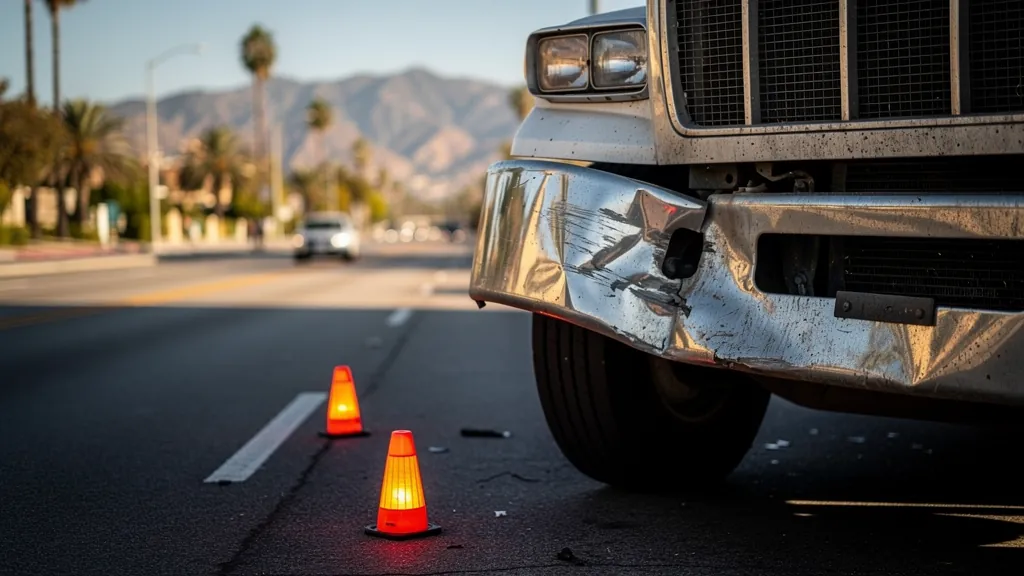
There is no honest average, and no lawyer can promise you a number. A truck case is worth what your injuries, lost income and future care add up to. It is limited by the insurance behind the carrier and every other party at fault, and it shrinks by any share of blame placed on you.
Settlement figures you see online are usually a firm's biggest wins, not a typical result. Here is what moves the value of a claim after a crash with a semi on the 134 or a box truck on San Fernando Road. First, the injury. A spinal fusion, a brain injury or a lost limb brings years of bills and lost earnings, and the claim has to price that future, not just the ER visit. Second, insurance. Federal rules set minimum liability coverage by cargo under 49 CFR 387.9: $750,000 for a for-hire interstate carrier of general freight in a truck of 10,001 pounds or more, $1,000,000 for oil and many hazardous materials, and $5,000,000 for certain bulk hazardous loads such as cargo-tank shipments. Third, the number of defendants, since each one can bring another policy. Fourth, fault. Under pure comparative negligence your award drops by your percentage, so the carrier's adjuster will try to pin part of the crash on your lane change or your speed. Once those four pieces are known, Moe can tell you what a fair range looks like for your case, and why.
Glendale police reports, courts, and your deadlines
The Glendale Police Department writes the report for crashes inside city limits. Its Records Bureau is at 131 N. Isabel Street, phone 818-548-3135. A 2014 city release said collision reports could be bought online through LexisNexis at least seven days after the crash, or requested by mail or in person, and that reports needing a Traffic Bureau criminal investigation, such as fatal or hit-and-run crashes, can be delayed. Those fees are old, so call the Bureau for current ones. Freeway crashes on the I-5, SR-134, SR-2 and I-210 are usually handled by the California Highway Patrol instead. Separate from any police report, you must report a crash to the DMV within 10 days if anyone was hurt or damage topped $1,000 (Vehicle Code 16000). You have two years to sue a private trucking company (Code of Civil Procedure 335.1) and three years for vehicle damage. The Glendale Courthouse sits at 600 East Broadway. Which Los Angeles Superior Court location hears a given injury case depends on the case, and we check the court's filing locator before we file, so we do not guess.
Who investigates a truck crash on Glendale's freeways?
Usually the California Highway Patrol, not Glendale police. The CHP Altadena Area office lists SR-134 and portions of I-210, I-5 and SR-2 among the routes it patrols, and the CHP Central Los Angeles Area also patrols SR-2. Which office wrote your report depends on exactly where the truck hit you.
When Glendale built its Vision Zero crash analysis, it studied 5,125 crashes on city streets from 2012 to 2021 and left out crashes on the state freeways, because the plan covers local roads. Your freeway crash lives in CHP files instead. The CHP Altadena office sits at 2130 Windsor Avenue in Altadena, phone (626) 646-0500. The ramps are where the two systems meet. The same city study flagged high-scoring crash segments at freeway access points, naming Honolulu Avenue and Lowell Avenue at the I-210 on-ramps and Goode Avenue and Sanchez near the 134. Honolulu at Lowell had 35 crashes, the most of any intersection on the city's list, and Brand Boulevard at Sanchez had 29. A truck that hit you just off a ramp may show up in a Glendale police report, a CHP report, or both. We pull every report that exists and compare them, because the officer's diagram and any cited violation often shape how the carrier's insurer values your claim.
What percentage does a truck accident lawyer take?
No California law sets the percentage. Business and Professions Code 6147 requires a written contingency fee agreement, signed by you and the lawyer, that states the rate you agreed on and says the fee is not set by law and is negotiable. With Moe, the fee comes only out of money he recovers for you.
Ask to see the agreement before you sign, and read three parts closely. The first is the rate, and whether it changes if the case goes to trial. The second is costs, because section 6147 says the contract has to explain how case costs affect both the fee and what you take home. In a truck case those costs can be real: downloading the engine control module, hiring a crash reconstruction engineer, deposing a safety manager at the carrier's home office. The third is whether you could owe anything for related matters outside the agreement. You are entitled to a signed duplicate copy when you sign. If a lawyer leaves out a required term, the statute lets you void the agreement, and the lawyer is then limited to a reasonable fee. What counts is the net amount that reaches you after fees, costs and medical liens are paid, so ask any Glendale truck accident lawyer you talk to how that math works in a case like yours.
Can I hire a lawyer now and pay later?
Yes. That is how a contingency fee works. You pay nothing to hire Moe, with no retainer and no hourly bill, and his fee is paid only from a settlement or verdict he wins for you. If there is no recovery, you owe no attorney fee. That lets you get help in the first days, while truck evidence still exists.
Waiting until you can afford a lawyer is the mistake that costs truck crash victims the most. The carrier has its own people working from day one, and its insurer pays defense lawyers by the hour whether they win or lose. Hiring early means the preservation letter goes out before the ECM data is overwritten, the CHP or Glendale police report is requested before memories fade, and someone handles the adjuster while you heal. If you are out of work after the crash, tell Moe on the first call. He can explain how your medical care and lost wages fit into the claim, what your own auto policy may cover in the meantime, and what the written agreement says about costs, so nothing surprises you when the case ends.
Truck injuries, Glendale hospitals, and how Moe handles your case
Truck crash injuries run severe: spinal cord damage, traumatic brain injury, crushed limbs, internal bleeding, and burns. Glendale hospitals with emergency care include Adventist Health Glendale Medical Center on Wilson Terrace and Glendale Memorial Hospital on South Central Avenue. The LA County EMS Agency lists both as umbrella facilities under Los Angeles General Medical Center, not as designated trauma centers, so your worst injuries may be treated at a trauma center elsewhere in the county. Whatever hospital you land in, keep every record, bill and discharge paper and follow the treatment plan, because the carrier's adjuster will read your chart for gaps. Moe handles these cases himself. He answers the phone, updates you by call and text, and builds the claim around your medical future instead of a quick number. In other crash cases, he secured a $75,000 total recovery after an at-fault insurer first offered $900, and he has won policy-limit recoveries. Past results do not promise a similar outcome, because every case turns on its own facts, the insurance available, and your injuries. The first review is free, available any hour, and Se Habla Español.
Talk to a Glendale truck accident lawyer
Call (323) 716-1992 for a free, no-obligation case review. You pay nothing unless we win, and we'll handle the insurance companies for you. Learn more about our truck accidents representation →
Frequently Asked Questions
The proof that wins your case disappears quickly. The truck's black box data and dash camera video can be overwritten once the rig goes back to work, and other carrier records are only kept for a limited time. Camera footage from Glendale businesses near the crash gets recorded over too. Moe sends preservation demands right away and works to inspect the truck before anyone repairs it, so the evidence stays intact.
Often more than the driver. Liability can reach the trucking company, a freight broker that arranged the load, the company that leased the truck or trailer, the shop that serviced it, a loader who overloaded it, and a parts maker if a defect caused the crash. More parties usually means more insurance policies. We identify every responsible party and every policy that applies, which is one reason truck cases can be worth more than car cases.
Carriers answer to the FMCSA. Its rules cover hours of service (11 hours of driving in a 14-hour window), electronic logging, post-crash drug and alcohol testing, maintenance, and minimum insurance. When a carrier breaks one of them, such as a driver over their hours or a rig with bad brakes, that violation becomes strong evidence of negligence in your claim.
For a crash on city streets, contact the Glendale Police Department Records Bureau at 131 N. Isabel Street, phone 818-548-3135. Reports from fatal or hit-and-run crashes can take longer because of the investigation. Freeway crashes are usually written up by the California Highway Patrol. Fees listed online are from 2014, so ask what they are now. If you hire Moe, his office can request the report for you.
Yes. California follows pure comparative negligence, so your compensation shrinks by your percentage of fault instead of disappearing. Trucking insurers often inflate your share to pay less, especially after a freeway merge. We push back with the ECM data, the driver's logs, witness statements, and a reconstruction of the crash so your share stays where it belongs.
You generally have two years from the crash to sue a private trucking company (Code of Civil Procedure 335.1). If a government vehicle was involved, you must present a written claim within six months (Government Code 911.2). If the entity rejects it in writing, you then have six months to sue. Because truck evidence vanishes fast, call well before any deadline.
Usually not, and not early. Fast offers show up before anyone knows the full extent of your injuries or the care you will need, and truck injuries are often severe. Once you sign, the claim closes for good, even if you get worse. Let Moe review any offer for free first. You pay no fee unless he recovers money for you.
Yes. Federal rules raise the minimum by cargo. A for-hire interstate truck of 10,001 pounds or more carrying general freight needs at least $750,000 in liability coverage. Oil and many hazardous materials require $1,000,000, and certain bulk hazardous loads, such as cargo-tank shipments, require $5,000,000 (49 CFR 387.9). These are floors, and many carriers buy more.
Yes. Under Business and Professions Code 6147, a lawyer who takes your case on contingency must give you a duplicate copy of the written contract, signed by both of you, at the time you sign it. The contract must state the fee rate, explain how costs affect your recovery, and say the fee is negotiable.
Other cases we handle in Glendale
See everything we handle in Glendale →
Truck Accident lawyers in other cities we serve
Sources & local resources
- Glendale 2022 OTS crash ranking · California Office of Traffic Safety
- Council Reviews Update on Vision Zero Action Plan · Glendale News-Press (Outlook Newspapers)
- Traffic Collision Data · Glendale Police Department
- City Clerk Services (Claim for Damages Form) · City of Glendale
- 49 CFR Part 395, Hours of Service of Drivers · Electronic Code of Federal Regulations
- 49 CFR 387.9, Financial responsibility, minimum levels · Electronic Code of Federal Regulations
- Cal. Government Code 911.2 · California Legislative Information
- Trauma Centers and 9-1-1 Umbrella Facilities (Ref. 506.2a) · LA County Department of Health Services EMS Agency
- Altadena Area office (575) · California Highway Patrol
- Central Los Angeles Area office (590) · California Highway Patrol
- Glendale Vision Zero Action Plan: Crash Analysis · City of Glendale
- Cal. Business and Professions Code 6147 · California Legislative Information
- LexisNexis - Traffic Accident Reports Available Online (2014 release)
Talk to Moe Abdallah directly
When you call Moe Abdallah Law, you work directly with your attorney and get straight answers, not a call center. Moe takes on the insurance companies and fights for the maximum, and he keeps you updated at every step. The consultation is free and you pay nothing unless he wins.
Real recoveries for real Angelenos
Real recoveries from an attorney who takes your case personally and fights for the maximum.
Rear-ended by a driver who fled, and other firms turned her down. Moe opened an uninsured-motorist claim, proved she could not have been at fault, and secured the full policy limit.
Broke his sternum and had no insurance of his own, and his prior attorney ignored him. Moe took his calls day and night and recovered a settlement that covered his hospital bills and future treatment.
Cut off on the freeway and left with back and neck pain over four months of treatment. Moe secured the full policy limit for his pain and suffering, and his totaled car was reimbursed.
Past results do not guarantee a similar outcome. Every case is different and depends on its own facts.
Talk to a lawyer today, free
Tell us what happened. We respond fast, usually within the hour, and there's no fee unless we win. Available 24/7 · Se Habla Español.
Call (323) 716-1992