
Do I Need a Lawyer After a Car Accident in Los Angeles?
Do I need a lawyer after a car accident? If nobody was hurt and the only loss is a repairable car with clear fault, you can often handle it yourself. If you have any injury, fault is disputed, the other driver fled or has no insurance, or a commercial, rideshare, or government vehicle is involved, call a Los Angeles car accident lawyer before you talk to an insurer. Moe Abdallah Law, P.C. gives free consultations and charges no fee unless you win.
Most people ask this question a few days after the crash, when the adjuster has already called twice. Some claims do not need a lawyer. Many do. This guide shows you where the line sits in California, what the red flags look like, what a contingency fee really costs, and what a lawyer does that you cannot easily do alone. Moe Abdallah handles car, truck, motorcycle, pedestrian, Uber and Lyft, uninsured motorist, and other crash cases in Los Angeles, so you will see where a call helps and where it does not.
When you can handle a car accident claim yourself
You can reasonably skip a lawyer when every one of these is true. Nobody was hurt, not even sore the next morning. The other driver clearly caused the crash and admits it. The other driver has insurance. The only loss is damage to your car or a few items inside it, and the repair estimate is small. In that situation you are really dealing with a property claim, and California gives you three years to sue over damaged property (Code of Civil Procedure § 338(c)). Call the at-fault driver's insurer or your own, get an estimate from a body shop you trust, and keep every receipt. If the claim is small and the insurer stalls, small claims court lets an individual sue for up to $12,500, but you cannot bring a lawyer into that courtroom, according to the California Courts self-help site. Even in this easy case, two habits protect you. Do not sign a release until the car is fixed and you have checked for hidden damage. And do not tell anyone you are fine. Neck and back pain often appears a day or two later, and once you have signed away your claim you cannot reopen it.
Red flags that mean you should call a lawyer
Treat any of the following as a reason to get a free consultation before you give an insurer a statement. First, any injury at all. If you saw a doctor, went to urgent care, or took an ambulance, the claim is no longer a simple car repair. Second, a fight over fault. If the other driver blames you, if the police report is unclear, or if a witness says something different, the insurer will use that doubt to cut what it pays. Third, no identifiable driver or no insurance. A hit and run or an uninsured driver pushes your claim onto your own policy, and that policy has deadlines and rules of its own. Fourth, a commercial truck, delivery van, or company car. Those claims bring in employers and larger policies. Fifth, an Uber or Lyft driver. Sixth, a city bus, police car, or any government vehicle. Seventh, an offer that arrives within days and sounds low. Eighth, a request for a recorded statement. If even one of these fits your crash, a call costs you nothing and can change how the claim is handled from the first day.
Why injuries change the answer
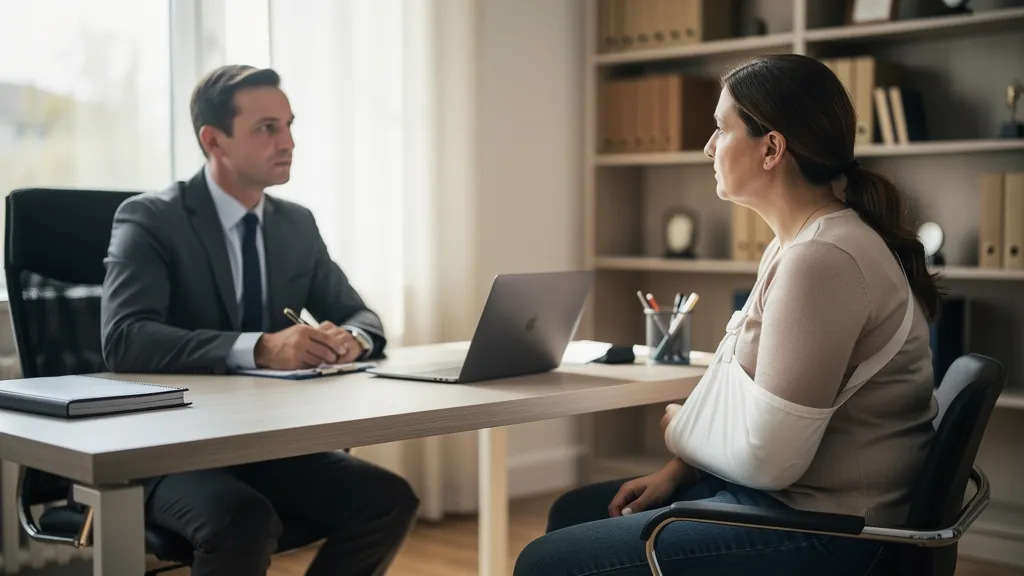
Once you are hurt, the insurer on the other side has a financial reason to settle low and settle early. California lets you recover economic damages such as medical bills and lost wages, and non-economic damages such as pain and suffering. Insurers know most people cannot tell how those categories are measured. They also know a first offer can easily leave out future care. They know treatment records decide the claim. A gap between the crash and your first doctor visit, or a stretch where you stopped going, gives the adjuster an argument that you were not that hurt. A lawyer makes sure you get the care you need, that the records tie your symptoms to the crash, and that the demand includes costs you have not paid yet. Pre-existing conditions are a common worry. Moe has handled a client with back problems documented on MRIs for years before the crash, and an insurer cannot simply ignore a crash that made an old injury worse. That is a conversation to have with a lawyer, not a reason to stay quiet.
Disputed fault and California's comparative fault rule
California follows pure comparative negligence under Li v. Yellow Cab Co. (1975) 13 Cal.3d 804. That means you can recover even if you were partly at fault, but your award drops by your percentage of blame. Adjusters know this and routinely try to push a fault share onto you, sometimes 20 or 30 percent, because every point comes straight off the payment. Whoever has the better evidence wins that argument. Photos of the scene, traffic camera and business video, 911 calls, the officer's report, and witness names all fade quickly. Stores overwrite video, shops repair cars, and memories blur. If the other driver's story differs from yours, or if the insurer says you ran a light or changed lanes, do not argue it by phone. Moe once took a red-light T-bone where the other driver had lined up fake witnesses, and the case turned when he found the real ones. Past results are not a promise of a similar outcome. Disputed fault is the clearest sign that you want someone building the evidence on your side while it still exists.
Hit and run, uninsured drivers, and your own policy
California requires drivers to carry at least $30,000 for injury to one person, $60,000 for injury to more than one person, and $15,000 for property damage, according to the DMV. Those numbers are small next to a real injury, and plenty of drivers carry nothing. That is why your own uninsured and underinsured motorist coverage matters. Under Insurance Code § 11580.2, a hit-and-run driver counts as uninsured when the driver is unknown, but strict conditions apply: your injury must come from physical contact with the other car, you or someone for you must report the crash within 24 hours to the city police or, outside city limits, the sheriff or CHP, and you must file a sworn statement with your insurer within 30 days after that. You must also act on time. The statute requires suit, an agreement, or a formal start of arbitration within two years of the accident. Underinsured coverage applies when the at-fault driver's limits are lower than your own UM limits. There is a catch for uninsured drivers: Civil Code § 3333.4 bars you from recovering non-economic damages such as pain and suffering if you owned an uninsured car involved in the crash or were driving without proof of insurance. The one exception covers an uninsured owner hit by a driver later convicted of DUI for that crash. Moe recovered a $100,000 policy limit for a woman rear-ended by a driver who fled with no police report, after other firms turned her down. Past results are not a promise of a similar outcome.
Commercial, rideshare, and government vehicles
These crashes are where doing it alone goes wrong most often. A delivery truck or company car brings in an employer, a commercial policy, and an insurer whose adjusters handle injury claims all day. Rideshare crashes depend on what the app was doing. Under Public Utilities Code § 5433, $1,000,000 in coverage for death, injury, and property damage applies from the moment a driver accepts a ride request until the ride is complete. Since January 1, 2026, the rideshare company must also carry uninsured and underinsured motorist coverage of $60,000 per person and $300,000 per incident, but only while a passenger is in the car. With the app on and no request accepted yet, the minimums are $50,000 per person, $100,000 per incident, and $30,000 for property damage, plus $200,000 in excess coverage. With the app off, the driver's personal policy is the starting point. The period you were in can decide which policy pays, and the apps keep that trip record. Government vehicles come with a hard deadline. Government Code § 911.2 requires a written claim within six months of the crash for injury claims against a city, county, or other public entity. That covers a city bus, a police cruiser, a county truck, or a road defect. Miss it and you may apply for late-claim relief only within one year of the crash under § 911.4, and the entity can say no. If the claim is rejected, § 945.6 gives you six months from the notice to file suit. Do not wait.
Low offers and recorded statement requests
A quick offer is not a favor. Under the Department of Insurance's guidance, a company must acknowledge a claim within 15 days of notice, accept or deny within 40 days of proof of claim, and pay within 30 days after a settlement is reached. Nothing in that timeline requires the other driver's insurer to be generous, and it has no duty to look out for you. An early offer usually arrives before you know what your injury will need. Moe took over a case where the at-fault insurer offered $900, which matched a single emergency room visit, and treated the claim as closed. After about five months of guided treatment, he secured the at-fault driver's $25,000 policy limit and opened an underinsured motorist claim on the client's own policy. The total reached $75,000. Every case differs, and past results are not a promise of a similar outcome. Still, the gap shows why you should not accept a number before you know your injury. A recorded statement is the same kind of trap. Your own insurer may require cooperation under your policy. The other driver's insurer does not. Its questions aim to lock in your words, and a casual answer like I'm okay can come back to hurt you later. You can politely decline and say your lawyer will contact them.
How contingency fees work in California
Most car accident lawyers work on contingency. The State Bar of California explains that you pay the lawyer a percentage of the money recovered if you win or settle, and nothing in fees if you lose. Three details matter. The State Bar says the percentage is negotiable and no statute sets it. The written fee agreement should say whether the percentage is figured before or after costs are deducted, which changes what you take home. And costs are separate from fees. The State Bar warns that court costs and other expenses can be high and that you may owe some or all of them whether you win or lose, so ask how your lawyer handles them. Read the agreement before you sign, ask for the percentage in writing, and ask for an example showing a settlement and what you would net. At Moe Abdallah Law, P.C. the free consultation costs nothing, the fee is contingent, and you owe no fee unless Moe wins. You can also check any California lawyer's license and discipline record on the State Bar website before you hire.
What a free consultation covers and what a lawyer actually does
A free consultation is a short, no-pressure conversation. You describe the crash, the injuries, and who has called you. The lawyer tells you if you have a claim, which deadlines apply, which insurance may pay, and what to avoid saying or signing. You are not obligated to hire anyone, and you can leave with a clear next step. Bring the police report number, photos, insurance cards, and any letters. If you hire the firm, the work is concrete. The lawyer sends letters of representation so the insurers stop calling you, sends preservation demands for video and vehicle data, gathers the police report and witness statements, and identifies every policy that may apply, including yours. The lawyer also guides your treatment, collects bills and records, handles liens, builds the demand with future care and lost income, negotiates, and files suit before the deadline if the insurer will not pay fairly. Moe takes calls himself and updates clients by call and text. Moe Abdallah Law, P.C. is at 527 W 7th St, Ste 924, Los Angeles, CA 90014 and answers at (323) 716-1992, 24/7, Se Habla Español.
What to do in the first days while you decide
You do not have to decide today, but a few steps protect every option. Get medical care, even if you feel mostly fine. Report the crash to police and ask for the report number. California requires you to report to the DMV with an SR-1 form within 10 days if anyone was injured or killed or if property damage exceeds $1,000, and the DMV warns that late reporting can lead to a license suspension, so file it even if the other driver was at fault. Photograph the cars, the road, injuries, and any cameras nearby. Tell your own insurer about the crash promptly, but keep to the facts. Do not post about it online. Do not sign anything from the other side's insurer. Write down the date the crash happened, because two years is the general limit to sue for injury under Code of Civil Procedure § 335.1, and six months applies if a public entity is involved. If any red flag from this guide fits your situation, call the same day. If none does and you were uninjured, you can likely go it alone.
Frequently Asked Questions
Not always. If nobody was hurt and the other driver's insurer accepts fault and pays for repairs, you may not. If you have any injury, or fault is disputed, the answer changes. California's comparative fault rule lets insurers assign you a share of blame even when you did little wrong, so a free consultation is cheap protection.
As soon as you have an injury, a fault dispute, a hit-and-run, an uninsured driver, or a commercial, rideshare, or government vehicle involved. Early help preserves video and records. Call before you give a recorded statement or sign anything, and well before the two-year lawsuit deadline or the six-month government claim deadline.
Usually you can handle a clear, property-damage-only claim yourself. File with the at-fault insurer, get a repair estimate, and keep receipts. Wait before signing a release in case pain appears later. If symptoms show up or the insurer disputes fault, speak with a lawyer, because a signed release can end your claim.
Most work on contingency, so you pay a percentage of the recovery only if you win or settle. The State Bar says the percentage is negotiable and not set by law. Ask whether the fee is figured before or after costs, and how case expenses are handled. Moe Abdallah Law, P.C. charges no fee unless you win.
You explain what happened and the lawyer reviews your injuries, the insurance involved, fault, and the deadlines that apply. You learn your options and what to avoid doing or saying. You are under no obligation to hire the firm. Bring the police report number, photos, and any letters from insurers.
No. The other driver's insurer is not your insurer and you generally have no duty to give it a recorded statement. Your own policy may require cooperation. You can decline politely and refer the adjuster to your lawyer. Insurers use statements to lock in details that can later cut your offer.
You generally must present a written claim to the public entity within six months under Government Code § 911.2, far shorter than the usual two years. A late application is possible within one year under § 911.4, but the entity can deny it. Call a lawyer immediately if a city bus or public vehicle was involved.
Your own uninsured motorist coverage may pay. For an unknown hit-and-run driver, Insurance Code § 11580.2 requires physical contact, a police report within 24 hours, and a sworn statement to your insurer within 30 days after that. You also have two years to sue or start arbitration. Check your policy and call a lawyer quickly, because these claims turn on strict conditions.
Once you sign a release and cash the check, the claim is generally closed. Before you sign, you can still talk to a lawyer, and doing so is free at Moe Abdallah Law, P.C. If you already settled, a lawyer can tell you whether anything remains open. Settling with the other driver without your own insurer's written consent can cost you an uninsured or underinsured claim, so ask first.
Have a question about your own case? Call (323) 716-1992 for a free review, or talk to a Los Angeles car accident lawyer →
Get help with your own case
Every crash is different, and the rules above play out differently in each one. If you were hurt, see how Moe handles your kind of case: Los Angeles Car Accident Lawyer, Los Angeles Truck Accident Lawyer, Los Angeles Motorcycle Accident Lawyer, Los Angeles Pedestrian Accident Lawyer, or Los Angeles Uninsured Motorist Lawyer. He reviews your case for free, 24/7, and you pay nothing unless we win.
Authoritative resources: California Courts, self-help for injury claims · Cal. Code Civ. Proc. § 335.1, 2-year deadline · California DMV · California Office of Traffic Safety, crash data
Sources & local resources
- California Auto Insurance Requirements · California DMV
- Report of Traffic Accident Occurring in California (SR 1) · California DMV
- What to Expect Regarding Fees and Billing · State Bar of California
- So You've Had an Accident, What's Next? · California Department of Insurance
- Insurance Code Section 11580.2 · California Legislative Information
- Government Code Section 911.2 · California Legislative Information
- Government Code Section 911.4 · California Legislative Information
- Public Utilities Code Section 5433 · California Legislative Information
- Small Claims in California · California Courts Self-Help
- Civil Code Section 3333.4 · California Legislative Information
Talk to Moe Abdallah directly
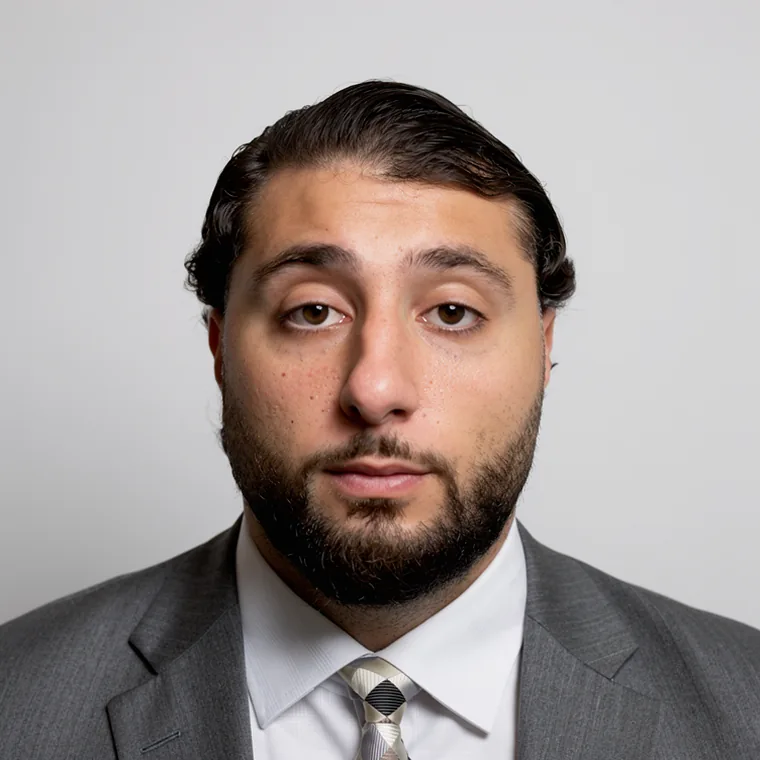
When you call Moe Abdallah Law, you work directly with your attorney and get straight answers, not a call center. Moe takes on the insurance companies and fights for the maximum, and he keeps you updated at every step. The consultation is free and you pay nothing unless he wins.
Real recoveries for real Angelenos
Real recoveries from an attorney who takes your case personally and fights for the maximum.
Rear-ended by a driver who fled, and other firms turned her down. Moe opened an uninsured-motorist claim, proved she could not have been at fault, and secured the full policy limit.
Broke his sternum and had no insurance of his own, and his prior attorney ignored him. Moe took his calls day and night and recovered a settlement that covered his hospital bills and future treatment.
Cut off on the freeway and left with back and neck pain over four months of treatment. Moe secured the full policy limit for his pain and suffering, and his totaled car was reimbursed.
Past results do not guarantee a similar outcome. Every case is different and depends on its own facts.
5.0 stars across every review
I would definitely recommend this firm to anyone looking for reliable legal guidance.
Moe Abdallah is the best attorney around , very professional, attentive, respectful, highly knowledgeable, caring for his clients like family and most importantly gets the job done! Forever thankful I found Moe to help me in my case Got me
I am incredibly grateful to Moe Abdallah Law, P.C. for their outstanding representation following my recent accident. Dealing with injuries, medical bills, and insurance companies was overwhelming, but Moe completely took the burden off my
Talk to a lawyer today, free
Tell us what happened. We respond fast, usually within the hour, and there's no fee unless we win. Available 24/7 · Se Habla Español.
Call (323) 716-1992