
California Comparative Negligence in a Car Accident: How Fault Cuts Your Payout
California comparative negligence is a pure system: if you were partly at fault for a car accident, you can still recover, but a judge or jury cuts your damages by your percentage of blame. A Los Angeles car accident lawyer like Moe Abdallah fights the fault split, because every point of blame the insurer puts on you comes out of your recovery.
If an adjuster told you the crash was "partly your fault," you did not lose your case. You lost ground unless you push back. California comparative negligence lets an injured driver, passenger, pedestrian, or cyclist collect even when the insurer blames them for most of the crash. What changes is the size of the check. Insurance companies know that, so the first thing they do after a Los Angeles crash is hunt for a way to move fault onto you. This guide explains the rule from the 1975 case that created it, shows the math with worked examples, and covers the arguments adjusters use for rear-end crashes, left turns, lane changes, pedestrians, cyclists, and lane splitting. It also explains what Proposition 51 does when more than one driver caused the crash, and it ends with the evidence that wins a fault fight. This is general information, not legal advice for your case. For a free review any time of day, call Moe Abdallah Law, P.C. at (323) 716-1992.
What pure comparative negligence means under California law
Before 1975, California followed contributory negligence. If a court found you even slightly at fault, you recovered nothing. In Li v. Yellow Cab Co. (1975) 13 Cal.3d 804, the California Supreme Court threw out that all-or-nothing bar and replaced it with comparative negligence. Under that system, your own fault reduces your recovery but does not erase it. The court held that liability for damage should be borne by those whose negligence caused it, in direct proportion to their fault. California uses the pure version of the rule. Some states cut you off once you reach 50 or 51 percent at fault. California does not. You can be 90 percent at fault and still recover the other 10 percent of your damages. The starting point in the statutes is Civil Code section 1714, which makes everyone responsible for injuries caused by a lack of ordinary care, except to the extent the injured person brought the injury on himself or herself by a lack of ordinary care. The law asks two questions. How careless was the other driver? How careless were you? Then it splits the loss to match. That is why the phrase "partly at fault" should not scare you. It should make you ask one question: what percentage are they claiming, and what proof do they have for it?
How fault percentages reduce your damages: worked examples
The math is simple multiplication. Your total damages are everything you could recover if the other driver were 100 percent responsible: medical bills, lost income, property damage, and pain and suffering. Your recovery is that total times the percentage of fault assigned to the other side. The numbers below are made up to show the arithmetic. They are not predictions for any real case. Say a jury finds your total damages are $100,000. If you are found 0 percent at fault, you recover $100,000. At 20 percent at fault, your award drops by $20,000 and you recover $80,000. At 50 percent, you recover $50,000. At 90 percent, you still recover $10,000, which a state with a 50 percent bar would never allow. Now watch how a small shift in the percentage moves real money. Suppose your damages are $250,000 and the insurer argues you were 30 percent at fault because you were speeding. That claim alone costs you $75,000. If your lawyer can show through the vehicle's data, a witness, or a traffic camera that you were going the limit, and the fault falls to 10 percent, you keep $225,000 instead of $175,000. The insurer's fault argument is not a side issue. For many claims it is the biggest number on the table. Two more points. First, the fault split usually applies to the whole award, including pain and suffering, not only the medical bills. Second, the percentage often decides settlement value long before any jury sees it, because both sides know how a jury is likely to split blame and negotiate in that shadow.
How insurers argue fault after a Los Angeles crash
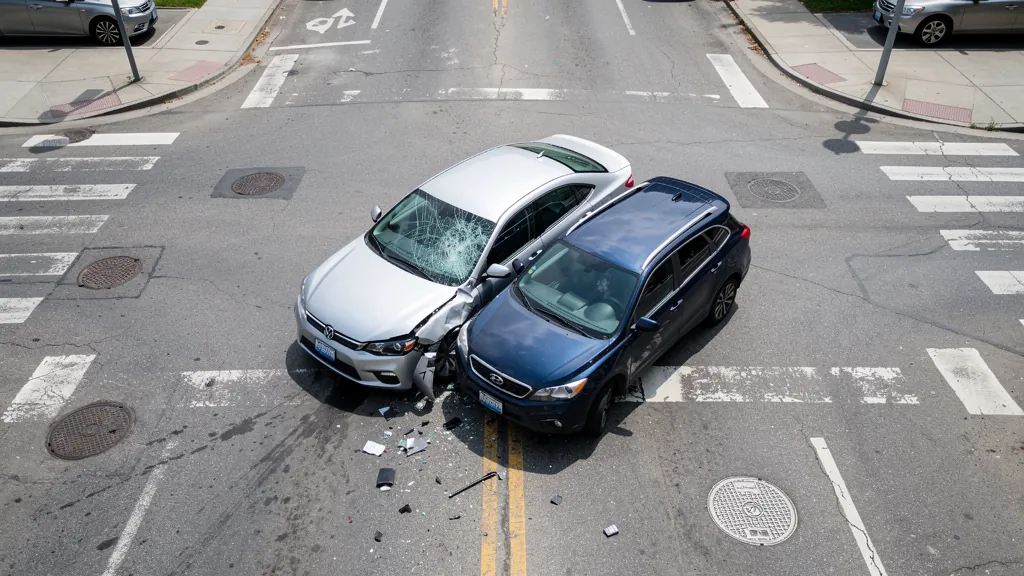
Adjusters rarely say "we want to pay less." They say the crash was "shared." They rely on a short list of Vehicle Code sections, and you can answer each one if you know what it actually says. Rear-end crashes. Insurers cite Vehicle Code section 21703, which says a driver shall not follow another vehicle more closely than is reasonable and prudent, with due regard for speed, traffic, and road conditions. That language favors the front driver in most rear-end crashes, but it is a reasonableness standard, not a rule that the back driver pays 100 percent in every case. Adjusters look for a front driver who braked hard for no reason, had dead brake lights, or cut in and slowed. They will also ask whether you were stopped, because a stopped car is hard to blame. Left turns. Vehicle Code section 21801 requires a driver turning left to yield to oncoming vehicles close enough to be a hazard, and to keep yielding until the turn can be made with reasonable safety. The turning driver gets blamed first. Insurers push back by claiming the oncoming driver was speeding, ran a red light, or was too far away to judge. Subdivision (b) also says that once a turning driver has yielded and signaled, approaching drivers must yield to the turn. Those are fact fights, and cameras and crash data settle them. Lane changes. Vehicle Code section 22107 says no one may turn from a direct course or move right or left on a roadway until the move can be made with reasonable safety, and then only after an appropriate signal if another vehicle may be affected. If you were in someone's blind spot, the insurer will say you were hard to see. The statute puts the duty on the driver making the move. In every one of these, the insurer picks a section and builds a story around your speed, your distraction, or your timing. The answer is proof, not argument.
Pedestrians, cyclists, and lane-splitting riders
Insurers lean hardest on fault when the injured person is the most exposed one on the road. Pedestrians outside a crosswalk. Vehicle Code section 21954 says a pedestrian on a roadway at any point other than a marked crosswalk, or an unmarked crosswalk at an intersection, must yield the right-of-way to vehicles so near as to be an immediate hazard. Adjusters quote that half and skip the rest. Subdivision (b) says the section does not relieve a driver of the duty to use due care for the safety of any pedestrian on a roadway. Inside a crosswalk, drivers owe pedestrians the right-of-way under Vehicle Code section 21950. Subdivision (b) of that section also tells pedestrians not to step suddenly into the path of a vehicle so close it is an immediate hazard. Even so, a pedestrian who crossed mid-block can still have a claim under pure comparative negligence, with a fault share assigned to the person on foot. Cyclists. Vehicle Code section 21200 gives a person riding a bicycle on a highway all the rights, and subjects them to all the rules, that apply to a driver of a vehicle. That cuts both ways. A cyclist who ran a stop sign carries blame. A driver who turned across a bike lane or opened a door into a rider carries blame too. Insurers sometimes try to put a share on a rider for not wearing a helmet or for riding near parked cars, so ask your lawyer how those arguments fit your facts. Motorcyclists who lane split. Vehicle Code section 21658.1 defines lane splitting as driving a two-wheeled motorcycle between rows of stopped or moving vehicles in the same lane. No California statute prohibits lane splitting. Section 21658.1 defines it and lets the California Highway Patrol develop safety guidelines, but it does not set a legal speed or spacing rule for it. Riders still must change lanes only when it is reasonably safe and ride at a safe speed, so expect the insurer to argue speed, space, or sudden lane changes. Proof of how fast you rode and how fast traffic moved matters more than the label "lane splitting." If you were hit on foot, on a bike, or on a motorcycle in Los Angeles, call early. These fault arguments get set in the first weeks.
Proposition 51: when more than one driver caused the crash
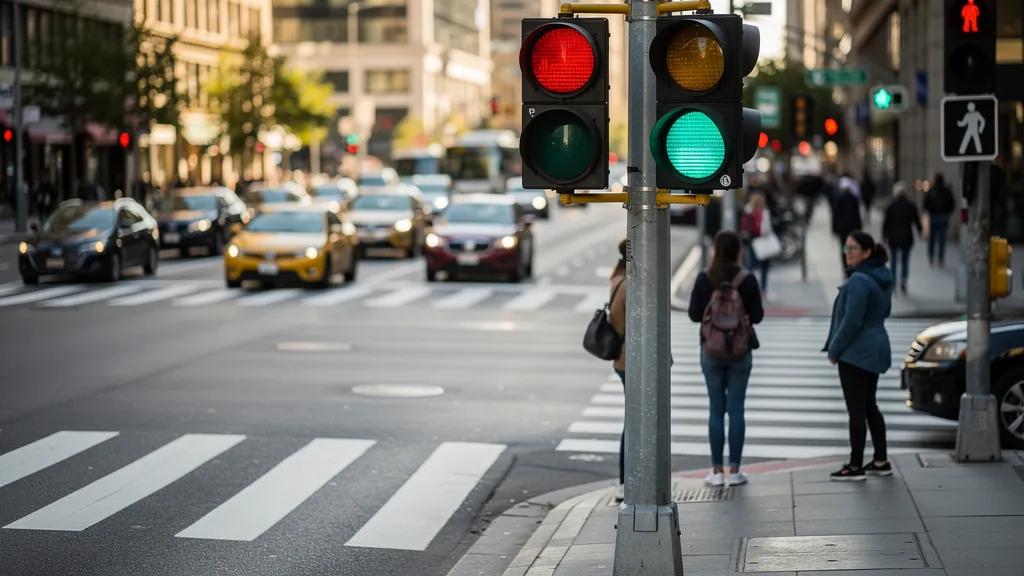
Many Los Angeles crashes involve three cars, a rideshare, a delivery truck, or a city road defect. Then a second rule matters: Proposition 51, the Fair Responsibility Act of 1986, now Civil Code section 1431.2. Section 1431.2(a) says that in a personal injury, property damage, or wrongful death action based on comparative fault, each defendant's liability for non-economic damages is several only and not joint. Each defendant pays only the non-economic damages allocated to that defendant in direct proportion to that defendant's percentage of fault, and the court enters a separate judgment against each. The statute defines the terms. Economic damages are objectively verifiable monetary losses such as medical expenses, loss of earnings, and the cost of repair or replacement. Non-economic damages are subjective, non-monetary losses such as pain, suffering, inconvenience, mental suffering, and emotional distress. The several-only rule is written for the second category. Here is how that plays out, again with made-up numbers. A jury awards $200,000 in non-economic damages. Driver A is 70 percent at fault, Driver B is 30 percent, and you are 0 percent. Driver A owes $140,000 of that and Driver B owes $60,000. If Driver B has no insurance and no assets, you cannot make Driver A cover B's $60,000 share of pain and suffering. That is the practical bite of Proposition 51, and it is why finding every responsible party matters. A second at-fault driver, an employer whose worker was driving on the job, or a city with a dangerous intersection can each add a pocket that pays. Your own uninsured motorist coverage may also help when a responsible driver cannot pay. If a public entity may share the blame, a six-month government claim deadline can apply (Government Code section 911.2), so do not wait.
Evidence that fights inflated fault
Fault percentages are won with proof gathered early. Here is what moves them, roughly in the order it disappears. Photos and video. Photograph all vehicles, the lane markings, the signals, the skid marks, and the debris before anything moves, if you can do it safely. Look for doorbell, business, and bus cameras near the crash and ask for the footage fast. Most systems overwrite on their own schedule, so each day matters. Witnesses. Get names and numbers from anyone who saw the crash. A neutral witness often outweighs two drivers' competing stories. In one result Moe handled, the other driver in a red-light T-bone brought fake witnesses, and Moe found the real ones. The case ended in a $30,000 policy-limit result. Past results do not promise a similar outcome. The police report. Report a crash to LAPD inside city limits or the California Highway Patrol on a freeway. The officer's diagram and the other driver's statements become part of the fault picture. If the report blames you wrongly, a lawyer can challenge it with other proof, because an officer's conclusion is not binding on the insurer or a jury. Vehicle damage and data. The point of impact shows who hit whom. Many cars also record speed and braking data in the seconds before a crash, so ask your lawyer to send a preservation letter before the car is repaired or scrapped. Medical records. Prompt treatment ties your injuries to the crash and cuts off the argument that something else caused them. In another matter, Moe secured a $100,000 uninsured motorist policy-limit recovery for a woman rear-ended by a driver who fled, with no police report, after other firms had turned her down. Past results do not promise a similar outcome.
What to say and not say to the other side's insurer
The other driver's insurance company may call you soon after the crash. The adjuster sounds friendly and asks for a recorded statement. The questions sound simple: how fast were you going, did you see the other car, were you looking at your phone, were you in a hurry? Each answer can become a fault percentage. You do not have to give a recorded statement to the other driver's insurer. You can say you will let your lawyer handle communication. Do not apologize at the scene or on the phone, even out of politeness. "I'm sorry" gets written down as an admission. Do not guess at speeds or distances. "I don't know" is a better answer than a wrong number. Report the crash to your own insurer as your policy requires. If anyone was injured or killed, or property damage was over $1,000, California also requires drivers involved to report the crash to the DMV on form SR-1 within 10 days (Vehicle Code section 16000), and the DMV says untimely reporting can lead to a license suspension. That report goes to the DMV, not to the other insurer, and it is a separate duty from any police report. Be careful with social media too. A photo of you at a barbecue three weeks after the crash can turn into an argument that you were not really hurt. Keep treatment records, keep a symptom journal, and keep your posts quiet until the claim ends.
Deadlines and how a lawyer handles a fault dispute
California gives you two years from the date of the crash to file a personal-injury lawsuit (Code of Civil Procedure section 335.1), and only six months to present a claim if a government vehicle or public entity is involved (Government Code section 911.2). Comparative fault does not pause either clock. In a fault dispute, a car accident lawyer in Los Angeles works the problem from three sides. First, build the facts: scene photos, video, witness statements, vehicle data, and the police report. Second, answer the specific Vehicle Code argument the insurer is using, whether it is section 21703 for a rear-end crash, section 21801 for a left turn, or section 22107 for a lane change. Third, price the claim at the percentage you can prove, not the percentage they invent. Moe Abdallah Law, P.C. handles car, truck, motorcycle, pedestrian, bicycle, Uber and Lyft, bus, hit-and-run, uninsured motorist, and drunk-driving crashes, plus wrongful death and brain injury cases that come from crashes. Attorney Mohamad "Moe" Abdallah personally handles cases and keeps clients updated by call and text. The consultation is free, and the fee is contingent, so you pay nothing unless the case is won. He took on one claim after the at-fault insurer offered $900 and the matter ended at $75,000 total. Past results do not promise a similar outcome. The office is at 527 W 7th St, Ste 924, Los Angeles, CA 90014. Call (323) 716-1992 any time, day or night. Se habla español.
Frequently Asked Questions
Yes. California follows pure comparative negligence, so you can recover even if you were mostly at fault. A judge or jury sets your fault percentage and reduces your damages by that amount. At 30 percent fault on $100,000 in damages, you would recover $70,000. The rule comes from Li v. Yellow Cab Co. (1975).
Under modified comparative negligence, used in some other states, you recover nothing once your fault reaches a cutoff such as 50 or 51 percent. California uses the pure version, with no cutoff. Your award shrinks as your share grows, but you can still recover something even at a high fault percentage.
No rule makes the rear driver pay in every case. Vehicle Code section 21703 bars following more closely than is reasonable and prudent, and that usually points at the rear driver. A front driver who braked with no reason, cut in, or had dead brake lights can share blame. Evidence decides it.
Vehicle Code section 21801 requires a left-turning driver to yield to oncoming vehicles close enough to be a hazard. The turning driver usually takes most of the blame, but an oncoming driver who was speeding or ran a red light can carry a share. Camera footage and vehicle data often settle it.
Not by itself. No California statute prohibits lane splitting. Vehicle Code section 21658.1 defines it and lets the CHP develop safety guidelines. An insurer will argue your speed, the space between cars, or a sudden lane change instead. Proof of how fast you and traffic were moving is what counts.
Under Civil Code section 1431.2, each defendant pays non-economic damages such as pain and suffering only in proportion to that defendant's percentage of fault. If a second at-fault driver cannot pay, you cannot collect that share from the first driver. So you want to name every responsible party early.
A police report is not a final ruling on fault. The officer may not have seen the crash and may have relied on one driver's version. Witnesses, video, and vehicle damage can contradict it. The insurer and a jury decide fault on all the evidence, not only the report.
You are not required to. Adjusters use recorded statements to find fault arguments, such as speed or distraction. Say you will have your lawyer communicate with them. Still report the crash to your own insurer as your policy requires, and file the DMV SR-1 within 10 days if anyone was injured or killed or property damage was over $1,000.
You generally have two years from the crash date under Code of Civil Procedure section 335.1. If a government vehicle or public entity is involved, you may have only six months to file a claim under Government Code section 911.2. Comparative fault does not extend either deadline.
Have a question about your own case? Call (323) 716-1992 for a free review, or talk to a Los Angeles car accident lawyer →
Get help with your own case
Every crash is different, and the rules above play out differently in each one. If you were hurt, see how Moe handles your kind of case: Los Angeles Car Accident Lawyer, Los Angeles Truck Accident Lawyer, Los Angeles Motorcycle Accident Lawyer, Los Angeles Pedestrian Accident Lawyer, or Los Angeles Uninsured Motorist Lawyer. He reviews your case for free, 24/7, and you pay nothing unless we win.
Authoritative resources: California Courts, self-help for injury claims · Cal. Code Civ. Proc. § 335.1, 2-year deadline · California DMV · California Office of Traffic Safety, crash data
Sources & local resources
- California Civil Code section 1714 · California Legislative Information
- California Civil Code section 1431.2 (Proposition 51) · California Legislative Information
- California Vehicle Code section 21658.1 (lane splitting) · California Legislative Information
- California Vehicle Code section 21801 (left turns) · California Legislative Information
- California Vehicle Code section 22107 (turning and lane changes) · California Legislative Information
- California Vehicle Code section 21703 (following too closely) · California Legislative Information
- California Vehicle Code section 21954 (pedestrians outside crosswalks) · California Legislative Information
- California Vehicle Code section 21200 (bicycle riders) · California Legislative Information
- Li v. Yellow Cab Co. (1975) 13 Cal.3d 804 · Justia
- Report of Traffic Accident Occurring in California (SR 1) · California DMV
Talk to Moe Abdallah directly
When you call Moe Abdallah Law, you work directly with your attorney and get straight answers, not a call center. Moe takes on the insurance companies and fights for the maximum, and he keeps you updated at every step. The consultation is free and you pay nothing unless he wins.
Real recoveries for real Angelenos
Real recoveries from an attorney who takes your case personally and fights for the maximum.
Rear-ended by a driver who fled, and other firms turned her down. Moe opened an uninsured-motorist claim, proved she could not have been at fault, and secured the full policy limit.
Broke his sternum and had no insurance of his own, and his prior attorney ignored him. Moe took his calls day and night and recovered a settlement that covered his hospital bills and future treatment.
Cut off on the freeway and left with back and neck pain over four months of treatment. Moe secured the full policy limit for his pain and suffering, and his totaled car was reimbursed.
Past results do not guarantee a similar outcome. Every case is different and depends on its own facts.
5.0 stars across every review
I would definitely recommend this firm to anyone looking for reliable legal guidance.
Moe Abdallah is the best attorney around , very professional, attentive, respectful, highly knowledgeable, caring for his clients like family and most importantly gets the job done! Forever thankful I found Moe to help me in my case Got me
I am incredibly grateful to Moe Abdallah Law, P.C. for their outstanding representation following my recent accident. Dealing with injuries, medical bills, and insurance companies was overwhelming, but Moe completely took the burden off my
Talk to a lawyer today, free
Tell us what happened. We respond fast, usually within the hour, and there's no fee unless we win. Available 24/7 · Se Habla Español.
Call (323) 716-1992