
Waymo Accident Lawyer in Los Angeles
A Waymo accident lawyer in Los Angeles helps people hurt in a crash with a Waymo robotaxi or another driverless car as a passenger, driver, pedestrian, or cyclist. Moe Abdallah Law, P.C. takes only vehicle-crash cases for injured people or families of people killed. You pay nothing unless Moe wins.
A driverless car crash feels different. There is no driver to talk to, no license to copy, and a company on the other side that already holds video and sensor data from the second before impact. This page explains what is public and what is not. It covers where Waymo drives in Los Angeles, which agencies oversee driverless cars, who can be responsible when one hurts you, and what to do in the first days. Moe Abdallah Law, P.C. takes cases only for people physically injured in motor-vehicle crashes, or families of people killed in them. Moe does not take property-damage-only claims, and he does not handle injuries that did not come from a crash. If you were a passenger, another driver, a pedestrian, or a cyclist hurt in a crash with a driverless vehicle, you can call (323) 716-1992 any time for a free review. Everything below comes from the official pages and statutes listed at the bottom, which we opened in October 2026. Where we could not confirm a detail, we say so.
Where Waymo drives in Los Angeles
Waymo describes its Los Angeles service as running from Santa Monica to Echo Park and down to Inglewood, and its own page says it does not offer service to LAX. The footprint has grown in steps. On June 18, 2025, Waymo's help center announced 35 more square miles that reached Windsor Hills, Ladera Heights, Echo Park, and Silver Lake. In November 2025 Waymo also began offering freeway trips to a growing number of riders in Los Angeles, with a Downtown LA to Culver City ride as its own example. Waymo says it will add more riders over time and does not list freeway names on that page. The map changes, so treat these descriptions as a snapshot. What matters for your claim is simpler. A driverless car can be on a city surface street or on a freeway, and the crash can involve a rider inside, a driver beside it, or a person on foot or on a bike. If the crash happened in Los Angeles, the same California rules apply to all of those people. Moe's office is in downtown LA at 527 W 7th St, Ste 924, and he handles crashes across the city.
Who regulates driverless cars in California
Three government bodies matter here. The California DMV approves manufacturers to operate autonomous vehicles on public roads. Under Vehicle Code section 38750, outside of supervised testing with a safety driver, an autonomous vehicle cannot run on public roads until the DMV approves the manufacturer's application, which must include safety certifications. The California Public Utilities Commission (CPUC) separately approves driverless passenger service. In a letter dated March 1, 2024, CPUC staff approved Waymo's updated Passenger Safety Plan and authorized the expansion of its driverless deployment service to the Los Angeles area, after the DMV had approved a larger operating area. The third body is federal. NHTSA, part of the U.S. Department of Transportation, requires named companies to report certain crashes involving automated driving systems under a Standing General Order. State law also lets a peace officer issue a notice of autonomous vehicle noncompliance when a driverless car is seen breaking a traffic law (Vehicle Code section 38752). The DMV says its new regulations were approved on April 28, 2026, and they allow officers to issue these notices on form OL 325 starting July 1, 2026, with the company required to send each notice to the DMV within 72 hours. The statute says a notice does not create a presumption that the vehicle is unsafe, so it is a lead for your case, not proof of fault.
What the company must keep and report after a crash
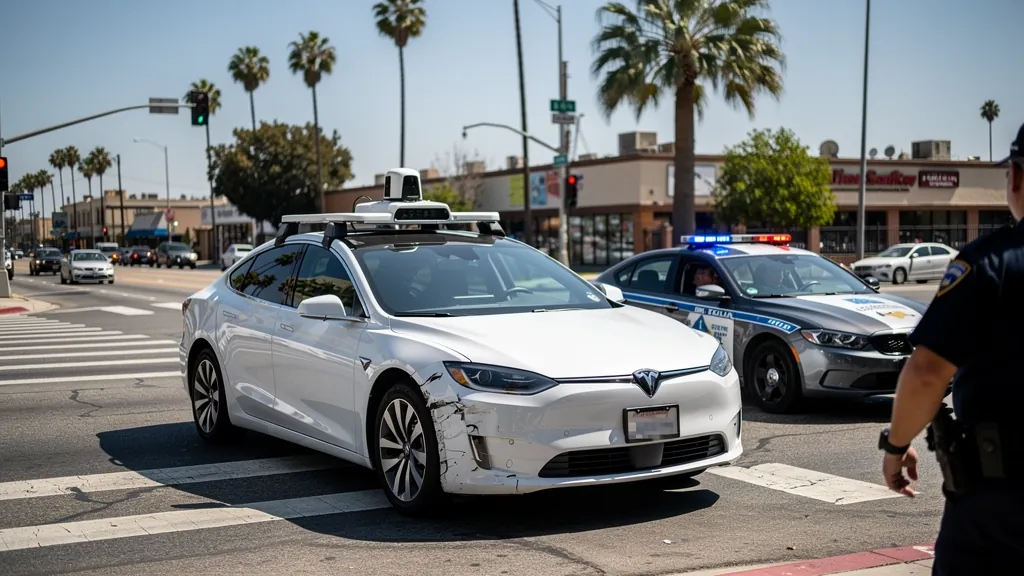
Several records may exist after a driverless crash, and they are not equal. The strongest is the vehicle's own data. Vehicle Code section 38750 requires the manufacturer to certify that the vehicle has a separate mechanism that captures and stores the autonomous technology's sensor data for at least 30 seconds before a collision while the vehicle is in autonomous mode, in a read-only format, and requires that the data be preserved for three years after the collision. That is the law for vehicles approved under the statute, and it is why a fast written preservation demand matters. The second record is a DMV collision report. Under the DMV's deployment regulations (13 CCR 228.34), a company running autonomous vehicles in deployment must send the DMV the full crash report it files with NHTSA for crashes in California, on NHTSA's timeline, and the DMV can demand more, including sensor data and camera footage from the 30 seconds before the collision. The DMV's autonomous vehicle page links to published collision reports from companies testing in California, but do not assume your crash will appear there. The third record is NHTSA's. For automated driving systems, a named company must report a crash if the system was in use at any time within 30 seconds of it and the crash involved a fatality, a struck pedestrian or cyclist, an air bag deployment, a tow-away, a hospital transport, or certain property damage. Reports for the most severe crashes are due within five days. NHTSA publishes the data, but it removes personal information, shows dates only by month and year, and notes that early reports can be incomplete. These reports help a lawyer. They do not replace your own evidence.
Who can be responsible when a robotaxi hurts you
People ask who they can even sue when no one is driving. The law does not leave a gap. California defines the operator of an autonomous vehicle as the person in the driver's seat, or, if nobody is there, the person who causes the autonomous technology to engage. In a driverless fleet, the company that dispatches and runs the vehicle is the natural first target. A manufacturer of the technology is defined separately in the same statute. Depending on the facts, other people may share fault too: a human driver who ran a light or cut off the robotaxi, a company that maintained the vehicle, or a public agency if a dangerous road condition played a part. Fault is a question of what happened, not what kind of car it was. A robotaxi that stopped suddenly on a freeway, turned across your lane, or failed to yield to someone in a crosswalk can be held to the same standard as any driver. A human who hit the robotaxi can be the one at fault, and the company's data can help prove it. Moe's firm handles the crash injury claim. A separate case that is purely about a defective part is a different kind of case, and Moe tells you plainly if yours looks like that.
Insurance and how a claim against a company works
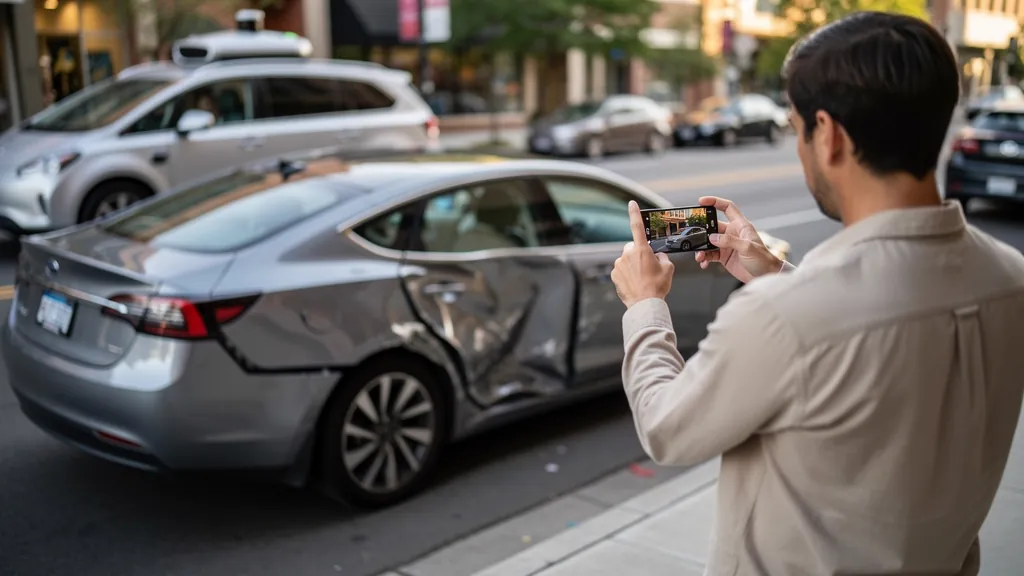
A claim against a driverless fleet runs through the company's insurance or self-insurance, not through a driver's personal auto policy. Vehicle Code section 38750 requires a manufacturer seeking approval to certify that it will maintain insurance, a surety bond, or proof of self-insurance in the amount of $5,000,000. DMV regulation 13 CCR 228.04 describes that evidence as the ability to respond to a judgment for personal injury, death, or property damage from collisions caused by its autonomous vehicles. That regulation also says it does not excuse a vehicle owner from the ordinary financial responsibility requirement in Vehicle Code section 16056. Do not read the $5,000,000 figure as a promise that you will receive that amount. It is the amount the statute requires the company to carry, and what your claim is worth depends on your injuries, your medical care, your lost income, and who was at fault. Do not assume the Uber and Lyft coverage tiers apply, either. We did not verify how California's rideshare insurance statute treats a driverless fleet, so ask before you rely on those numbers. Expect an adjuster, not a driver, to call you. Recorded statements, medical releases, and quick settlement offers can all hurt you if you sign before you know the full extent of your injuries. If you rode in the car, the Waymo app terms you accepted may also affect how a claim proceeds. We have not reviewed them here, and Moe reads them for you.
Comparative fault and shared blame
California follows pure comparative negligence. Under Li v. Yellow Cab Co. (1975) 13 Cal.3d 804, you can recover even if you were partly at fault, but the award is reduced by your percentage of fault. Insurers use that rule in driverless cases. A company may point to a pedestrian outside a crosswalk or a cyclist's position in the lane, or argue that the other human driver caused the crash. Because the robotaxi records what it saw, the data can cut either way, which is another reason to get it early rather than let the company describe it first. When more than one party is at fault, California's Proposition 51 means each defendant pays non-economic damages such as pain and suffering only in proportion to its own share of fault, while economic damages such as medical bills stay joint. Moe's job is to keep your share of blame as low as the evidence allows and to name every party who belongs in the claim.
Evidence to lock down in the first days
Start with what you can control. Photograph the vehicle, its plate and any fleet number, the lane position, skid marks, traffic signals, and your injuries. Write down the time and exact location. Look for the sticker or app label that identifies the company and the vehicle. If you were a passenger, screenshot your trip receipt and ride history before anything changes, and keep your phone. Ask witnesses for names and numbers, and look for nearby cameras on shops, buses, and traffic signals, since footage can be overwritten quickly. Then send the evidence that only the company holds. Moe sends a written preservation demand covering the 30-second sensor capture, camera video, remote assistance logs if any, the trip and dispatch record, maintenance history, and software version. He also requests the police report, any DMV collision report, and the NHTSA report number if one exists. Those requests are the reason timing matters. A company that gets a demand in the first week has a much harder time claiming data was lost in the normal course of business.
What to do after a robotaxi crash in Los Angeles
Call 911 and get medical care first, even if you feel only sore. A driverless car cannot give you its driver's information, so you need an officer. LAPD handles crashes on surface streets inside the City of Los Angeles, cities such as Santa Monica, Culver City, and Inglewood have their own police departments, and the California Highway Patrol handles the freeways, with CHP area offices such as Central Los Angeles at 777 W. Washington Blvd. and West Los Angeles in Culver City covering different freeway stretches. Ask the officer to note that the vehicle was driverless and to record the company name. Get the report number. LAPD asks you to wait at least 45 days after the crash before requesting a report online, and reports involving an arrest, a death, or a juvenile must be requested by mail. The LAPD non-emergency line is 877-ASK-LAPD. If you were driving and the crash caused an injury or more than $1,000 in damage to anyone, California requires you to report it to the DMV on form SR-1 within 10 days. Do not post about the crash online or talk to the company's adjuster before you understand your rights. You can also report the incident to the DMV through its AV Incident Form, or report a safety problem to NHTSA's Vehicle Safety Hotline at 1-888-327-4236.
Deadlines for a driverless car injury claim
In most cases you have two years from the crash to file a personal injury lawsuit against a private party, which includes a private company running a robotaxi fleet (Code of Civil Procedure section 335.1). A company is not a public entity, so the six-month government claim rule does not apply to it. If a city, county, or state agency may share responsibility, such as through a dangerous road condition, you generally must present a written claim to that agency within six months of the crash (Government Code section 911.2), and you then have six months from a written rejection to sue. Those short deadlines can apply to the same crash as a claim against the company, so they get calendared early. Evidence fades faster than deadlines. Video can be overwritten in days, and the company's preservation duties will not help you if no one asks. Call Moe as soon as you can, even if you are not sure you have a case.
How Moe handles a driverless car case
Moe Abdallah is a Southwestern Law School graduate, State Bar No. 348886, and he handles car, truck, motorcycle, pedestrian, bicycle, Uber and Lyft, uninsured motorist, and other crash cases for injured people. The firm has a 5.0 star rating on Google. You talk to Moe himself, and he updates you by call and text. There is a free consultation, the fee is contingent so you pay nothing unless he wins, and the office is available 24/7 with Se Habla Español. Past results show how he works with limited facts. He obtained a $100,000 policy-limit uninsured motorist recovery for a woman rear-ended by a driver who fled, with no police report, after other firms turned her down, and a $75,000 total after an insurer first offered $900. Past results do not promise a similar outcome, and every case depends on its own facts. Driverless cases add a records fight on top of the usual injury claim, so the first call is about speed. Moe can start the evidence requests before you finish treatment.
Frequently Asked Questions
Often yes, if the crash was caused by the vehicle or the company running it. California treats the person or company that causes the autonomous technology to engage as its operator. Whether a claim is strong depends on the facts: who was at fault, your injuries, and the evidence. Call for a free review and Moe will tell you plainly.
Call 911, get medical care, and ask the officer to record that the vehicle was driverless along with the company name. Photograph the scene and vehicle, screenshot your trip record if you were a passenger, and get witness details. Avoid recorded statements to the company until you understand your rights.
LAPD writes the report on city surface streets, and the CHP handles freeways. The DMV and NHTSA also collect crash information from companies, but they do not decide who owes you compensation. Those reports can still help your claim as evidence.
Likely yes. California law requires autonomous vehicles approved under Vehicle Code section 38750 to have a mechanism that stores sensor data for at least 30 seconds before a collision and keeps it for three years. The company controls it, so a prompt written preservation demand matters. You may not see everything it holds.
Maybe. The DMV's autonomous vehicle page links to published collision reports from companies testing in California, and NHTSA publishes crash reports under its Standing General Order with personal details removed and dates shown only by month and year. Early reports can be incomplete, and your crash may not appear. Do not rely on them alone.
California law requires a manufacturer to certify that it will maintain insurance, a surety bond, or proof of self-insurance of $5,000,000 to operate autonomous vehicles under Vehicle Code section 38750. That is a requirement, not a promise of what your claim pays. Your recovery depends on your injuries, costs, and fault.
You may. A passenger usually is not blamed for the crash, so the question is who caused it: the company's vehicle, another driver, or both. Keep your trip receipt and ride history. Moe also reviews the app terms you accepted, since they may affect how the claim is handled.
California drivers must yield to people in a marked crosswalk and use due care for pedestrians elsewhere, and cyclists have the same rights as drivers on the road. A robotaxi is held to the same duty of care. Comparative fault may still reduce a claim, so the details of where you were matter.
Generally two years from the crash to sue a private party, including a company (Code of Civil Procedure section 335.1). If a city, county, or state agency may share fault, a written government claim is generally due within six months (Government Code section 911.2). Do not wait to find out which applies.
The consultation is free and Moe works on contingency, so you pay no fee unless he wins. The office is open 24/7 at (323) 716-1992. Moe takes cases only for people injured in vehicle crashes or families of people killed in them, not property-damage-only claims.
Have a question about your own case? Call (323) 716-1992 for a free review, or talk to a Los Angeles car accident lawyer →
Get help with your own case
Every crash is different, and the rules above play out differently in each one. If you were hurt, see how Moe handles your kind of case: Los Angeles Car Accident Lawyer, Los Angeles Truck Accident Lawyer, Los Angeles Motorcycle Accident Lawyer, Los Angeles Pedestrian Accident Lawyer, or Los Angeles Uninsured Motorist Lawyer. He reviews your case for free, 24/7, and you pay nothing unless we win.
Authoritative resources: California Courts, self-help for injury claims · Cal. Code Civ. Proc. § 335.1, 2-year deadline · California DMV · California Office of Traffic Safety, crash data
Sources & local resources
- Ride with us in the City of Angels (Waymo Los Angeles) · Waymo
- Expanded LA service area (June 18, 2025) · Waymo Help
- Taking riders further, safely with freeways · Waymo
- Disposition of Waymo Advice Letter 0002 · California Public Utilities Commission
- Vehicle Code section 38750 · California Legislative Information
- Vehicle Code section 38752 · California Legislative Information
- Order to Adopt Article 3.8 Regulations (Deployment of Autonomous Vehicles) · California DMV
- Autonomous Vehicle Milestones · California DMV
- Autonomous Vehicles Incident Reporting · California DMV
- Standing General Order on Crash Reporting · NHTSA
- Autonomous Vehicles · California DMV
- Request a Traffic Report · Los Angeles Police Department
- Code of Civil Procedure section 335.1 · California Legislative Information
- Government Code section 911.2 · California Legislative Information
- Li v. Yellow Cab Co. (1975) 13 Cal.3d 804 · Justia
Talk to Moe Abdallah directly
When you call Moe Abdallah Law, you work directly with your attorney and get straight answers, not a call center. Moe takes on the insurance companies and fights for the maximum, and he keeps you updated at every step. The consultation is free and you pay nothing unless he wins.
Real recoveries for real Angelenos
Real recoveries from an attorney who takes your case personally and fights for the maximum.
Rear-ended by a driver who fled, and other firms turned her down. Moe opened an uninsured-motorist claim, proved she could not have been at fault, and secured the full policy limit.
Broke his sternum and had no insurance of his own, and his prior attorney ignored him. Moe took his calls day and night and recovered a settlement that covered his hospital bills and future treatment.
Cut off on the freeway and left with back and neck pain over four months of treatment. Moe secured the full policy limit for his pain and suffering, and his totaled car was reimbursed.
Past results do not guarantee a similar outcome. Every case is different and depends on its own facts.
5.0 stars across every review
I would definitely recommend this firm to anyone looking for reliable legal guidance.
Moe Abdallah is the best attorney around , very professional, attentive, respectful, highly knowledgeable, caring for his clients like family and most importantly gets the job done! Forever thankful I found Moe to help me in my case Got me
I am incredibly grateful to Moe Abdallah Law, P.C. for their outstanding representation following my recent accident. Dealing with injuries, medical bills, and insurance companies was overwhelming, but Moe completely took the burden off my
Talk to a lawyer today, free
Tell us what happened. We respond fast, usually within the hour, and there's no fee unless we win. Available 24/7 · Se Habla Español.
Call (323) 716-1992