
Catastrophic Injury Lawyer in Los Angeles
A catastrophic injury lawyer in Los Angeles helps people whose lives changed in a vehicle crash, with injuries like paralysis, brain damage, amputation, or severe burns. Moe Abdallah Law, P.C. takes these cases only for people hurt (or families who lost someone) in car, truck, motorcycle, pedestrian, bike, bus, and rideshare crashes, on a no-fee-unless-we-win basis.
If you or someone you love survived a crash with a spinal cord injury, a traumatic brain injury, an amputation, severe burns, or multiple broken bones, the claim in front of you is not a normal car accident claim. The bills do not stop after a few months. The work, the home, and the care your family provides can change for good. Moe Abdallah Law, P.C. is a Los Angeles injury law firm with a narrow focus. Attorney Moe Abdallah takes cases only for people physically injured, or families who lost someone, in motor-vehicle crashes. That means car, truck, motorcycle, pedestrian, bicycle, bus, Uber and Lyft, hit-and-run, and drunk-driving crashes. He does not take workplace injury, product defect, or premises cases, and this page does not cover them. What follows is a plain guide to what makes a crash injury catastrophic under California law, how the money gets measured, what policy limits and liens do to a recovery, which Los Angeles hospitals treat these injuries, and what to do first. Every statistic and statute cited here is listed with its source at the bottom. Call (323) 716-1992 any hour for a free review.
What counts as a catastrophic injury after a crash
No statute defines the word. It usually means an injury that changes how you live and work for the rest of your life. After a vehicle crash, that usually means spinal cord injury and paralysis, traumatic brain injury, loss of an arm or leg, severe burns, and crushing or multiple fractures that need repeated surgery. Vehicle crashes are a leading cause of the first two. The National Spinal Cord Injury Statistical Center reports that vehicle crashes and falls account for almost 70 percent of recent traumatic spinal cord injuries. The CDC counted 223,050 nonfatal traumatic brain injury hospitalizations in the United States in 2018, and motor vehicle crashes caused 23.8 percent of them. Those are national numbers, not Los Angeles numbers, but they tell you the injuries on this page are not rare. A catastrophic injury case differs from a typical claim in one way that drives everything else: the damages do not end when treatment ends. You are not asking an insurance company to cover an emergency room visit and six weeks of therapy. You are asking it to pay for decades of care, lost career years, and a different life. That is why the evidence, the experts, and the timeline look different.
Burns from vehicle fires and the cases behind them
Fire after a crash is less common than the other injuries here, but the damage can be extreme. Severe burns can mean long hospital stays, repeated surgeries, scar care, pain management, and therapy that goes on for years, along with the emotional toll of visible disfigurement. Here is where Moe draws his line. He takes the claim against the driver, trucking company, or other party whose negligence caused the crash that led to the fire. If your injury came from a fuel system or battery defect, that is a product case, and Moe does not handle product cases. Say so in your first call and he will tell you plainly whether your situation fits. If it does, the first moves are the same as in any serious crash: get the burn center care you need, photograph the injuries and the vehicle, and keep the wreck from being sold, scrapped, or repaired. The vehicle and the crash report are the proof of how the fire started and who caused the collision.

What a lifetime of care really costs, and how it gets proven
The most detailed published numbers on lifetime costs come from spinal cord injury research. The National Spinal Cord Injury Statistical Center reports estimated costs in 2025 dollars. For high tetraplegia (C1 to C4), the first year averages $1,446,827 and each later year $251,246. For paraplegia, the first year is $705,131 and each later year $93,409. Estimated lifetime cost for a person injured at age 25 ranges from $2,144,693 to $6,419,617 depending on severity, discounted at 2 percent. Those figures leave out indirect costs such as lost wages, fringe benefits, and productivity, which the center says averaged $97,787 per year. They are national estimates built on a 2011 study and restated in 2025 dollars, not a prediction for your case, and brain injury, amputation, and burn costs follow their own patterns. California law lets you recover the reasonable cost of reasonably necessary medical care you are reasonably certain to need in the future (CACI 3903A). To prove it, you build a life care plan. A physician or physiatrist lays out the care you will need, a life care planner prices each item, and an economist converts the total to present value. The plan covers surgeries, equipment, home changes, attendant care, therapy, and medication. Insurers attack future care as speculation, so the plan has to rest on your own medical records and your treating doctors, not guesses.
Lost earning capacity is more than lost paychecks
If your injury means you will never work again, or never work at the same level, the lost paychecks are only part of the loss. California jury instruction CACI 3903D covers lost earning capacity, which asks what you could have earned without the injury compared with what you can still earn with it. The instruction tells the jury to consider the career choices you had a reasonable probability of achieving, and it says you do not need a work history to claim these damages. The court of appeal case it relies on, Licudine v. Cedars-Sinai Medical Center (2016), held that proof of prior earnings is not required. That helps students, young workers, and stay-at-home parents. Proof can come from a vocational evaluator, an economist, lay witnesses who knew your plans, or your own earnings in that field. Moe gathers pay records, tax returns, training, licenses, and employer statements early, and he documents the work the injury now makes impossible. If you cannot go back to your job, a vocational evaluation often shows which jobs remain open and what they pay. The gap between those two numbers is the claim. Insurers know this and often offer a number based on the last paycheck. Do not accept that framing.

Policy limits, UM/UIM coverage, and why stacking will not save you
Here is the hard truth in many catastrophic cases: the damages can run far past the insurance. California's minimum auto liability limits are $30,000 per person and $60,000 per accident for policies issued or renewed on or after January 1, 2025. A person with a spinal cord injury can use up that limit in the first days at the hospital. So we look for every source of money. Start with your own policy. A California auto liability policy must include uninsured motorist coverage, which includes underinsured motorist coverage, unless you waived it in writing. Underinsured coverage applies when the at-fault vehicle's liability limits are lower than your own UM limits. It pays only after the at-fault driver's liability limits are paid out, and only up to your UIM limit minus what the at-fault side paid (Insurance Code section 11580.2(p)). Limits from two or more vehicles or policies cannot be added together or stacked (section 11580.2(q)), so do not count on adding up the cars in your household. Moe reads every policy that could apply. Other targets include a trucking company's higher policies, an employer whose driver was on the job, rideshare coverage (California requires $1 million in liability insurance for a rideshare driver from the moment a ride is accepted until the ride ends, Public Utilities Code section 5433), and a public entity if its vehicle or road design played a part. Do not settle with the at-fault driver without your own insurer's written consent, because the statute says the coverage does not apply to a claim you settle without it (section 11580.2(c)(3)).
Time-limited demands, liens, and Medi-Cal
Two things can shrink a recovery after a big crash: the demand clock and the liens. When the at-fault driver's policy is too small, a lawyer may send a time-limited demand offering to settle for the policy limit. Under Code of Civil Procedure section 999.1, that demand must be in writing, be labeled as a time-limited demand or cite the statute, give the insurer at least 30 days to accept (33 if sent by regular mail), offer to settle all claims within limits including the satisfaction of all liens, offer a release, describe the injuries, and include reasonable proof. Then come the liens. A licensed California hospital that treats you has a lien on your recovery for its reasonable and necessary charges (Civil Code section 3045.1), and once the hospital gives notice, an insurer or other payer that pays you without paying the lien can be liable to the hospital for it, up to what 50 percent of the judgment or settlement, after prior liens, can cover (section 3045.4). If Medi-Cal paid for your care, its lien is limited to the part of the settlement that represents medical expenses, and a beneficiary who files a claim or lawsuit must give the state written notice within 30 calendar days of filing (Welfare and Institutions Code sections 14124.73 and 14124.76). Health plans and Medicare may also claim repayment. Moe tracks every lien from day one and works to reduce them so more of the money can reach you.
Los Angeles trauma centers, police reports, and the first evidence
Where you were treated matters for the proof. The LA County EMS Agency lists Los Angeles General Medical Center, Ronald Reagan UCLA Medical Center, Cedars-Sinai Medical Center, and Harbor-UCLA Medical Center as Level I trauma centers. California Hospital Medical Center downtown, Northridge Hospital Medical Center, and Providence Holy Cross Medical Center in Mission Hills are Level II trauma centers. For spinal cord injuries, the national data sheet puts the average acute hospital stay at 18.6 days and the average rehabilitation stay at 36.3 days since 2015, and every step creates records that show what the injury cost. Ask for complete copies and keep the discharge papers. For the crash itself, LAPD handles surface-street collisions in the City of Los Angeles through its four Traffic Divisions, and the California Highway Patrol covers the freeways. LAPD reports that involve a death or an arrest cannot be released online and must be requested by mail, and LAPD says to wait at least 45 days before requesting a standard report. CHP releases only reports it wrote. Evidence disappears fast: truck electronic logs, dashcam and traffic camera video, vehicle event data, and the wrecked vehicles themselves. Moe moves fast to ask that this evidence be preserved before it is gone.
Deadlines in a catastrophic injury case
You generally have two years from the crash to file a lawsuit against a private driver or company for personal injury or wrongful death (Code of Civil Procedure section 335.1). Do not treat that as plenty of time. A catastrophic case needs months of medical stabilization before the future care can be priced, and experts and records take time. If a public entity may be responsible, such as a city bus, a county vehicle, or a dangerous roadway, you must present a written claim within six months (Government Code section 911.2). If it rejects the claim in writing, you have six months from that notice to sue (section 945.6). If you miss the six-month claim window, you can apply for leave to file a late claim within a reasonable time, not more than one year after the injury (section 911.4). For an uninsured or underinsured motorist claim, you must also do one of three things within two years: sue, reach an agreement with your insurer, or start arbitration by certified mail (Insurance Code section 11580.2(i)). California follows pure comparative negligence, so partial fault reduces your award but does not bar it (Li v. Yellow Cab Co.). If the injured person lacks the legal capacity to make decisions, a guardian or conservator must act, and the court must approve any settlement (Code of Civil Procedure section 372).
How Moe builds the damages proof
A catastrophic case is won on the damages as much as on fault. Moe starts by locking down fault: the police report, witnesses, video, and vehicle data. Then he builds the injury story with your treating doctors, and he brings in the people who price your future, including a life care planner, an economist, and a vocational evaluator when the facts call for them. He documents your life before the crash with photos, videos, and statements from family, because noneconomic damages for pain, suffering, and loss of enjoyment have no fixed formula and jurors decide them from the evidence. He identifies every insurance policy, handles liens, and sends time-limited demands that follow the statute. You work with Moe himself, and he keeps you updated by call and text. The fee is contingent, so you pay nothing unless he wins. Moe's published results include $105,000 for an uninsured client with a broken sternum, covering hospital bills and future treatment, and $75,000 total after an at-fault insurer offered only $900, by tendering the at-fault limit and then opening an underinsured motorist claim. Those cases were not catastrophic injuries, and a past result does not promise a similar outcome. They show how he works a policy-limit problem.
Frequently Asked Questions
No. Moe takes cases only for people injured, or families of people killed, in motor-vehicle crashes. That covers car, truck, motorcycle, pedestrian, bicycle, bus, rideshare, hit-and-run, and drunk-driving crashes. He does not take workplace, product defect, or premises cases, even when the injury is severe. If you are not sure which category fits, call (323) 716-1992 and he will tell you honestly.
There is no legal definition, but the term usually covers spinal cord injury and paralysis, traumatic brain injury, amputation, severe burns, and multiple or crushing fractures that need repeated surgery. The common thread is permanence. These injuries change your ability to work, care for yourself, and live the way you did before, so the claim must account for future costs.
No honest lawyer can give a number without your records. Value depends on fault, the medical evidence, your future care needs, how much you could have earned, and the insurance available. Many catastrophic cases are limited by policy limits rather than by damages, which is why finding every policy matters. California law lets you recover future medical costs and lost earning capacity if they are reasonably certain.
A life care plan is a detailed, itemized forecast of the medical and personal care you will need for the rest of your life, with a cost for each item. A physician and a life care planner build it from your medical records, and an economist converts it to present value. It supports the future medical expense claim under CACI 3903A and answers the insurer's argument that your future care is guesswork.
California's minimum liability limit is $30,000 per person for policies issued or renewed on or after January 1, 2025, which is far below the cost of most catastrophic injuries. Your own underinsured motorist coverage may pay the difference up to its limit. Underinsured coverage applies only when the at-fault driver's limits are lower than your own UM limits. Moe also looks for other sources, such as an employer, a trucking company, rideshare insurance, or a public entity. Limits from multiple vehicles or policies cannot be stacked.
They can. A licensed hospital has a lien on your recovery for its reasonable and necessary charges, and an insurer that pays you after notice without paying the lien can be liable to the hospital, up to what 50 percent of the recovery after prior liens can cover. If Medi-Cal paid, its lien reaches only the part of the recovery that represents medical expenses, and the state must be given written notice within 30 days of filing a claim or lawsuit. Moe works to reduce liens so you keep more.
Generally two years from the crash to sue a private party. If a government agency is involved, you must present a written claim within six months. Uninsured and underinsured motorist claims have their own two-year requirement. Catastrophic cases need time to build, so call early. Waiting for your recovery to be clear can cost you the right to sue.
Yes. Family members can call (323) 716-1992 for you, any hour, and Se Habla Español. Moe offers a free consultation and works on contingency, so no fee is owed unless he wins. If the injured person cannot make decisions, a spouse, parent, or court-appointed guardian or conservator can act, and the court must approve any settlement.
Have a question about your own case? Call (323) 716-1992 for a free review, or talk to a Los Angeles car accident lawyer →
Get help with your own case
Every crash is different, and the rules above play out differently in each one. If you were hurt, see how Moe handles your kind of case: Los Angeles Car Accident Lawyer, Los Angeles Truck Accident Lawyer, Los Angeles Motorcycle Accident Lawyer, Los Angeles Pedestrian Accident Lawyer, or Los Angeles Uninsured Motorist Lawyer. He reviews your case for free, 24/7, and you pay nothing unless we win.
Authoritative resources: California Courts, self-help for injury claims · Cal. Code Civ. Proc. § 335.1, 2-year deadline · California DMV · California Office of Traffic Safety, crash data
Sources & local resources
- Traumatic Spinal Cord Injury Facts and Figures at a Glance (2026 SCI Data Sheet) · National Spinal Cord Injury Statistical Center, University of Alabama at Birmingham
- Incidence of Nonfatal Traumatic Brain Injury-Related Hospitalizations, United States, 2018 · CDC, MMWR
- CACI No. 3903A. Medical Expenses, Past and Future (Economic Damage) · Judicial Council of California (via Justia)
- CACI No. 3903D. Lost Earning Capacity (Economic Damage) · Judicial Council of California (via Justia)
- California Insurance Code section 11580.2 · California Legislative Information
- California Public Utilities Code section 5433 (rideshare insurance) · California Legislative Information
- California Code of Civil Procedure section 999.1 (time-limited demands) · California Legislative Information
- California Civil Code section 3045.1 (hospital liens) · California Legislative Information
- California Civil Code section 3045.4 · California Legislative Information
- California Welfare and Institutions Code section 14124.73 · California Legislative Information
- California Welfare and Institutions Code section 14124.76 · California Legislative Information
- 9-1-1 Receiving Hospital Directory, Reference No. 501 · LA County EMS Agency, Department of Health Services
- California Code of Civil Procedure section 335.1 · California Legislative Information
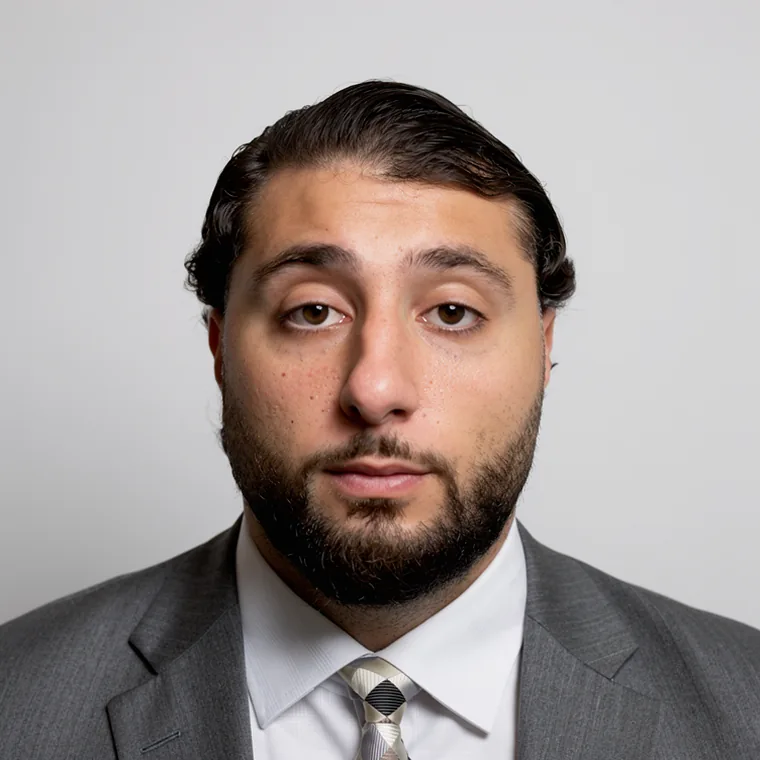
Talk to Moe Abdallah directly
When you call Moe Abdallah Law, you work directly with your attorney and get straight answers, not a call center. Moe takes on the insurance companies and fights for the maximum, and he keeps you updated at every step. The consultation is free and you pay nothing unless he wins.
Real recoveries for real Angelenos
Real recoveries from an attorney who takes your case personally and fights for the maximum.
Rear-ended by a driver who fled, and other firms turned her down. Moe opened an uninsured-motorist claim, proved she could not have been at fault, and secured the full policy limit.
Broke his sternum and had no insurance of his own, and his prior attorney ignored him. Moe took his calls day and night and recovered a settlement that covered his hospital bills and future treatment.
Cut off on the freeway and left with back and neck pain over four months of treatment. Moe secured the full policy limit for his pain and suffering, and his totaled car was reimbursed.
Past results do not guarantee a similar outcome. Every case is different and depends on its own facts.
5.0 stars across every review
I would definitely recommend this firm to anyone looking for reliable legal guidance.
Moe Abdallah is the best attorney around , very professional, attentive, respectful, highly knowledgeable, caring for his clients like family and most importantly gets the job done! Forever thankful I found Moe to help me in my case Got me
I am incredibly grateful to Moe Abdallah Law, P.C. for their outstanding representation following my recent accident. Dealing with injuries, medical bills, and insurance companies was overwhelming, but Moe completely took the burden off my
Talk to a lawyer today, free
Tell us what happened. We respond fast, usually within the hour, and there's no fee unless we win. Available 24/7 · Se Habla Español.
Call (323) 716-1992