
Truck Accident Lawyer California: Statewide Help After a Big Rig Crash
A truck accident lawyer in California helps you hold the driver, the trucking company and their insurers responsible after a big rig injures you or kills someone you love. Moe Abdallah takes these cases himself, works with you anywhere in the state, and charges no fee unless he wins.
A truck crash is not a bigger car crash. The vehicle is heavier, the injuries are often worse, and the other side is usually a company with an insurer, a safety file and a plan for what happens the minute the wreck is reported. If you are searching for a california truck accident attorney, this page explains in plain words who can be responsible, which federal and state rules apply, what proof the carrier holds, and what to do first. Moe Abdallah Law, P.C. takes truck cases only when a person was hurt or killed in a motor-vehicle crash. Moe works with clients anywhere in California by phone, text and email. His office is in downtown Los Angeles, and you never have to come in to hire him. He handles every case himself. The review is free, Se Habla Español, and you pay no fee unless we win.
The truck crash cases Moe takes, wherever you live in California
Moe takes cases for people who were physically hurt in a crash with a commercial truck, and for families who lost someone in one. That covers tractor-trailers, box trucks, delivery trucks, dump trucks, tanker trucks, flatbeds and garbage trucks. He does not take property-damage-only claims, workplace injury claims, product-defect cases or premises cases, so if your loss is only a damaged vehicle, he will tell you that on the first call and point you elsewhere. The work does not depend on where you live. A driver hurt on a Central Valley highway, a Bay Area interchange, a desert stretch of the I-10 or a mountain pass can start the same way: a free call, a short story of what happened, and a plan for the next few days. Moe works with clients anywhere in California by phone, text and email, and his office is in downtown Los Angeles. He does not run offices anywhere else. If you are in the hospital or at home recovering, nothing about your case requires you to travel. Documents, photos, medical records and signatures can move by email and text, and you will talk to Moe, not a call center or a junior staffer. What you get on a truck case is speed on the proof and a lawyer who understands that the trucking company is already working. Its insurer may have an adjuster calling you before you leave the hospital. You are allowed to say you have a lawyer and send every call to Moe.
Answer 3 quick questions and Moe will call you, free. No fee unless we win.
Prefer to talk? Call (323) 716-1992, 24/7.
Who can owe you money after a big rig hits you
The first name on a truck claim is the driver, but the driver is rarely the only target. California law can make an employer answerable for what an employee does on the job, so the trucking company that employed or dispatched the driver is often the main defendant. Then the questions widen, and Moe asks each one in every case. Did the carrier hire a driver it should have screened out, or push a driver to run past the legal limits on driving time? Did a maintenance shop or the carrier's own mechanics skip a brake or tire repair that showed up on an inspection report? Did a loading company or shipper stack the cargo badly, overload the trailer or fail to secure the load? Was the truck leased from another company, so that an owner, a lessor and an operator all have a hand in it? If a freight broker chose the carrier, did the broker pick a company with a poor safety record? Did a defective part, such as a steering or braking component, fail on its own? Not every one of those parties will be responsible in every crash, and some claims against brokers and manufacturers raise hard legal questions that depend on the facts. Moe does not guess at this on a first call. He asks for the bill of lading, the lease, the dispatch records and the maintenance file, and he follows them to whoever made the decisions that put that truck on that road. The point is practical: the more responsible parties and policies he can identify, the more money may be available to pay for your medical care, lost income and the rest of your losses. Moe takes only crash injury cases, so these are always claims that begin with a collision on a public road.
The federal rules that shape a California truck claim
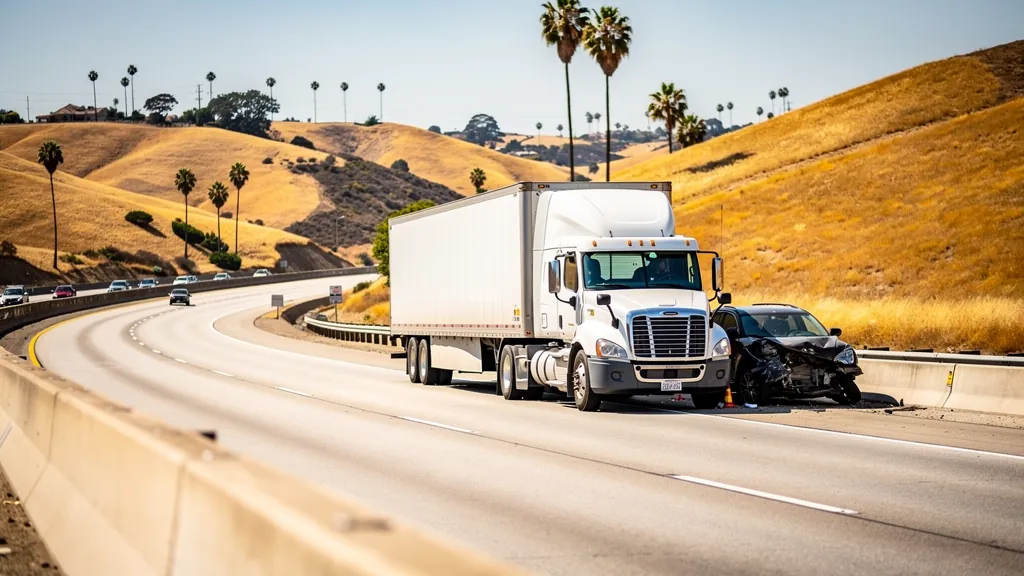
Commercial trucks that cross state lines answer to the Federal Motor Carrier Safety Regulations, and those rules give an injury lawyer a checklist to measure the carrier against. They do not decide the case on their own, but a broken rule is often how a lawyer shows a company cut corners. Hours of service are the rules most people have heard of. Under 49 CFR § 395.3, a driver of a property-carrying truck may not operate the truck without first taking 10 consecutive hours off duty, may spend no more than 11 hours behind the wheel inside a 14-hour window, and may not keep driving after 8 hours without a break of at least 30 minutes. The same section sets weekly caps of 60 hours in 7 days or 70 hours in 8 days. A tired driver, or a dispatcher who set a delivery schedule that left no room to rest, can be part of the story. The duty-status record is how those limits are checked. Under 49 CFR § 395.8, most carriers must have their drivers log duty status on an electronic logging device, or ELD, instead of a paper log. Other parts of the regulations require a driver qualification file for each driver (49 CFR § 391.51), a written inspection report whenever a driver finds a defect in a vehicle (49 CFR § 396.11) and an accident register at the company (49 CFR § 390.15). Each one is a record Moe will ask for by name. California adds its own layer. The state licenses commercial drivers, inspects trucks and regulates the carriers that stay inside its borders, and a broken state safety rule can matter too. Which rule applies depends on the truck, the load and where it was headed, which is why Moe reads the paperwork before he decides which standards to hold the company to.
Evidence that disappears fast, and who holds it
On a car case you can often get the proof later. On a truck case, the strongest proof sits with the company, and companies are not required to keep it forever. Federal rules set minimums, and short ones. A carrier must keep a driver's record of duty status and its supporting documents for at least 6 months (49 CFR § 395.8), and it must keep driver vehicle inspection reports for only 3 months (49 CFR § 396.11). Those are floors, not promises to preserve what your case needs, and a record kept for the minimum can lawfully be deleted when the period ends. Other proof has no neat retention rule at all. The truck's engine control module may store speed, braking and other data. A forward-facing or driver-facing dashcam may record over old footage. Telematics and GPS tracking show where the truck was and how it was driven in the hours before. Fuel receipts, toll records, payroll, dispatch messages and cell phone records can show whether the driver was on schedule or racing a deadline. The truck itself may be repaired, sold or sent to a salvage yard. This is why Moe moves quickly. A preservation letter sent to the carrier, its insurer and any maintenance vendor asks them in writing to keep the truck, the data and the files, and it puts them on notice that the proof matters. The same letter reaches the driver qualification file, the pre-employment history and the accident register the company must keep for three years (49 CFR § 390.15). If you can safely do so, take photos of the truck, the plates, any company name or DOT number on the door and the scene, and write down witness names. If you cannot, say so, and Moe will work from what the reports and records show.
Freight corridors across California, and why the paperwork matters more than the road
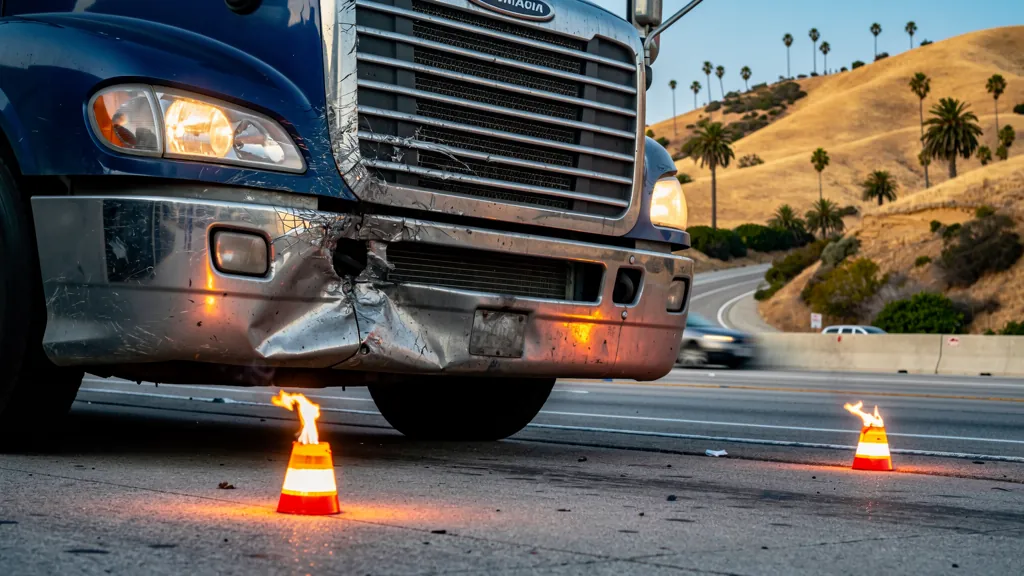
Trucks reach every part of the state, but a few routes carry the long-haul freight. Interstate 5 runs the length of California and links the Central Valley, the Grapevine and the two ends of the state. State Route 99 parallels it through the farm country of the valley. Interstate 10 and Interstate 15 bring freight in from Arizona and Nevada across the desert. Interstate 80 moves trucks through the Sierra and the Sacramento region toward Nevada. Interstate 710 serves the port area of Los Angeles County, and local surface streets feed warehouses and delivery docks in every city. That list is a geography lesson, not a danger ranking. This page makes no claim about how many crashes happen on any one road, because a lawyer should not guess at a number the reader can check at an official source. What matters to your claim is what happened to you on whichever road you were on: the lanes, the speed, the weather, the truck's load and what the driver and carrier did before the crash. Road type does change the kind of evidence, though. A crash on a rural highway may leave a thin trail of witnesses and a long wait for help, so photos and the CHP report carry more weight. A crash near a port, a rail yard or a warehouse district often involves a driver on a tight delivery window and a company with a dispatch system that logged every move. A crash on a mountain grade can raise brake maintenance questions. Whatever your road, Moe starts with the same facts: who was driving, who they drove for, what the truck was carrying and where that truck had been.
Insurance on the truck, and the insurance in your own household
Trucking companies carry more insurance than ordinary drivers, but there is still a ceiling on what the policy pays. Under 49 CFR § 387.9, the federal minimum liability coverage for a for-hire interstate carrier of non-hazardous property in a truck with a gross vehicle weight rating of 10,001 pounds or more is $750,000. The minimum is $1,000,000 for certain hazardous-material and oil loads, and $5,000,000 for bulk and other high-hazard loads. These are minimums for interstate carriers, not the coverage a given truck actually has, so Moe asks for the actual policy and does not assume a number. A serious truck injury can cost more than any policy limit, which is why the search for coverage does not stop at the first insurer. Moe looks at the carrier's main policy, any umbrella or excess policy, the coverage of a lessor or broker if one is involved, and the coverage in your own household. Your own policy matters if the truck driver cannot be found or the coverage falls short. California auto bodily-injury policies must include uninsured and underinsured motorist coverage unless you agreed in writing to remove or reduce it (Ins. Code § 11580.2). For policies issued or renewed on or after January 1, 2025, the state minimum liability limits are $30,000 per person and $60,000 per accident for injury or death, plus $15,000 for property damage (Veh. Code § 16056). If a truck hit you and drove off, your claim is an uninsured motorist claim, and the law sets three conditions. There must be physical contact between the unidentified vehicle and you or the vehicle you occupied. You must report the crash to the police within 24 hours, or to the sheriff or CHP outside city limits. And you must file a sworn statement with your insurer within 30 days. Miss one, and the coverage can be lost.
When the truck belongs to a city, county or state agency
Not every truck that hurts someone belongs to a private company. Garbage trucks, street sweepers, water and public-works trucks, dump trucks and school-district vehicles can belong to a city, a county, a school district or a state agency. The rules change when the owner is a public entity, and the deadlines shrink. A public entity is liable for injury or death caused by an employee's negligent operation of a motor vehicle within the scope of employment (Veh. Code § 17001). But you cannot go straight to court. Under Gov. Code § 911.2, a written claim for personal injury or death must be presented to the entity within six months of the crash. The entity then has 45 days to act, and if it does not, the claim is treated as rejected (Gov. Code § 912.4). If the entity sends a written rejection, you generally have only six months from that notice to file a lawsuit (Gov. Code § 945.6). Compare that to the two years you have against a private trucking company. Six months passes quickly when you are in surgery or rehab. If the truck may be federal, such as a postal truck, tell Moe right away so he can check which claim rules apply. A government-owned vehicle is not covered by the usual uninsured motorist definition. If you are not sure who owned the truck, do not wait to find out. Moe identifies the owner from the report, the vehicle markings and the plate, and he calendars the earliest deadline on day one.
Deadlines and shared fault after a truck crash
California gives you two years from the date of the crash to file a lawsuit for personal injury or wrongful death caused by someone's negligence (Code Civ. Proc. § 335.1), and three years for damage to a vehicle or other property (Code Civ. Proc. § 338(c)(1)). A claim against a government owner is much shorter, as the last section explains. Do not treat the two-year number as a deadline to act on. The proof described above can be gone long before it runs out. Fault is the other fight. California follows pure comparative negligence, so you can recover even if you were partly at fault, or even mostly at fault, and your award is reduced by your percentage of fault (Li v. Yellow Cab Co. (1975) 13 Cal.3d 804). Trucking insurers know this rule. They look for any reason to move blame onto you: a lane change, a stop, a speed that a camera can be read two ways. A recorded statement given to the carrier's adjuster before you have a lawyer is one of the easiest ways to hand them that argument. How fault is split among the parties also affects who pays, which is another reason to identify every responsible party early. Past results do not promise a similar outcome, and Moe will not predict one before he has the facts.
How a family works with Moe from anywhere in California
The first step is a call or a text. There is no charge, and Moe is available 24 hours a day. Tell him what happened, where you are being treated and whether anyone has already called you from the trucking company or an insurance company. You do not need a police report number to start. Within the first days, Moe sends the preservation letters, requests the crash report from the CHP or the local police agency that wrote it, and begins to identify the carrier, the owner of the truck and every policy that could apply. You send photos, medical bills and insurance cards by phone or email. Anything that needs a signature can be handled electronically. You are not asked to travel to Los Angeles, and Moe does not promise visits to your home or hospital room. As treatment continues, Moe keeps in touch by call and text so you know where things stand. He deals with the adjusters so you do not have to repeat the story to strangers. If the case needs a lawsuit, he tells you before he files, and he explains the court process in plain terms. Moe handles every case himself, so the person who takes your first call is the lawyer working your claim. The fee is a contingency fee. You pay no fee unless we win. If you or someone you love was hurt or killed in a crash with a truck anywhere in California, call (323) 716-1992. Se Habla Español.
Where Moe works with clients
The office is in downtown Los Angeles. Moe works with clients everywhere else in California by phone, text and email. Pages for specific areas:
Los Angeles County
Sacramento
Hurt in Los Angeles? See the Los Angeles truck accidents page.
Frequently Asked Questions
Yes. Moe works with clients anywhere in California by phone, text and email. His office is in downtown Los Angeles, and you never have to travel there to hire him. Documents, photos and records move by email, and you speak with Moe himself. He does not promise home or hospital visits, and the work does not depend on them.
Responsibility can reach the driver, the trucking company, a company that leased the truck, a shop that skipped a repair, a shipper or loader that overloaded the trailer, and sometimes a freight broker or parts maker. Which of them is liable depends on the facts, so Moe reviews the records before naming anyone.
The truck, its engine control module data, any dashcam video, the ELD log, GPS and dispatch records, the driver qualification file, inspection reports and the accident register. Federal rules require only short retention periods for some of these, so Moe sends a preservation letter right away.
For a for-hire interstate carrier of non-hazardous property in a truck of 10,001 pounds or more, the federal minimum is $750,000 (49 CFR § 387.9). Certain hazardous loads require $1,000,000 or $5,000,000. Carriers can carry more than the minimum, and Moe asks for the actual policies.
You generally have two years from the crash to sue for personal injury or wrongful death (Code Civ. Proc. § 335.1). If the truck belongs to a public entity, a written claim must be presented within six months (Gov. Code § 911.2), and suit follows within six months of a written rejection (Gov. Code § 945.6).
Your own uninsured motorist coverage may apply if three conditions are met. There must be physical contact with the other vehicle, you must report the crash to the police within 24 hours (or the sheriff or CHP outside city limits), and you must file a sworn statement with your insurer within 30 days. Call Moe quickly.
Yes. California follows pure comparative negligence, so your award is reduced by your percentage of fault instead of being barred (Li v. Yellow Cab Co. (1975) 13 Cal.3d 804). Do not give the trucking company's insurer a recorded statement before you talk to a lawyer.
Nothing up front. Moe works on a contingency fee, so you pay no fee unless we win. The case review is free, available 24/7, and Se Habla Español. Ask Moe on the first call how costs are handled so there are no surprises.
Get medical care, report the crash to the police or CHP, and photograph the truck, plates and company markings if you can. Do not give a recorded statement. Then call Moe. Moe will also walk you through any DMV report that applies.
No. Moe represents people hurt in motor-vehicle crashes anywhere in California. Most of the work happens by phone, text and email, so you never have to come to the downtown Los Angeles office. The case review is free, and you pay nothing unless we win.
More statewide help
Authoritative resources: California Courts, self-help for injury claims · Cal. Code Civ. Proc. § 335.1, 2-year deadline · California DMV · California Office of Traffic Safety, crash data
Sources & local resources
- Code of Civil Procedure § 335.1 · California Legislative Information
- Government Code § 911.2 · California Legislative Information
- Government Code § 945.6 · California Legislative Information
- Government Code § 912.4 · California Legislative Information
- Vehicle Code § 17001 · California Legislative Information
- Vehicle Code § 16056 · California Legislative Information
- Insurance Code § 11580.2 · California Legislative Information
- 49 CFR § 387.9 Financial responsibility, minimum levels · Electronic Code of Federal Regulations
- 49 CFR § 395.3 Maximum driving time for property-carrying vehicles · Electronic Code of Federal Regulations
- 49 CFR § 395.8 Driver's record of duty status · Electronic Code of Federal Regulations
- 49 CFR § 391.51 Driver qualification files · Electronic Code of Federal Regulations
- 49 CFR § 396.11 Driver vehicle inspection report(s) · Electronic Code of Federal Regulations
Talk to Moe Abdallah directly
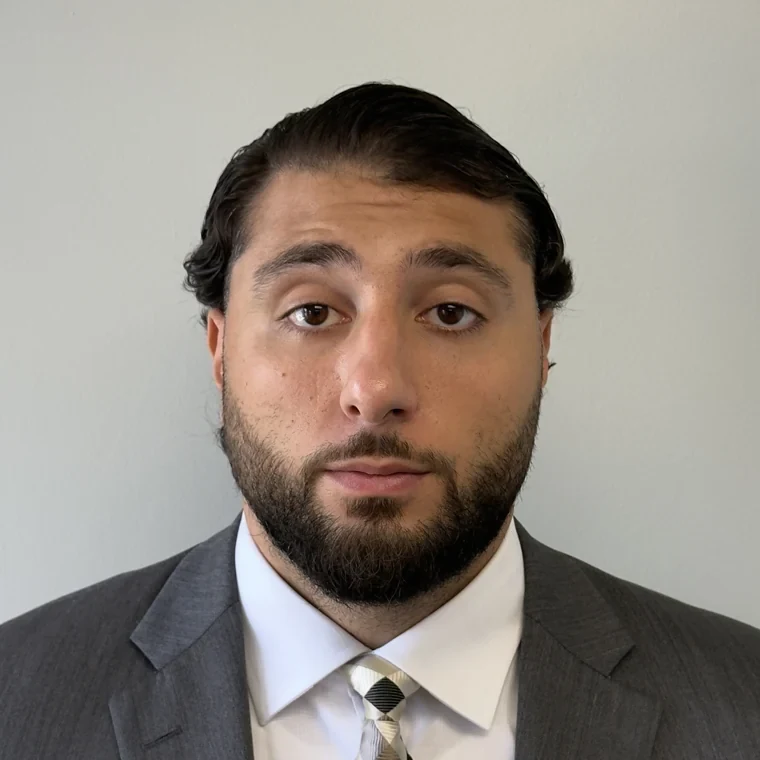
When you call Moe Abdallah Law, you work directly with your attorney and get straight answers, not a call center. Moe takes on the insurance companies and fights for the maximum, and he keeps you updated at every step. The consultation is free and you pay nothing unless he wins.
Real recoveries for real clients
Real recoveries from an attorney who takes your case personally and fights for the maximum.
Hit head-on at high speed, breaking his femur and ankle and needing surgery. Moe secured the at-fault driver's full policy limit.
Rear-ended by a driver who fled, and other firms turned her down. Moe opened an uninsured-motorist claim, proved she could not have been at fault, and secured the full policy limit.
Past results do not guarantee a similar outcome. Every case is different and depends on its own facts.
Talk to a lawyer today, free
Tell us what happened. We respond fast, usually within the hour, and there's no fee unless we win. Available 24/7 · Se Habla Español.
Hurt anywhere in California? Moe works with clients statewide by phone and email, so you never have to come to LA.
Call (323) 716-1992