
Motorcycle Accident Lawyer California: Help for Riders Statewide
A motorcycle accident lawyer in California helps hurt riders and their families deal with the other driver's insurer, prove what happened and seek payment for medical bills, lost income and pain. Moe Abdallah takes these cases himself, works with you anywhere in the state, and charges no fee unless he wins.
Riders get hurt in ways drivers do not, and insurers know it. The injuries are often serious, the rider is often blamed first, and California law has two rules, lane splitting and helmets, that adjusters love to stretch. If you are searching for a california motorcycle accident attorney, this page explains in plain words how these crashes happen, what the law says about riding between lanes and wearing a helmet, how uninsured and hit-and-run drivers are handled, and what to do first. Moe Abdallah Law, P.C. takes motorcycle cases only when a person was physically hurt or killed in a crash. Moe works with riders anywhere in California by phone, text and email. His office is in downtown Los Angeles, and you never have to come in to hire him. He handles every case himself. The review is free, Se Habla Español, and you pay no fee unless we win.
The rider cases Moe takes, wherever you live in California
Moe takes cases for riders and passengers who were physically hurt on a motorcycle, and for families who lost someone in a motorcycle crash. That covers street bikes, cruisers, touring bikes, scooters and other motorcycles hit by a car, a truck, a bus, a rideshare driver or a driver who left the scene. He does not take property-damage-only claims, workplace injury claims, product-defect cases or premises cases. If your only loss is a damaged bike, he will say so on the first call. The work does not depend on where you ride. A rider hurt on the Pacific Coast Highway, a Central Valley road, a Sierra foothill route or a desert highway can start the same way: a free call, a short account of what happened, and a plan for the next few days. Moe works with clients anywhere in California by phone, text and email, and his office is in downtown Los Angeles. He does not run offices anywhere else. Photos, medical records, the police report and signatures can move by email and text, so you can hire him from a hospital bed or a couch. What you get is a lawyer who answers his own phone and who understands that the other driver's insurer is already building a story that starts with the rider. You are allowed to tell any adjuster that you have a lawyer and send every call to Moe.
Answer 3 quick questions and Moe will call you, free. No fee unless we win.
Prefer to talk? Call (323) 716-1992, 24/7.
What the statewide numbers say about California riders
UC Berkeley's Safe Transportation Research and Education Center, known as SafeTREC, publishes motorcycle safety facts built from the federal Fatality Analysis Reporting System and from the CHP's SWITRS crash database. According to SafeTREC, 583 motorcyclists were killed in California in 2023. That was 14 percent of all motor vehicle deaths in the state, and it was a drop of 10.2 percent from 2022. Nationally, motorcycles made up 3.3 percent of registered vehicles in 2023 and 0.6 percent of vehicle miles traveled, yet motorcyclists were 15.5 percent of all traffic deaths. A rider has no frame, no airbag and no crumple zone, so the same impact that dents a car can break a person. SafeTREC also looked at where fatal motorcycle crashes happened in California in 2023. About 73 percent were urban and 27 percent were rural. Principal arterials, the big through streets, accounted for 31 percent, minor arterials for 28 percent, major collectors for 16 percent and interstates for 10 percent. So the riding most people do every day, on busy city and suburban roads, is where many of the worst crashes happen. These numbers describe the whole state, not your crash. They do not say who caused any one wreck, and they do not make riding more or less lawful. What they show is that insurers see rider claims constantly, and each one gets a process.
Left turns, right of way and how most rider crashes start
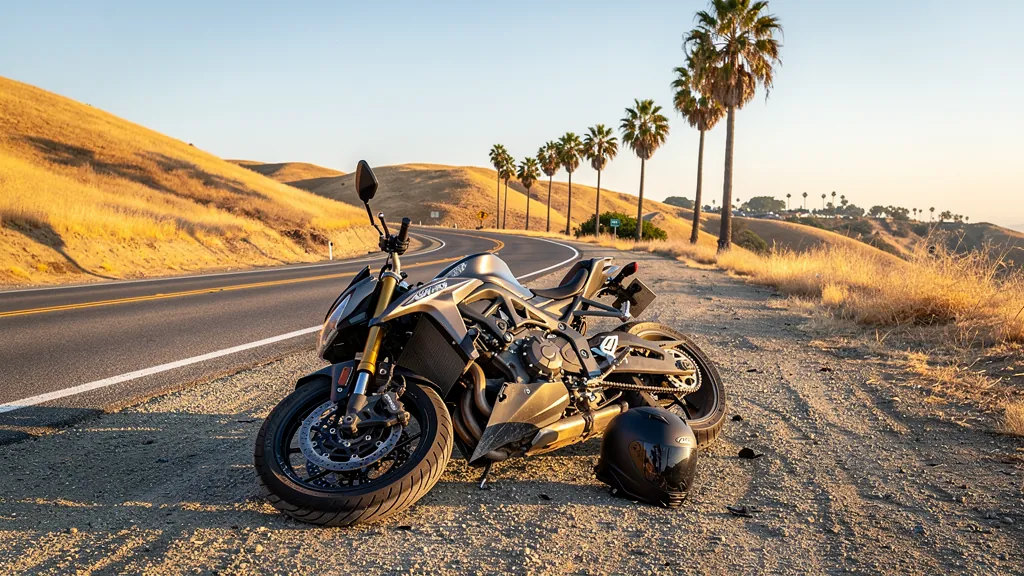
One of the most common car versus motorcycle crash patterns is a left turn. A driver waiting to turn left across traffic looks at an oncoming bike, misjudges its speed or never sees it, and turns in front of the rider. California law puts the duty on the turning driver. Under Vehicle Code section 21801(a), a driver turning left must yield to oncoming vehicles close enough to be a hazard. The rider often has no room to stop, and the impact is at the front of the bike. SafeTREC's list of main crash factors in fatal and serious injury motorcycle crashes in California in 2023 fits that picture. Unsafe speed was listed most often at 28.2 percent, followed by improper turning at 19.8 percent and automobile right of way at 19.3 percent. Driving under the influence of alcohol or drugs came fourth at 8.7 percent, and unsafe lane change fifth at 5.2 percent. Those labels come from the main factor an officer or the data coding assigned, and they do not say whose conduct that was. A crash labeled unsafe speed can still involve a driver who pulled out in front of a bike. Other common patterns include a driver changing lanes into a rider in a blind spot, a driver opening a car door into a lane, a rear-end hit at a light, sudden braking in stop-and-go freeway traffic, and a driver who turns right across a rider going straight. Gravel, a pothole or an oil patch can also bring a rider down. Moe looks at the scene, the vehicles and the witnesses before anyone decides who was at fault.
Lane splitting in California: what the law says and what insurers do with it
Lane splitting means a motorcycle riding between lanes of slow or stopped traffic. California does not have a statute that bans it. Vehicle Code section 21658.1 defines lane splitting and lets the California Highway Patrol develop safety guidelines. That is all it does. It does not say lane splitting is always legal, and it does not set a safe speed. Riders are still bound by the other traffic rules, including Vehicle Code section 21658(a), which says a driver may not move from a lane until the move can be made with reasonable safety, and Vehicle Code section 22350, the speed law, which bars driving faster than is reasonable or prudent for conditions. Insurers use this gray area. The first thing a driver's adjuster may say after a crash is that the rider was lane splitting, as if that ends the claim. It does not. California follows pure comparative negligence. Under Li v. Yellow Cab Co., an injured person can recover even when partly at fault, and the award is reduced in proportion to that person's share of fault. If a driver swerved into the gap without signaling, or opened a door, or cut off a rider in the next lane, the driver can carry most of the blame even if the rider was between lanes. What matters is how fast the rider was going, how fast traffic was moving, whether the rider had room, and what the other driver did. Dashcam video, a witness and the position of the vehicles after impact often answer those questions. Moe collects that proof early, because it gets harder to find with each week.
Helmets, gear and the comparative-fault argument
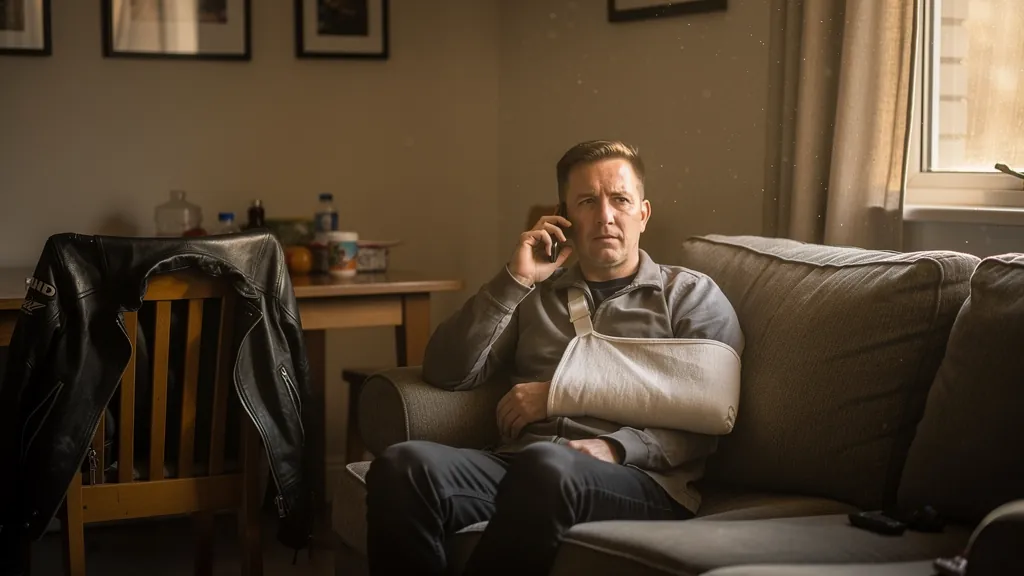
Vehicle Code section 27803 requires the driver and any passenger on a motorcycle to wear a fastened, properly fitting safety helmet that meets the standards set under Vehicle Code section 27802. Riding without one is a violation. It does not, by itself, end your claim. The other driver still caused the crash, and the other driver is still responsible for what they caused. What an insurer can do is argue that not wearing a helmet made your head injury worse and that your award should shrink under comparative fault. That argument only reaches the injuries a helmet would have changed. It does not reach a broken leg, a shattered wrist or a torn shoulder. Insurers also like to say that bright gear would have made you visible, or that a rider was on the wrong bike or lacked a license. A missing endorsement or a gear choice does not make a left-turning driver any less required to yield. If you wore a helmet, keep it. Do not clean it, repair it or throw it out. A cracked shell and scuffed gear show the force of the impact and where you hit. Photograph the helmet, jacket, gloves and boots before anything gets washed, and keep them in a bag. If you did not wear a helmet, tell Moe on the first call. The facts are easier to deal with early than after the insurer finds them.
Rider bias, and how insurers try to shrink a rider's claim
In Moe's experience, some adjusters start from the idea that riders are reckless. That idea can show up in low offers and in quick statements that the rider was speeding. It is a bias, not a fact about your crash, and the way to answer it is with proof. Insurers may also try a handful of familiar moves. They call within days, sound friendly, and ask for a recorded statement. They offer a fast check that closes the claim before you know the full cost of treatment. They ask you to sign a broad medical release. They point at old injuries to explain your pain. You do not have to give a recorded statement to the other driver's insurer. You can say you have a lawyer and end the call. Be careful with posts on social media as well, because a photo of you at a family party can get framed as proof you are fine. Do not sign a release or take a settlement before you understand how long you will need treatment. Because California uses pure comparative negligence, an insurer saying you were partly at fault is a negotiating move, not the end of your case. The question is how much blame each person carries, and that is a matter of evidence. Moe tests every fault claim against the police report, the photos, the witness accounts and the vehicle damage. If your own insurer has to pay under your policy, he deals with that adjuster too.
Rider injuries and the records that prove them
Motorcycle injuries tend to be serious. Riders suffer broken collarbones, wrists, arms, legs, pelvises and ribs. They suffer road rash that needs surgery and leaves scars. They suffer spinal injuries, nerve damage and amputations. When the head strikes the road or the other vehicle, a rider can have a concussion or a traumatic brain injury even with a helmet. Moe handles brain and spinal injuries only when they come from a motor vehicle crash. Your medical records are the backbone of the claim. Go to an emergency room or urgent care right away, even if you walked away, because adrenaline hides pain and some injuries show up days later. Follow the treatment plan and keep every appointment, since gaps in care give an insurer something to argue about. Keep the bills, the pharmacy receipts, the mileage to appointments, and a short daily note about pain, sleep and what you cannot do. Lost income is part of the claim too. If you missed work, or you cannot go back to your old job, keep pay stubs, a letter from your employer and any doctor's work restrictions. The bike matters, but the bike is property. Moe's focus is the person: the hospital bills, the future care, the time off and the pain. Every case turns on its own facts.
When the driver fled, or has no insurance or too little
Hit-and-run crashes happen in rider cases too, and a rider cannot always get a plate. Leaving the scene of an injury crash is a crime under Vehicle Code section 20001, and a driver involved in an injury crash must stop, give their information and give reasonable help. If the driver who hit you cannot be identified, California treats that vehicle as uninsured, and your own uninsured motorist coverage can pay for your injuries. Under Insurance Code section 11580.2, the injury must come from physical contact with the hit-and-run vehicle, the crash must be reported to the police, sheriff or CHP within 24 hours, and you must file a sworn statement with your insurer within 30 days of that report. Report the crash in the first day, even from a hospital bed. The same coverage helps when the driver is known but has no insurance, or has too little. California's minimum liability limits are $30,000 per person and $60,000 per accident for policies issued or renewed on or after January 1, 2025. A serious motorcycle injury can run well past that. Underinsured motorist coverage on your own policy can cover part of the gap, after the at-fault driver's limits are paid. Check your policy and tell Moe what it says. Some riders carry UM and UIM coverage without knowing it, since California insurers must include it in auto bodily-injury policies unless the named insured waived it in a signed writing. Note that UM and UIM claims have their own two-year rule under Insurance Code section 11580.2. To protect the claim you must sue, reach an agreement with your insurer, or start arbitration by certified mail within two years of the crash. Settling with a liable driver without your insurer's written consent can also void your UM coverage, so talk to Moe before you sign anything. Under Proposition 213 (Civil Code section 3333.4), a person who owned an uninsured vehicle involved in the crash, who drove without financial responsibility, or who was convicted of DUI for the crash generally cannot recover non-economic damages such as pain and suffering. An uninsured owner hit by a driver convicted of DUI is an exception. Tell Moe about your own insurance status early.
Deadlines, and what changes when a city, county or state road is involved
California generally gives you two years from the date of the crash to file an injury lawsuit against a private person or company under Code of Civil Procedure section 335.1. Waiting is a mistake even when the deadline looks far away, because skid marks fade, video gets deleted and witnesses move. The deadline is much shorter when a government is involved. A city bus that hit you, a county truck, or a road with a defect that a public agency owns can mean a claim against a public entity. Under Government Code section 911.2, you must present a written claim to that agency within six months of the crash for injury or death. If the agency mails a written rejection, you then have six months from that notice to file suit under Government Code section 945.6. The usual extra time for minors does not apply to these government claims. Potholes, missing signs, bad drainage and loose gravel on a public road can all bring a rider down, so tell Moe about the road as well as the driver. If you are not sure who owns the road or the vehicle, call. Moe can sort that out quickly. After a crash, get the police report. The CHP handles crashes on freeways and in unincorporated areas, and police or sheriff's deputies handle most city streets. Ask the officer for the report number at the scene, and ask Moe to help you get a copy.
Where Moe works with clients
The office is in downtown Los Angeles. Moe works with clients everywhere else in California by phone, text and email. Pages for specific areas:
Los Angeles County
Bay Area
Central Valley
Sacramento
Hurt in Los Angeles? See the Los Angeles motorcycle accidents page.
Frequently Asked Questions
Yes. Moe works with riders anywhere in California by phone, text and email. His office is in downtown Los Angeles, and you never have to travel there to hire him. Documents, photos and records move by email, and you speak with Moe himself. He does not promise home or hospital visits, and the work does not depend on them.
No California statute bans it. Vehicle Code section 21658.1 defines lane splitting and lets the CHP issue safety guidelines, but it does not make lane splitting always legal. Riders must still change lanes only when it is reasonably safe and ride at a safe speed. Even a rider who was lane splitting can recover if the driver was mostly at fault.
No. Vehicle Code section 27803 requires a helmet, but not wearing one does not bar your claim. An insurer may argue that the missing helmet made your head injury worse and ask for a lower award under comparative fault. That argument does not reach injuries a helmet would not have changed.
You can still recover. California follows pure comparative negligence under Li v. Yellow Cab Co., so your award is reduced by your share of fault, and it is not erased. Moe tests the driver's story against the police report, photos, witnesses and vehicle damage before accepting any fault percentage.
Report the crash to the police, sheriff or CHP within 24 hours and file a sworn statement with your own insurer within 30 days of that report. Your uninsured motorist coverage can pay when the driver cannot be identified, if the injury came from physical contact with that vehicle.
Generally two years from the crash for a private driver or company. A claim against a city, county or state agency must be presented in writing within six months. UM and UIM claims have their own two-year rule. The safest move is to call Moe soon.
Your own uninsured and underinsured motorist coverage may apply. California's minimum liability limits are $30,000 per person and $60,000 per accident for current policies, which can fall short of a serious rider injury. Check your policy with Moe before you settle with anyone.
Moe works on a contingency fee, so you pay no fee unless we win. The case review is free, and he is available 24/7. Se Habla Español.
Call 911, get medical care, and report the crash to the police or CHP. Photograph the scene, your bike, your injuries and your gear. Save your helmet. Get the other driver's name, plate and insurance, and any witness contacts. Do not give a recorded statement to the other insurer. Then call Moe at (323) 716-1992.
No. Moe represents people hurt in motor-vehicle crashes anywhere in California. Most of the work happens by phone, text and email, so you never have to come to the downtown Los Angeles office. The case review is free, and you pay nothing unless we win.
More statewide help
Authoritative resources: California Courts, self-help for injury claims · Cal. Code Civ. Proc. § 335.1, 2-year deadline · California DMV · California Office of Traffic Safety, crash data
Sources & local resources
- 2025 SafeTREC Traffic Safety Facts: Motorcycle Safety · UC Berkeley Safe Transportation Research and Education Center
- Vehicle Code § 21658.1 · California Legislative Information
- Vehicle Code § 21658 · California Legislative Information
- Vehicle Code § 22350 · California Legislative Information
- Vehicle Code § 27803 · California Legislative Information
- Vehicle Code § 21801 · California Legislative Information
- Code of Civil Procedure § 335.1 · California Legislative Information
- Government Code § 911.2 · California Legislative Information
- Government Code § 945.6 · California Legislative Information
- Vehicle Code § 20001 · California Legislative Information
- Civil Code § 3333.4 · California Legislative Information
- Code of Civil Procedure § 352 · California Legislative Information
- Vehicle Code § 16056 · California Legislative Information
- Insurance Code § 11580.2 · California Legislative Information
- Li v. Yellow Cab Co. (1975) 13 Cal.3d 804 · Justia
- Request a Crash Report · California Highway Patrol
Talk to Moe Abdallah directly
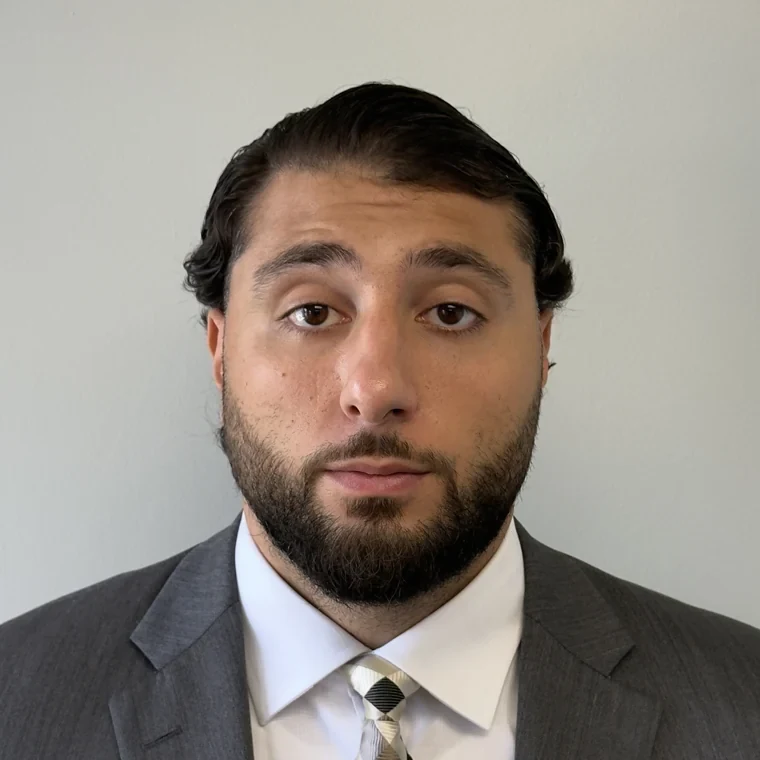
When you call Moe Abdallah Law, you work directly with your attorney and get straight answers, not a call center. Moe takes on the insurance companies and fights for the maximum, and he keeps you updated at every step. The consultation is free and you pay nothing unless he wins.
Real recoveries for real clients
Real recoveries from an attorney who takes your case personally and fights for the maximum.
A passenger rear-ended on the highway with back and neck injuries on top of a pre-existing condition. Moe argued the crash severely worsened it and secured the full policy limit.
Hit head-on at high speed, breaking his femur and ankle and needing surgery. Moe secured the at-fault driver's full policy limit.
Past results do not guarantee a similar outcome. Every case is different and depends on its own facts.
Talk to a lawyer today, free
Tell us what happened. We respond fast, usually within the hour, and there's no fee unless we win. Available 24/7 · Se Habla Español.
Hurt anywhere in California? Moe works with clients statewide by phone and email, so you never have to come to LA.
Call (323) 716-1992