
Long Beach Pedestrian Accident Lawyer
A Long Beach pedestrian accident lawyer proves the driver or public agency that hurt you is responsible, and fights the insurer that blames you for walking. Moe Abdallah Law, P.C. handles pedestrian injury cases on contingency, so you pay nothing unless we win.
You were on foot. The driver had a steel frame, airbags and a seat belt. You had nothing. That gap is why a pedestrian accident in Long Beach so often ends in a hospital stay, surgery and months away from work, and why insurers rush to say you stepped out where you should not have. Moe Abdallah Law, P.C. represents people hit while walking in Long Beach, from the crosswalks around Downtown and Belmont Shore to wide arterials like Pacific Coast Highway and Artesia Boulevard. Moe takes your call himself. We look at who had the right of way, what the evidence shows and which insurer or public agency owes you. Your case review is free, available 24/7, and you pay no fee unless we win.
Why walking in Long Beach has gotten more dangerous
The numbers should worry anyone who crosses a street here. The California Office of Traffic Safety ranked Long Beach 2nd of 15 comparable cities for pedestrian crash victims in 2022, with 359 people hurt or killed on foot. In 2025 the city recorded 53 fatal traffic collisions, its most in more than ten years, and 32 of the people who died were walking, biking or riding e-scooters. Long Beach adopted a Vision Zero goal in 2016 to end traffic deaths and serious injuries by 2026, and the city has said it plans speed cameras at 18 locations. News coverage of the 2025 deaths named Orange Avenue between Seventh Street and Hellman Avenue as a place residents worry about, and LAist pictured a rollover crash at 10th Street and Elm Avenue and reported that residents of the Washington neighborhood worry about speeding drivers. We do not claim any street is unsafe beyond what those sources say, but they show you are not imagining the risk. If you were hit on one of these streets, the road's design, the speed limit and whether the crossing was marked can all matter to your claim. A pedestrian case here is rarely about one careless driver alone. Sometimes it is also about how the city designed and maintained the crossing.
Who had the right of way in a Long Beach crosswalk
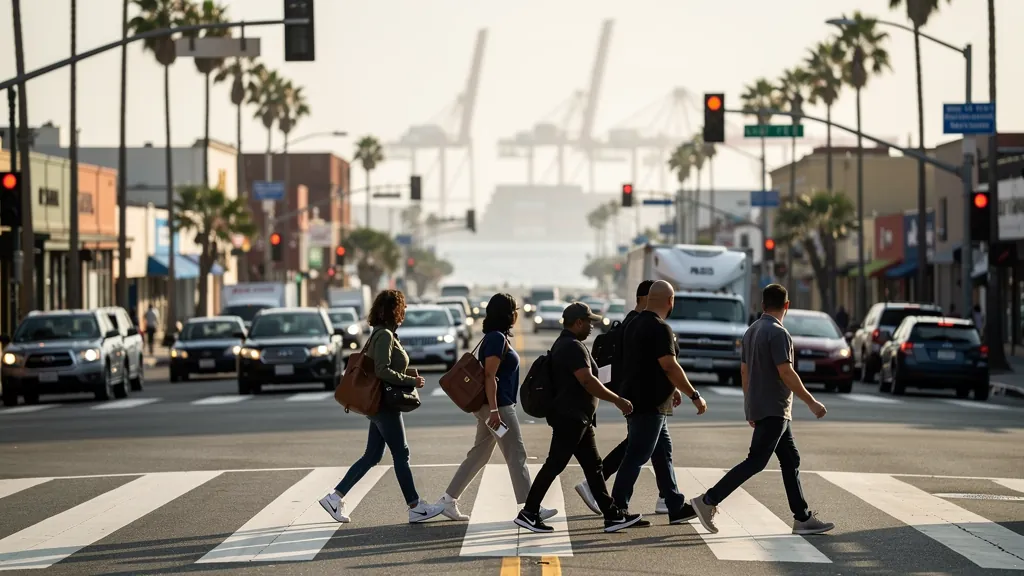
California protects pedestrians at crossings. A driver must yield to a pedestrian in any marked crosswalk and in an unmarked crosswalk at an intersection. A driver approaching a pedestrian in a crosswalk must use all due care and slow down as needed (Vehicle Code section 21950). Even when you are outside a crosswalk, the driver still owes you due care (Vehicle Code section 21954(b)). The law asks something of you too. Pedestrians must use due care for their own safety, and one outside a crosswalk must yield to vehicles that pose an immediate hazard (Vehicle Code sections 21950(b) and 21954(a)). Insurers lean on these rules. They say you crossed mid-block, wore dark clothes at night, looked at your phone or ran against the signal. California follows pure comparative negligence, so even if some fault lands on you, you can still recover. Your award drops only by your percentage (Li v. Yellow Cab Co. (1975) 13 Cal.3d 804). A 2023 law, the Freedom to Walk Act, also limits when police can cite pedestrians for crossing outside a crosswalk, though both the pedestrian's and driver's duties of care remain. We answer the blame story with signal timing, sight lines and the driver's own behavior.
Evidence that disappears fast on Long Beach streets
Pedestrians rarely get a second chance to document a scene, because you are usually in an ambulance. That makes the first days decisive, so we move fast. We look for footage from businesses along Pacific Coast Highway, Orange Avenue and Artesia Boulevard, from doorbell cameras on residential blocks in Bixby Knolls, California Heights and Los Cerritos, and from buses and other vehicles that passed the scene. Much of that video is overwritten within days. We photograph the crosswalk paint, the signal heads, the lighting and any parked cars or trees that blocked the driver's view. We find witnesses and 911 callers. We ask whether the driver was on a phone, and we preserve your clothing and shoes. We also track your injuries as they develop. A pedestrian struck at 25 or 35 miles per hour may look stable at first, then show bleeding, a spinal fracture or a brain injury days later. If the driver admits fault at the scene, the report may say so, and that helps. If the driver says you darted out, we test that story against the evidence. Do not post about the crash online, and do not give your insurer or theirs a recorded statement before you talk with us.
When the city, the county or the state may share the blame
Sometimes the road is the danger, not just the driver. A faulty signal, a crosswalk with no visible markings, a missing streetlight or a sight line the agency let become blocked can all contribute to a pedestrian crash. A public entity is liable for a dangerous condition of its property only when the plaintiff proves the condition, causation and a foreseeable risk, and shows either that an employee's negligence created it or that the agency knew or should have known in time to fix it (Government Code section 835). These claims run on a short clock. You must present a written claim to the public entity within six months of the injury (Government Code section 911.2). In Long Beach, the City Clerk at 411 W. Ocean Blvd. takes claims for death, injury and property damage, online, by mail or in person at City Hall. If the city sends a written rejection, you have six months from that notice to file suit (Government Code section 945.6). Crashes on state highways and freeways may point to the State or Caltrans instead, so we identify who owns each stretch of road early. Missing the six-month window can end a strong claim, and the usual extra time for minors does not apply to public-entity claims. Call before you decide whether a road condition played a part.
Buses, light rail, rideshare and the driver who fled
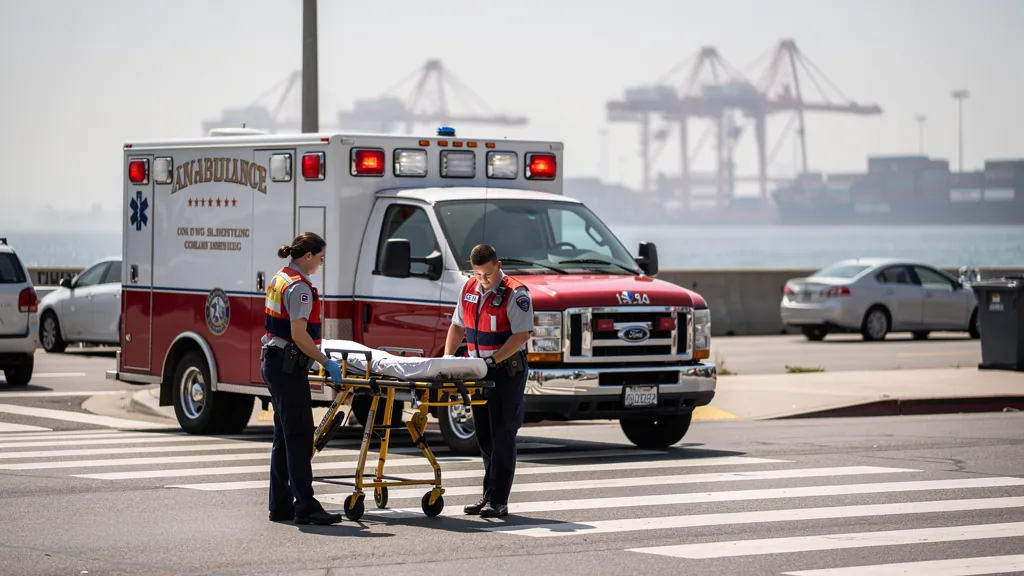
Not every pedestrian crash involves a private car. Long Beach Transit buses run through the city and surrounding communities, and Metro's A Line ends at the Downtown Long Beach station, so plenty of people walk to and from stops and platforms. If a bus or train struck you, we find out who operates and insures it, because that decides which deadlines apply. A rideshare driver who hits you may carry a commercial policy. Then there is the driver who leaves. A driver in an injury crash must stop, give their information and render aid (Vehicle Code sections 20001 and 20003), but many do not. If no one is identified, your own uninsured motorist coverage may pay. You need physical contact, a report within 24 hours and a sworn statement to your insurer within 30 days of the report (Insurance Code section 11580.2). If you do not own a car, UM coverage on a policy held by a spouse or relative you live with may still cover you. We once helped a woman recover $100,000 in policy limits after a driver fled with no police report. Past results do not predict a similar outcome, but they show that missing evidence is not the end of a case.
Hospitals, police reports and how Moe handles your case
People who get hit while walking tend to need serious care: a broken pelvis or legs, spine and head injuries, internal bleeding and long rehab. Long Beach has two Level II trauma centers, MemorialCare Long Beach Medical Center and St. Mary Medical Center, and your records from either one shape what a claim is worth. The Long Beach Police Department writes the collision report. Request it by mail from Long Beach Police Department, 400 W. Broadway, Long Beach, CA 90802, ATTN: Information Management Division, with a copy of your photo ID. The fee is $30, crime victims are exempt, and processing can take up to about six months. We do not wait for it. If the case needs a lawsuit, the Los Angeles Superior Court hears civil cases at the Governor George Deukmejian Courthouse, 275 Magnolia Ave., in Long Beach. Moe personally handles your case. He moves on evidence the same week, keeps you updated by call and text, and deals with the adjusters so you do not have to. We have turned a $900 insurance offer into $75,000 for one client. Past results do not predict a similar outcome. You pay nothing unless we win, and Se Habla Español.
Talk to a Long Beach pedestrian accident lawyer
Call (323) 716-1992 for a free, no-obligation case review. You pay nothing unless we win, and we'll handle the insurance companies for you. Learn more about our pedestrian accidents representation →
Frequently Asked Questions
Often the driver. California law requires drivers to yield to pedestrians in a marked crosswalk and in an unmarked crosswalk at an intersection, and to use all due care and slow down. If you were partly at fault, such as by entering against a signal, your award drops by your percentage of fault, but you can still recover.
You may still have a claim. A pedestrian outside a crosswalk must yield to vehicles that pose an immediate hazard, but drivers still owe due care to anyone on the road. Insurers will argue you share the blame, and California's comparative negligence rule reduces your award by that share without barring it. We look at what the driver could see.
Mail the Long Beach Police Department release application and a copy of your photo ID to 400 W. Broadway, Long Beach, CA 90802, ATTN: Information Management Division. The fee is $30, and crime victims are exempt. The department says processing can take up to about six months, so hold on to any report number or card the officer gave you.
You generally have two years from the crash to sue a private driver (Code of Civil Procedure section 335.1). If a public entity may be responsible, you must present a written claim within six months, then sue within six months of a written rejection. The deadlines differ, so call early and we will work out which one applies.
Possibly. A public entity is liable only if you prove a dangerous condition, that it caused your injury, that the risk was foreseeable, and that the city created the condition or knew about it in time to fix it. You must file a government claim with the City Clerk within six months. We review the crossing and the city's records.
Often yes. If the driver is found, you have a liability claim. If not, your own uninsured motorist coverage may pay for your injuries when there was contact, you reported within 24 hours and you filed a sworn statement within 30 days. UM does not cover property damage. Call us right away so those deadlines do not pass.
Not before you know your full injuries. Early offers often arrive before surgery, follow-up imaging or a final prognosis, and signing ends your claim. Do not give a recorded statement or sign a release without legal advice. We wait until your treatment is clear, then value your medical costs, lost income and pain, and negotiate from there.
Nothing unless we win. Moe Abdallah Law, P.C. works on contingency, so you pay no fee unless we recover money for you, and your case review is free. Call (323) 716-1992 any time, day or night. You will speak with Moe, and he can explain your deadlines and next steps in plain language.
Other cases we handle in Long Beach
See everything we handle in Long Beach →
Pedestrian Accident lawyers in other cities we serve
Sources & local resources
- California Vehicle Code Section 21950 · California Legislative Information
- California Vehicle Code Section 21954 · California Legislative Information
- California Government Code Section 835 · California Legislative Information
- Long Beach vowed to eliminate deadly crashes. Instead, they're the highest in over a decade · LAist
- Claim Form · City of Long Beach City Clerk
- Request a Police Report · Long Beach Police Department
- Long Beach 2022 OTS Rankings · California Office of Traffic Safety
- Long Beach vowed to eliminate deadly crashes; instead, they're the highest in over a decade · Long Beach Post
- How to File a Claim
- Long Beach 2023 OTS Rankings
Talk to Moe Abdallah directly
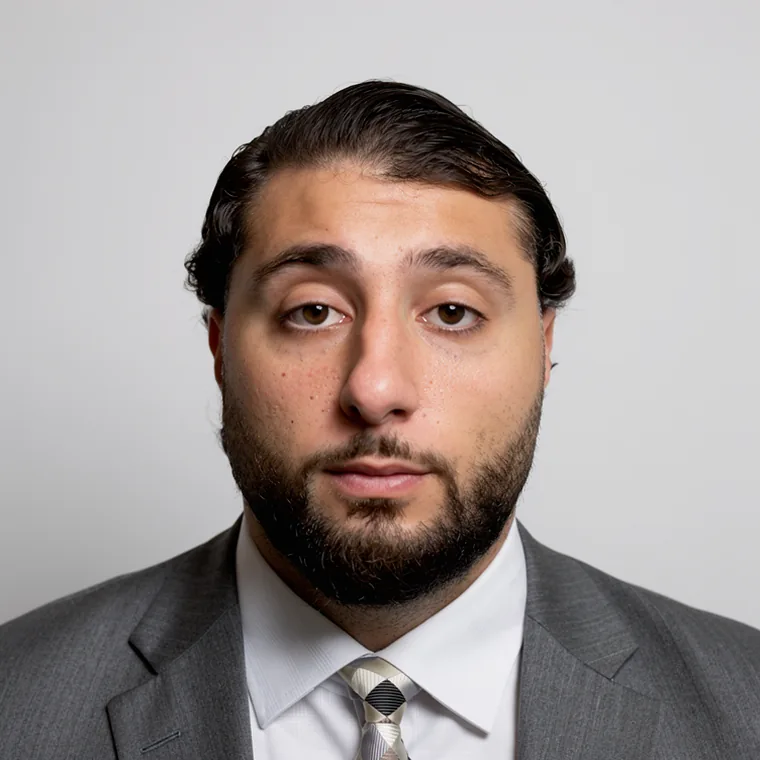
When you call Moe Abdallah Law, you work directly with your attorney and get straight answers, not a call center. Moe takes on the insurance companies and fights for the maximum, and he keeps you updated at every step. The consultation is free and you pay nothing unless he wins.
Real recoveries for real Angelenos
Real recoveries from an attorney who takes your case personally and fights for the maximum.
Rear-ended by a driver who fled, and other firms turned her down. Moe opened an uninsured-motorist claim, proved she could not have been at fault, and secured the full policy limit.
Broke his sternum and had no insurance of his own, and his prior attorney ignored him. Moe took his calls day and night and recovered a settlement that covered his hospital bills and future treatment.
Cut off on the freeway and left with back and neck pain over four months of treatment. Moe secured the full policy limit for his pain and suffering, and his totaled car was reimbursed.
Past results do not guarantee a similar outcome. Every case is different and depends on its own facts.
5.0 stars across every review
I would definitely recommend this firm to anyone looking for reliable legal guidance.
Moe Abdallah is the best attorney around , very professional, attentive, respectful, highly knowledgeable, caring for his clients like family and most importantly gets the job done! Forever thankful I found Moe to help me in my case Got me
I am incredibly grateful to Moe Abdallah Law, P.C. for their outstanding representation following my recent accident. Dealing with injuries, medical bills, and insurance companies was overwhelming, but Moe completely took the burden off my
Talk to a lawyer today, free
Tell us what happened. We respond fast, usually within the hour, and there's no fee unless we win. Available 24/7 · Se Habla Español.
Call (323) 716-1992